Startup name: Innovative Technology for Producing Construction Raw Materials (Eco Pinus) Through Waste Recycling
Startup category in UI Greenmetric questionnaire (SI, EC, WS, WR, TR, ED): WS
Date establish: 5.02.2025
Income: 6,054 USD
Revenue: 8.65 USD
Employees: 6 personnel
Description: History:
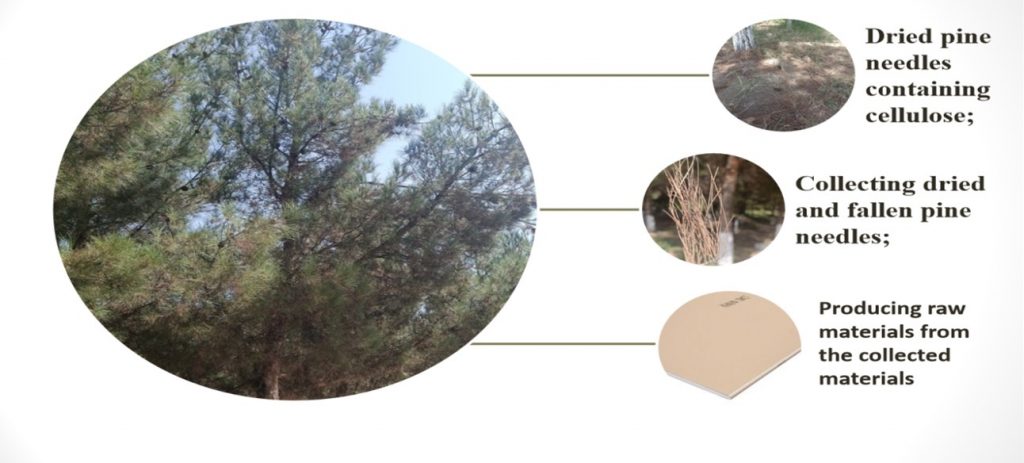
Eco Pinus was founded as an innovative green startup focused on creating eco-friendly construction materials from natural and recycled resources. The idea was born out of a desire to reduce environmental waste and promote sustainable construction practices. The project began with the research and development of new materials made from dried and processed pine needles, transforming what is usually considered waste into valuable building raw materials.
Aims and Scope of Work:
The main aim of Eco Pinus is to utilize natural and renewable materials to produce environmentally safe construction resources. By recycling dried and woven pine needles, the startup contributes to environmental protection, efficient use of forest by-products, and reduction of pollution. Its broader scope includes developing innovative technologies for sustainable construction, supporting the circular economy, and promoting the use of green materials in the building industry.
Primary Product/Activity:
Eco Pinus produces compressed eco-friendly construction materials made from pine needles, wood dust, natural resin, and other plant-based components. These materials are durable, lightweight, and non-toxic, serving as an alternative to traditional materials like chipboard, MDF, and plywood. The production process is fully eco-conscious, relying on renewable and biodegradable components.
The Eco Pinus startup focuses on the production of eco-friendly, pressed construction boards made from dried and processed pine needles, wood dust, and natural resin. The company’s activities cover the full production cycle — from collecting and recycling raw materials to manufacturing and marketing sustainable construction materials.
The startup’s production capacity allows for the creation of 4,286 m² of eco-boards annually. Each square meter of board generates a net profit of 17,000 UZS, resulting in an estimated annual net profit of 72,862,000 UZS. This profit margin demonstrates the project’s economic feasibility and strong potential for scaling.
Eco Pinus aims to expand its production by increasing the amount of recyclable raw materials and improving manufacturing technology. In the long term, the company plans to collaborate with construction firms, furniture producers, and eco-design organizations to promote environmentally sustainable materials in the construction industry.
Startup name: ECO-DRONE – The Flying Gardener that Revives the Desert
Startup category in UI Greenmetric questionnaire (SI, EC, WS, WR, TR, ED): EC.
Date establish: 10.05. 2025
Income: 160 USD
Revenue: 220 000 – 300 000 USD
Employees: 30-40 personnel
Description:
Across the world, millions of hectares of fertile land are turning into deserts. This alarming process not only causes severe environmental degradation but also threatens food security, economic stability, and human livelihoods. Recognizing this global challenge, the ECO-DRONE startup was created to provide an innovative and sustainable solution.
ECO-DRONE is an automated unmanned aerial device designed for the rapid and efficient planting of seeds in desertified and hard-to-reach areas. Using advanced navigation and seed-dispersion technologies, the drone can cover vast territories in a short period of time, turning barren lands into green, fertile zones.
This cutting-edge technology represents a revolutionary step in the fight against desertification, offering practical and scalable methods to restore ecosystems.
Aims and Mission:
The main goal of ECO-DRONE is to combat land degradation and promote reforestation through automation and precision technology. The project also seeks to address broader global challenges such as:
Food shortages, by restoring agricultural potential;
Water scarcity, through soil stabilization and improved microclimates;
Loss of biodiversity, by enabling the growth of native plants and trees.
Scope of Work:
ECO-DRONE focuses on designing, producing, and operating smart drones for environmental restoration. The startup collaborates with agricultural organizations, environmental agencies, and local communities to implement large-scale reforestation and land-rehabilitation projects.
Innovation and Impact:
By combining ecology, robotics, and sustainability, ECO-DRONE provides a powerful tool for environmental restoration, carbon reduction, and climate resilience. Its scalable approach can be applied not only in desert regions but also in areas affected by deforestation, wildfires, and soil erosion.
Startup name: Smart Stop – Smart Bench with Solar Panel
Startup category in UI Greenmetric questionnaire (SI, EC, WS, WR, TR, ED): WR
Date establish: 1.10. 2025
Income: 300- 350 USD
Revenue: 400 000 – 500 000 USD
Employees: Project Manager – Management Specialist
Technical Director – Engineer
Marketing Manager – Advertising and Sales
Description:
Today, renewable energy is recognized as the energy of the future, and every renewable energy source represents an investment in sustainability. The Smart Stop project is an innovative solution designed to integrate renewable energy technology into everyday urban life. This smart bench uses solar panels to generate electricity and offers multiple public utilities in one intelligent, eco-friendly design.
Problem Addressed:
The project aims to solve several urban infrastructure problems, such as:
Frequent power outages;
Lack of public comfort features, including lighting and charging ports;
Absence of information systems and digital connectivity in public spaces.
Expected Results and Functions:
Through the implementation of the Smart Stop – Smart Bench with Solar Panel project, the following outcomes will be achieved:
Generation of electricity using solar panels;
LED lighting system for night visibility;
USB charging ports for mobile devices;
Real-time schedule display for public transport;
Wi-Fi hotspot for free internet access;
Temperature monitoring sensors;
Security camera and emergency (SOS) button;
Digital advertising screen for informational and commercial purposes.
Technical Specifications:
Solar panels: 1.2 kW
Battery capacity: 1 kW
Smart display + Wi-Fi system
LED monitor
Dimensions:
Height: 2.2 m
Front length: 3.0 m
Side length: 1.5 m
Team Members:
Project Manager – Management Specialist
Technical Director – Engineer
Marketing Manager – Advertising and Sales
Impact:
The Smart Stop project combines modern technology, renewable energy, and urban comfort to create sustainable, intelligent public spaces. It contributes to energy efficiency, digital transformation, and smart city development, while promoting environmental awareness and user convenience.
Startup name: Cultivation of Paulownia Trees along the Banks of the Zarafshan River
Startup category in UI Greenmetric questionnaire (SI, EC, WS, WR, TR, ED): EC
Date establish: 10.11. 2024
Income: 120 USD
Revenue: 200,000 USD
Employees: 8–12 personnel for small-scale
Description: The project focuses on the cultivation of Paulownia trees along the banks of the Zarafshan River, which flows through the Navoiy region. This initiative aims to improve the local ecosystem, combat climate change, and create economic value through sustainable forestry.
Environmental Impact:
Once mature, Paulownia trees can reduce the surrounding temperature by 10–15°C, helping to mitigate global warming. Each tree absorbs approximately 22 m³ of CO₂ and releases around 6 m³ of oxygen, making it one of the most effective species for improving air quality and balancing the natural environment.
Economic Value:
Paulownia wood is highly valuable on the global market — it is about twice as expensive as pine wood, reaching up to $800 per cubic meter. The wood is lightweight, durable, and versatile, suitable for producing furniture, musical instruments, construction materials, and more.
Additional Benefits:
Paulownia trees bloom in April and May, and their flowers are rich in nectar, providing significant benefits for beekeeping and honey production. This creates additional economic opportunities for local communities involved in apiculture.
Funding and Implementation:
A total of 500 million UZS has been allocated for the implementation of this project. The funds will be used for land preparation, seedling cultivation, planting, and maintenance along the Zarafshan River banks.
Expected Outcomes:
Reduction of regional temperature and greenhouse gases;
Improved air quality and biodiversity;
Growth of high-value Paulownia timber for export;
Development of beekeeping and related rural industries;
Promotion of sustainable environmental practices in the Navoiy region.


Startup name: Establishing a cultivated plantation of medicinal licorice in saline soils
Startup category in UI Greenmetric questionnaire (SI, EC, WS, WR, TR, ED): EC
Date establish: 1.04. 2025
Income: 8,200 USD
Revenue: 17,600 USD
Employees:
Project Manager / Startup Owner -1
Agronomist / Technical Specialist -1
Field Workers / Laborers – 3–4 (seasonal)
Machinery Operator (tractor, irrigation, etc.) -1 (part-time)
Accountant / Logistics assistant – 1 (shared or part-time)
Overall: 7-8
Description: Aim:
The project aims to establish a sustainable plantation of medicinal licorice (Kovul) on saline and arid soils to promote ecological restoration, pharmaceutical innovation, and economic efficiency in degraded land areas.
Scope of Work:
The initiative includes soil preparation, plantation establishment, and agrotechnical maintenance over a 1-hectare pilot area, with future expansion planned based on productivity results. Activities focus on using environmentally friendly cultivation methods, optimizing irrigation in water-scarce conditions, and rehabilitating mined and salinized lands through biological greening.
Licorice is a salt-tolerant and drought-resistant perennial plant that thrives even in poor, alkaline soils (pH 6–8). It naturally adapts to saline environments by either storing or releasing salt through its cells, which makes it ideal for reclaiming degraded and saline lands. The plantation will contribute to greening mined and damaged areas, improving soil structure, and enhancing ecological balance.
Kovul grows well in light, well-drained soils (sandy or loamy) and requires minimal nutrients, allowing it to prosper where other crops cannot. Its cultivation will not only increase biodiversity but also support pollinator populations, as its nectar-rich flowers continue blooming until late autumn, providing a valuable resource for beekeeping.
From an economic and scientific perspective, this plant is highly beneficial for the pharmaceutical industry, as its roots and leaves contain rutin, vitamin C, sugars, iodine compounds, as well as essential proteins, carbohydrates, essential oils, and biogenic elements such as Ca, Mg, Na, K, P, Fe, Zn, Cu, and Mn. These properties make licorice a valuable raw material for medicine, cosmetics, and food industries.
Primary Product/Activity:
The plantation produces high-value medicinal raw materials — primarily licorice roots rich in rutin, vitamin C, essential oils, and biogenic minerals — serving the pharmaceutical, cosmetic, and food industries. The project also contributes to beekeeping productivity through its nectar-rich flowers and enhances biodiversity by restoring marginal ecosystems.
Overall, the project integrates environmental sustainability, economic innovation, and scientific research and biodiversity conservation.
Startup name: Cultivation of Microgreens
Startup category in UI Greenmetric questionnaire (SI, EC, WS, WR, TR, ED): ED
Date establish: 25.11.2025
Income: 38,000 USD
Revenue: 92,000 USD
Employees: Project Manager / Coordinator 1
Agricultural Specialist / Agronomist 1
Technician / Greenhouse Operator 1
Marketing & Sales Assistant 1
Laborers / Assistants 2
6–7 people in total
Permanent staff: 3–4 (manager, agronomist, technician, marketer)
Part-time / support staff: 2–3 (nutrition advisor, assistants)
Description:
Aim:
The project aims to develop a sustainable and health-oriented system for cultivating nutrient-rich microgreens that can enhance community nutrition, especially among preschool-aged children. It also seeks to promote eco-friendly indoor farming methods that require minimal resources while supporting food security and local entrepreneurship.
Scope:
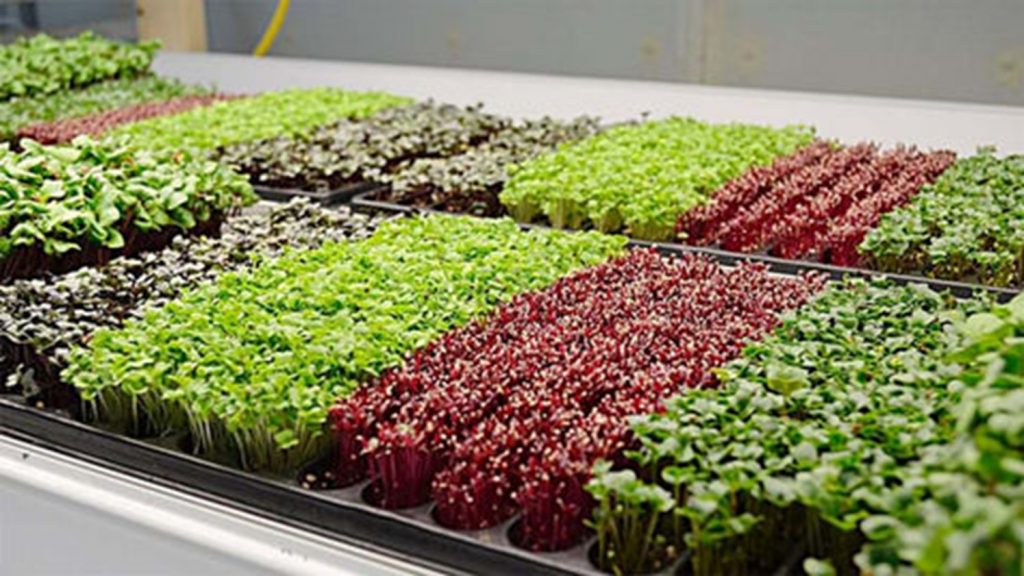
This initiative focuses on the production, promotion, and integration of microgreens into local diets and educational institutions such as kindergartens and schools. The project combines agricultural innovation, nutrition education, and environmental sustainability by using low-resource cultivation methods (minimal water, soil, and space) to produce high-value crops all year round.
Primary Product Activity:
The startup grows a range of vitamin- and mineral-rich microgreens, including:
Pea shoots (rich in vitamin C and folic acid)
Sunflower microgreens (high in vitamin E and protein)
Dill microgreens (support digestion)
Broccoli microgreens (contain sulforaphane for heart and brain health)
Spinach microgreens (rich in iron and vitamin A)
Mung bean sprouts (rich in B vitamins and easy to digest)
These microgreens are supplied to local markets, schools, kindergartens, and health food centers as part of a healthy, sustainable food initiative.
Planting Areas:
The cultivation takes place in controlled indoor environments such as greenhouses, university research labs, and small hydroponic systems. The initial planting area covers 50–100 square meters, allowing efficient year-round production. As the project expands, larger greenhouse zones (up to 0.2 hectares) will be established to meet rising local demand.