Curriculum integration
Curriculum Integration of SDGs
Meaningful Education Around the Sustainable Development Goals (SDGs)
Navoi State University (NSU) is dedicated to embedding the principles and values of the United Nations Sustainable Development Goals (SDGs) into its academic curriculum, research activities, and community engagement initiatives. The university strives to prepare graduates who possess not only professional competence but also a strong awareness of sustainability, social responsibility, and global citizenship.
In line with Uzbekistan’s national development priorities, NSU promotes Meaningful Education around the SDGs through an interdisciplinary approach that connects theory with real-world applications. The university’s diverse programs in education, natural sciences, social sciences, economics, medicine, and physical education provide students with the knowledge and skills needed to address the key sustainability challenges of the 21st century.
SDG-Linked Curriculum
To ensure that every student is exposed to sustainability concepts and practices, the SDGs are integrated across multiple courses and disciplines. The following subjects incorporate the principles of sustainable development, human well-being, and environmental responsibility:
Education and Pedagogy: Inclusive Education, Critical Pedagogy, Creative Pedagogy, Quality Management in Education, Leadership and Management, Digital Pedagogy, Family and School Cooperation in Raising Children with Special Needs.
Health and Life Sciences: Public Health, Hygiene and Medical Ecology, Diet in an Active Sports Life, Human Anatomy, Physiology, Microbiology, and Preventive Medicine.
Physical Education and Sports: Theory and Methodology of Physical Culture, Adaptive Physical Education, Sports Management, Ecology and Sports, Green Campus Initiatives.
Psychology and Social Sciences: Medical Psychology, Social Work, Personality Psychology, Psychology of Leadership, Social Conflicts and Their Management, Moral and Legal Foundations of the Fight Against Corruption.
Natural Sciences and Geography: Ecology and Nature Protection, Sustainable Development, Geoecological Culture, Global Climate Change and Its Impact on Natural Resources of Uzbekistan, Environmentally Clean Energy Types.
Economics and Management: Strategic Management, Fundamentals of Entrepreneurship and Start-UP, Economic Security, World Economy and International Relations, Project Management, and Social Responsibility in Business.
This integration ensures that all students, regardless of their field of study, engage with SDG themes and understand their connection to future professional practice, local community development, and global sustainability. (link)
Workshops and Training Sessions
Regular workshops are organized across faculties to equip students and academic staff with sustainability-related competencies. These sessions focus on developing leadership, innovation, and community engagement skills while emphasizing ethical and environmental responsibility.
Examples include:
Workshop on Integrating SDGs into Teaching and Learning Practices (SDG 4 – Quality Education)
Digital Skills for Sustainable Development (SDG 9 – Industry, Innovation and Infrastructure)
Promoting Gender Equality in Higher Education (SDG 5 – Gender Equality)
Climate Literacy and Environmental Responsibility (SDG 13 – Climate Action)
Leadership and Community Partnership for the SDGs (SDG 17 – Partnerships for the Goals)
These interactive workshops encourage participants to share experiences, identify sustainability challenges in their disciplines, and co-develop innovative solutions.
1. A seminar-training workshop was conducted at the Faculty of Economics of Navoi State University by specialists from the Higher School of Business and Entrepreneurship under the Cabinet of Ministers. The workshop addressed current topics in economics, business management, human resource management, tourism and hospitality, and logistics.
Students received detailed guidance on modern management approaches, innovative business ideas, and opportunities in the tourism sector. Experts shared practical experiences, provided recommendations useful for students’ future professional careers, and established agreements for students’ internships in relevant organizations.
At the conclusion of the workshop, students had the opportunity to ask questions and were reminded of the importance of continual skill development, acquiring modern knowledge, and maintaining competitiveness in the labor market.
Relevance to other SDGs:
SDG 8 – Decent Work and Economic Growth: Enhances students’ employability and entrepreneurial skills.
SDG 9 – Industry, Innovation, and Infrastructure: Promotes innovation and practical business knowledge among young professionals.
2. As part of preparations for international accreditation, Navoi State University, in cooperation with the ACQUIN international accreditation organization, scheduled an accreditation review on September 18–19 of this year. International experts from ACQUIN will evaluate the bachelor’s and master’s programs in Mathematics, Biology, and Foreign Languages and Literature: English Language. This process aims to ensure that the university’s programs meet international quality standards, enhancing the quality and competitiveness of higher education.
Relevance to other SDGs:
SDG 8 – Decent Work and Economic Growth: Ensures graduates gain internationally recognized qualifications that improve employability.
SDG 17 – Partnerships for the Goals: Strengthens international collaboration in higher education and knowledge exchange.
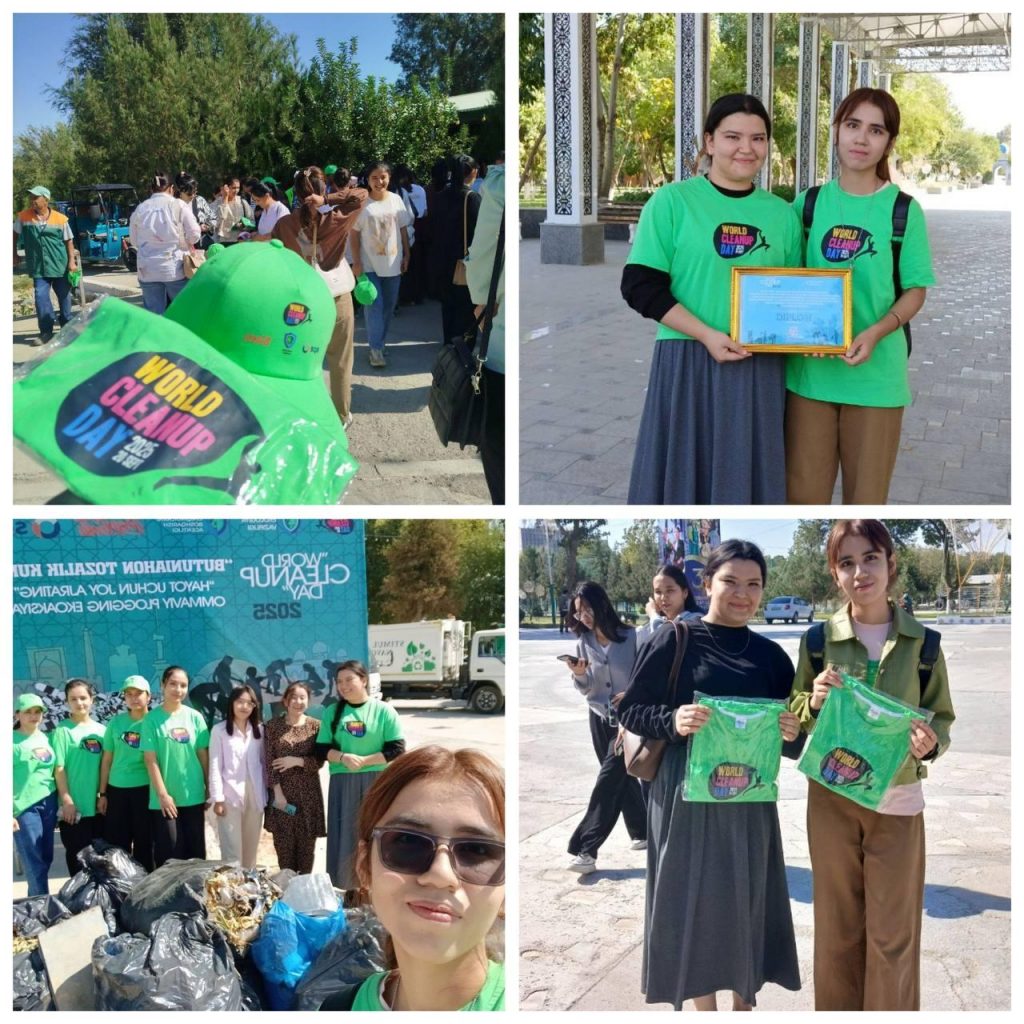
3. Environmental Action “Allocate Space for Life” Dedicated to World Cleanup Day
An environmental action titled “Allocate Space for Life” was organized in Alisher Navoi Central Park in Navoi city, dedicated to the observance of World Cleanup Day.
The event aimed to raise environmental awareness and promote a culture of cleanliness, health, and responsibility among young people. Volunteer groups consisting of students from the Faculty of Languages and the Faculty of History of Navoi State University took an active part in the initiative.
During the event, participants combined jogging activities with environmental cleanup, demonstrating the importance of integrating physical well-being and ecological responsibility. The initiative promoted the values of sustainable living, teamwork, and civic engagement.
This activity contributed to several Sustainable Development Goals (SDGs):
SDG 13 – Climate Action: encouraging proactive engagement in environmental protection and waste reduction;
SDG 3 – Good Health and Well-being: promoting a healthy lifestyle through physical activity;
SDG 11 – Sustainable Cities and Communities: fostering public participation in keeping urban spaces clean and livable;
SDG 17 – Partnerships for the Goals: strengthening collaboration between the university, local authorities, and community organizations.
Through this initiative, Navoi State University reaffirmed its commitment to sustainability and active youth participation in building a cleaner, healthier, and more sustainable environment.
4. Workshop “Environmental Culture – The Foundation of a Healthy Society”
A workshop titled “Environmental Culture – The Foundation of a Healthy Society” was organized by the Faculty of Exact Sciences of Navoi State University in cooperation with the Navoiy City Council of the Ecological Party of Uzbekistan.
The workshop focused on raising environmental awareness and promoting sustainable living practices among youth. During the roundtable discussions, participants examined key issues such as preventing ecological crises, developing clean and healthy lifestyles, and strengthening love and care for nature among students.
Faculty tutors and active students shared their ideas and proposals on how to increase ecological responsibility and promote a culture of sustainability within the university and the wider community.
At the conclusion of the event, participants emphasized the importance of turning environmental consciousness into a daily habit and encouraged everyone to take an active role in protecting and preserving the natural environment.
This workshop directly contributed to several Sustainable Development Goals (SDGs):
SDG 13 – Climate Action: promoting environmental awareness and preventive action against ecological crises;
SDG 3 – Good Health and Well-being: advocating for a clean and healthy lifestyle;
SDG 4 – Quality Education: fostering environmental education and youth engagement;
SDG 15 – Life on Land: encouraging respect for and protection of terrestrial ecosystems;
SDG 17 – Partnerships for the Goals: strengthening collaboration between the university and the Ecological Party to achieve sustainable outcomes.
Through this workshop, Navoi State University reaffirmed its dedication to building a generation of environmentally conscious citizens who recognize the intrinsic link between ecological culture and a healthy, sustainable society.
5. Implementation of the “Clean Hands” National Program
Within the framework of improving public health and hygiene culture in Uzbekistan, the “Clean Hands” National Program is being implemented to expand access to sanitary and hygiene facilities, especially among young people and students.
The program emphasizes the importance of proper hand hygiene as a key component of disease prevention and the promotion of a healthy lifestyle. Under this initiative, all healthcare and educational institutions across the country, including Navoi State University, are being equipped with hand-washing stations, while canteens and public dining areas are provided with soap and antiseptic supplies.
This program also aims to raise public awareness on hygiene practices and ensure sustainable access to clean and safe sanitation facilities. It reflects the country’s strong commitment to the United Nations Sustainable Development Goals, particularly:
SDG 3 – Good Health and Well-being: improving hygiene and reducing the spread of infectious diseases;
SDG 6 – Clean Water and Sanitation: ensuring access to adequate sanitation and hygiene for all;
SDG 4 – Quality Education: integrating hygiene education and awareness-raising activities into educational settings;
SDG 17 – Partnerships for the Goals: fostering cooperation between educational institutions, public health authorities, and community organizations.
Through the implementation of the “Clean Hands” initiative, Navoi State University continues to contribute to building a healthier academic environment and promoting sustainable hygiene practices among students and staff.
University Seminars and Awareness Campaigns
NSU hosts public lectures, student forums, and faculty seminars that raise awareness of sustainable development issues at the local and global levels.
Topics have included:
The role of education in promoting sustainable societies
Youth participation in achieving SDGs
Green Campus and Eco-friendly initiatives at universities
Ethical and inclusive leadership in academia
Such events bring together students, researchers, and local community representatives, fostering collaboration and shared responsibility for achieving sustainability.
6. Seminar on Supporting Women and Implementing the “Uzbekistan–2030” Strategy
At Navoi State University, a seminar was organized to explain the essence and objectives of the State Program for the Implementation of the “Uzbekistan–2030” Strategy within the framework of the “Year of Supporting Youth and Business.”
The event aimed to raise awareness among university staff about the national priorities for sustainable development, with a particular focus on gender equality, support for women, and empowerment in the social and economic spheres.
During the roundtable discussion, experts presented insights into:
the main directions of the State Program,
the ongoing national efforts to promote gender equality and strengthen the role of women in society (SDG 5),
initiatives designed to support youth and women’s entrepreneurship (SDG 8), and
the vital role of mothers in child upbringing and family well-being (SDG 4 – Quality Education).
This seminar contributed to advancing NSU’s institutional commitment to the Sustainable Development Goals, encouraging academic and administrative staff to integrate gender-sensitive and inclusive approaches into education, management, and community engagement practices.
7. Seminar on Gender Equality and Women’s Health in the New Uzbekistan
A seminar titled “Gender Equality Issues and Women’s Health in the New Uzbekistan” was organized by the Faculty of Uzbek Language and Literature and the Faculty of Mathematics and Informatics at Navoi State University for fourth-year students.
The event aimed to enhance students’ awareness of gender equality, women’s rights, and public health as integral components of sustainable development. During the seminar, participants received detailed explanations and practical insights on the following themes:
The Role of Gender Equality in Society
Reproductive Health and the Formation of Healthy Families
Enhancing Legal Literacy of Female Students to Promote Gender Equality
Gender Equality Issues in the Development of the New Uzbekistan
The seminar emphasized the importance of women’s empowerment, reproductive well-being, and inclusive participation in social life, aligning with the United Nations Sustainable Development Goals — SDG 5 (Gender Equality), SDG 3 (Good Health and Well-being), and SDG 4 (Quality Education).
This event contributed to promoting gender-sensitive perspectives among students, strengthening their understanding of equality, health, and human rights within the context of Uzbekistan’s sustainable development vision.
8. As part of the “Month of Art and Creativity” in Navoi region, Navoi State University organized a seminar-training and roundtable discussion on “Combating Plagiarism.” The event focused on preventing plagiarism during dissertation writing and reinforcing the principles of academic integrity. This initiative promotes scientific collaboration, responsible use of knowledge, and sustainable academic development, directly supporting SDG Target 17.4.
Relevance to other SDGs:
SDG 4 – Quality Education: Promoting academic integrity and combating plagiarism contributes to ensuring quality education.
SDG 16 – Peace, Justice, and Strong Institutions: Strengthening academic honesty and preventing unfair practices support justice and integrity within institutions.
9. At the 19th Regional iDMU in Navoi city, a regional seminar titled “Lessons from the Khamsa” was held in celebration of the “Year of Alisher Navoi” and the 584th anniversary of Hazrat Navoi’s birth. The seminar focused on the literary heritage of Alisher Navoi, fostering cultural awareness and enriching students’ knowledge of national literature, thereby contributing to quality education and lifelong learning.
Relevance to other SDGs:
SDG 11 – Sustainable Cities and Communities: Promoting cultural heritage helps preserve community identity and history.
SDG 16 – Peace, Justice, and Strong Institutions: Encouraging understanding of national heritage supports social cohesion and informed citizenship.
Playlist
2 Videos


10. A training seminar dedicated to promoting volunteerism and establishing a nationwide eco-volunteer network was held at Navoi State University, organized in cooperation with the Youth Affairs Agency, the Volunteers Association, and the Ecologist Public Association.
The seminar brought together 70 active volunteers from different regions of Uzbekistan under the concept of “Peer-to-Peer Education.” The goal of the event was to strengthen youth engagement in environmental protection, community development, and sustainable initiatives through knowledge-sharing and collaboration.
During the workshop, participants discussed and practiced:
Principles of eco-volunteerism and community-based sustainability projects;
The role of young people in promoting environmental awareness and climate responsibility;
Strengthening cooperation among youth organizations to achieve the Sustainable Development Goals (SDGs);
Leadership, teamwork, and innovative approaches in volunteer activities.
This seminar supported the advancement of multiple SDGs, including:
SDG 17 – Partnerships for the Goals: through inter-institutional cooperation between NSU, government agencies, and NGOs;
SDG 13 – Climate Action: by promoting eco-volunteer initiatives and environmental awareness;
SDG 4 – Quality Education: through peer-led learning and capacity building;
SDG 11 – Sustainable Cities and Communities: by encouraging youth participation in sustainable urban and regional development.
The event served as an effective platform for fostering cooperation between educational institutions, civil society organizations, and active youth, contributing to the creation of a sustainable and environmentally responsible volunteer movement across Uzbekistan.
Research Activities and Publications NSU
Research Activities and Publications Related to the SDGs
Navoi State University (NSU) actively supports research and innovation initiatives that contribute to achieving the United Nations Sustainable Development Goals (SDGs). The university encourages faculty and students to conduct interdisciplinary research addressing pressing social, environmental, educational, and technological challenges. Research projects at NSU are focused on key SDG-related areas, including quality education (SDG 4), gender equality (SDG 5), clean water and sanitation (SDG 6), affordable and clean energy (SDG 7), industry, innovation and infrastructure (SDG 9), climate action (SDG 13), and partnerships for the goals (SDG 17).
The following research publications illustrate NSU’s contributions to sustainability-oriented research and innovation:
№ | Title of Publication | SDG Alignment | Thematic Focus |
1 | Academic Chain: Securing Educational Credentials with Blockchain-Enabled Systems | SDG 4, SDG 9, SDG 16 | Digital innovation and transparency in education |
2 | Analyzing the Sources and Consequences of Atmospheric Pollution: A Case Study of the Navoi Region | SDG 13, SDG 15 | Environmental protection and regional sustainability |
3 | Methods of Developing Professional Competence in Students Through the Use of Digital Technologies | SDG 4, SDG 9 | Educational quality and digital skills development |
4 | Improving Innovative Activities Based on Software in Digital Learning Environments | SDG 4, SDG 9 | Technological innovation in higher education |
5 | Optimizing Mechanical Engineering Curriculum Design Using AI and Machine Learning | SDG 4, SDG 9 | Artificial intelligence and STEM education |
6 | Opportunities for Developing Independent Educational Activity of Future Teachers Based on Digital Technologies | SDG 4 | Independent learning and teacher training |
7 | Use of Blended Educational Technology in Organizing Students’ Independent Education of Programming Languages | SDG 4, SDG 9 | Blended learning and digital pedagogy |
8 | Methods and Use of Wastewater Phytoremediation Intensification in the Mining Industry | SDG 6, SDG 9, SDG 13 | Clean water and environmental innovation |
9 | Environmental Factors of Students’ Professional Orientation in Extracurricular Activities | SDG 4, SDG 13 | Environmental education and youth development |
10 | The Role of Digital Innovations and Human Resource Potential in Advancing Education | SDG 4, SDG 8 | Innovation and human capital development |
11 | Methodology of Organizing Independent Education of Future Biology Teachers | SDG 4 | Quality education and science teacher training |
12 | Age and Growth of Two Bream Species in the Tudakul Reservoir of Uzbekistan | SDG 14, SDG 15 | Biodiversity and sustainable aquatic ecosystems |
13 | Influence of Abiotic Factors on Biodiversity of Bivalve Molluscs in the Lower Zarafshan Reservoirs | SDG 13, SDG 15 | Climate impact on biodiversity |
14 | Growth of Rainbow Trout (Oncorhynchus mykiss) in the Conditions of Tashkent Province, Uzbekistan | SDG 2, SDG 15 | Sustainable aquaculture and food resources |
15 | Aspects of Modernization of Chemistry Education through Information Technology | SDG 4, SDG 9 | Educational innovation in STEM |
16 | Current State of Coenopopulations of Some Rare Endemic Species in Navoi Region, Uzbekistan | SDG 15 | Conservation and ecosystem protection |
17 | Pandemics and Their Geographical Distribution | SDG 3 | Public health and epidemiological mapping |
18 | Waste Water Treatment of Mining Enterprises in Uzbekistan Using Higher Aquatic Plants | SDG 6, SDG 13, SDG 15 | Eco-friendly water purification and industrial sustainability |
19 | Morphological Characteristics of Carp (Carassius gibelio) in Pond Fish Farming in Uzbekistan | SDG 2, SDG 15 | Sustainable food production and aquatic ecology |
20 | Fabrication of an Economical and Environmentally Friendly Electrode Utilizing Fullerene Modified with L-Proline and Copper Nanoparticles | SDG 9, SDG 12 | Green chemistry and eco-friendly technology |
21 | The Role of AI-Driven Intelligent Tutoring Systems in Enhancing Mechanical Engineering Education | SDG 4, SDG 9 | AI in education and digital learning tools |
22 | Novel Eco-Friendly Electrode: Copper Nanoparticle-Doped MWCNTs for Green Electro-Organic Synthesis of 1,2,3-Triazoles | SDG 9, SDG 12 | Sustainable industrial chemistry |
23 | Econometric Modeling and Forecasting of Environmental Conditions and Population Health: Case Study of Navoi and Zarafshan Cities | SDG 3, SDG 11, SDG 13 | Urban sustainability and health research |
24 | Effective Methods for Organizing Laboratory Sessions in Programming Language Courses | SDG 4, SDG 9 | Pedagogical innovation in digital education |