Admission Provisions
Navoi State University has the system that regularly monitors all applicants including female students, low-income family students, students with special needs in order to support them during their studies. Navoi State University follows an already existing policy of providing a number of benefits (https://lex.uz/uz/docs/-6056269) for women in terms of acceptance that introduced by government.
Navoi State University (NSU) is committed to advancing gender equality by ensuring that women and girls have equal access to educational opportunities at all levels of study. The university’s admission policies and outreach activities are designed to encourage female participation, reduce barriers to entry, and support their academic and professional development in line with national legislation and international gender equality goals.
To guarantee transparency and inclusivity, NSU systematically monitors application and acceptance data through the Hemis Student Information System and national government portals, including:
my.gov.uz – for centralized bachelor’s and master’s admissions,
magistr.edu.uz – for master’s programme applications,
daraja.ilmiy.uz – for doctoral (PhD and DSc) admissions,
uzbmb.uz – for national testing and assessment registration, and
admission.uz – for general applicant information and guidance.
Through these national systems, NSU can access disaggregated data on female application and admission rates, which helps track progress toward gender balance and identify areas for improvement. The university collaborates with the Agency for Assessment of Knowledge and Qualifications and the Ministry of Higher Education, Science and Innovation to analyze this data annually and align institutional goals with state-level gender equality policies.
Navoi State University has an institutional Gender Equality and Access Policy that formally addresses women’s applications, acceptance/entry, and participation at the university. The policy outlines clear commitments to ensuring equal access to admissions, removing gender-based barriers, increasing women’s representation in STEM and leadership fields, and monitoring gender-disaggregated data across all stages of recruitment and education. It requires female representation in admissions committees, promotes scholarships and outreach programs for women, and provides support mechanisms such as flexible study options and services for students with family responsibilities. The policy also establishes annual monitoring and reporting procedures through the Gender Equality Committee and the Hemis Information System, ensuring accountability and continuous improvement. Overall, this policy demonstrates NSU’s comprehensive approach to supporting women’s access, admission, retention, and academic progression.
(policy bu yerga hyperlink bilan berilishi kk)
Expansion of Recommendation Quotas for Female Applicants
In 2025, major progress was achieved with the expansion of the recommendation quota (tavsiyanoma) system for women. According to official data published on the UzBMB platform (mandat.uzbmb.uz), the number of special recommendation places for women doubled from 2,000 to 4,000 nationwide.
This policy innovation allowed a larger number of women—particularly those from vulnerable and disadvantaged groups—to gain admission to higher education institutions, including Navoi State University.
Although the system does not automatically guarantee admission, it substantially increases women’s chances of entering universities and directly contributes to achieving SDG 5 by removing long-standing gender and financial barriers to education.
Nationwide Admission Reforms and Female Participation
Under Presidential Decree PF–43 (July 18, 2025), the parameters of the state admission order for higher education institutions for the 2025/2026 academic year were officially approved.
A total of 45,422 state-funded study places were allocated nationwide, including the aforementioned 4,000 grants specifically for women (xotin-qizlar).
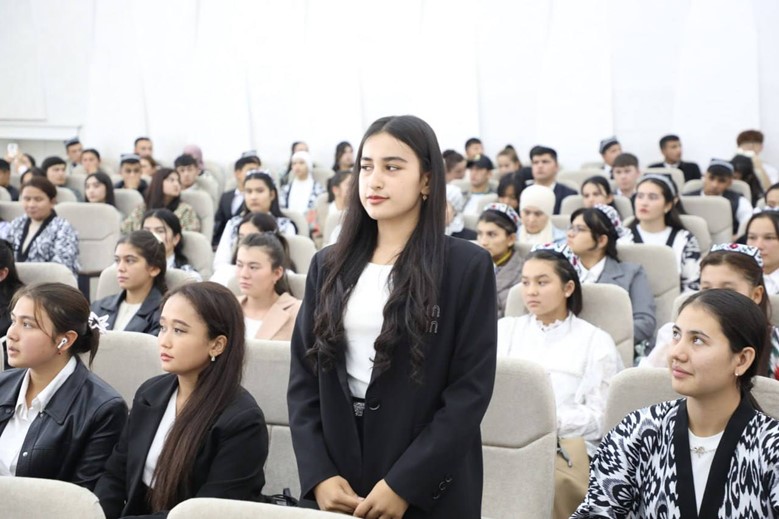
Between July 14 and 23, 2025, entrance examinations were conducted under the coordination of the Ministry of Higher Education, Science and Innovations. According to official statistics, 671,397 applicants registered across the country — of whom 53.8% (361,019) were women.
This majority female participation demonstrates the tangible impact of Uzbekistan’s gender policies and the success of digital accessibility reforms in education.
Measurable Progress and National Impact
Uzbekistan’s comprehensive gender-focused education reforms have produced significant outcomes:
The number of higher education institutions has tripled in recent years.
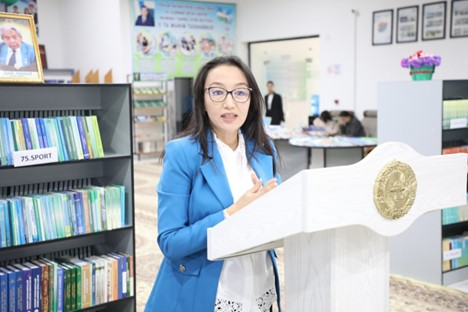
Enrollment coverage has reached 42%, with record participation of women.
The number of female students in higher education has increased 11-fold compared to earlier yearss.
Over the past 25 years, 800 young people were sent abroad for education at the state’s expense, and in just the last seven years, this number has tripled through the “El-Yurt Umidi” Foundation, significantly expanding women’s access to international academic experience.
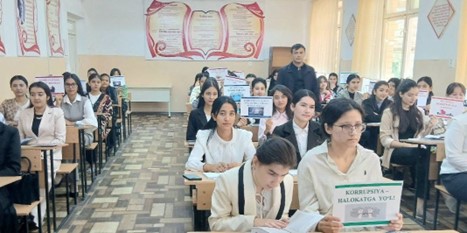
The Youth Affairs Agency, in collaboration with the Civil Service Development Agency, now monitors students abroad and assists their reintegration into professional life upon return to Uzbekistan.
As the President of the Republic of Uzbekistan stated:
“When we educate one girl, we educate an entire family. An educated, enlightened family means an educated and enlightened society. We will continue to advance this cause with even greater energy.”
This guiding principle underscores the strategic direction of both the national government and institutions such as Navoi State University in ensuring that gender equality, women’s education, and empowerment remain central to Uzbekistan’s sustainable development agenda.
Admission Provision for Women with Five Years of Work Experience
In accordance with the Resolution of the Cabinet of Ministers of the Republic of Uzbekistan No. 322, dated June 9, 2022, “On approval of the Procedure for admission to state higher educational institutions of women with at least five years of work experience in their specialty”, Navoi State University (NSU) provides special admission provisions to support women’s access to higher education.
According to this state regulation, women who have at least five years of continuous work experience in a specific professional field are eligible for admission to higher education institutions through an interview process, without being required to pass the national centralized entrance examinations.
This provision recognizes the professional contribution, experience, and competence of women who have been active in the workforce and seeks to provide them with an opportunity to continue their academic development.
This state policy aims to:
Encourage lifelong learning and professional growth among women who have been working for at least five years in sectors such as education, healthcare, administration, or production;
Support gender equality in higher education by providing flexible admission routes for women returning to academic study;
Recognize the value of women’s practical experience as part of the nation’s intellectual and economic development;
At NSU, this provision is implemented under the supervision of the Admission Commission and the Women’s Support Community.
Eligible applicants must:
Submit official documentation (such as an employment record or employer certificate) confirming five years of continuous work in one professional field;
Undergo a structured interview conducted by the university’s Admission Commission;
Meet any specific faculty or program requirements related to their chosen field of study.
Upon successful evaluation, these applicants are admitted to the relevant bachelor’s or master’s program on a preferential basis, reflecting their prior achievements and work experience.
The admission process and statistics for women admitted under this special regulation are:
Registered in the Hemis Student Information System;
Reported annually to the Ministry of Higher Education, Science and Innovation;