“Navoi State University: Strengthening International Cooperation for Sustainable Progress”
Navoi State University actively develops international and regional partnerships that enhance its academic capacity and support progress toward the Sustainable Development Goals. Through collaborative training programs, exchange visits, joint discussions, research, and academic networking, the university enhances its capacity to address key themes such as quality education, innovation and scientific development, environmental sustainability, cultural sustainability, and institutional cooperation for sustainable development.
These collaborations allow NSU staff to observe different educational, scientific, and management systems, explore comparative approaches, and plan joint activities that directly contribute to the development of sustainable teaching practices, research initiatives, community engagement, and university governance.
The cases below present examples of NSU’s involvement in such international cooperation.
Today, Navoi State University officially inaugurated two new international centres — the “Asparagus” Research Centre and the “Silk Road” Agricultural Specialists Training Centre — in cooperation with Beijing Vocational College of Agriculture and Beijing Shengxi Agricultural Development Company of China.
The establishment of these centres represents an important step towards strengthening international academic cooperation, promoting agricultural innovation, and enhancing the integration of scientific research with practical education. The initiative also creates new opportunities for knowledge exchange, technology transfer, and the development of professional competencies in the agricultural sector.
“Asparagus” Research Centre
The “Asparagus” Research Centre aims to promote the introduction of modern agricultural technologies, improve cultivation practices, and support the production of high-quality, export-oriented agricultural products. Its activities are expected to contribute to the development of innovative farming methods, more efficient use of agricultural resources, and the expansion of opportunities for scientific research in sustainable agriculture.
Through cooperation with Chinese partners, the centre provides a platform for exchanging expertise, exploring innovative cultivation techniques, and strengthening the practical application of agricultural research.
“Silk Road” Agricultural Specialists Training Centre
The “Silk Road” Agricultural Specialists Training Centre focuses on preparing highly qualified specialists by integrating theoretical knowledge with practical training. It is designed to enhance the professional skills of students and agricultural practitioners through hands-on learning, exposure to modern technologies, and opportunities to engage in practice-oriented educational activities.
The centre is expected to strengthen the connection between higher education and the agricultural sector, improve students’ practical competencies, and support the development of a skilled workforce capable of responding to the changing demands of modern agriculture.
The inauguration ceremony was attended by Navoi State University Rector Muhiddin Kalonov, representatives of the Chinese partner institutions, university professors and lecturers, students, and agricultural specialists.
During the event, participants explored the facilities established at the centres, including modern laboratory equipment, innovative developments, and opportunities for conducting scientific research. The visit highlighted the potential of the new centres to serve as platforms for research, professional training, and international knowledge exchange.
The launch of these centres reflects Navoi State University’s commitment to expanding international partnerships, advancing research and innovation, and improving the quality of higher education through practical and interdisciplinary collaboration.
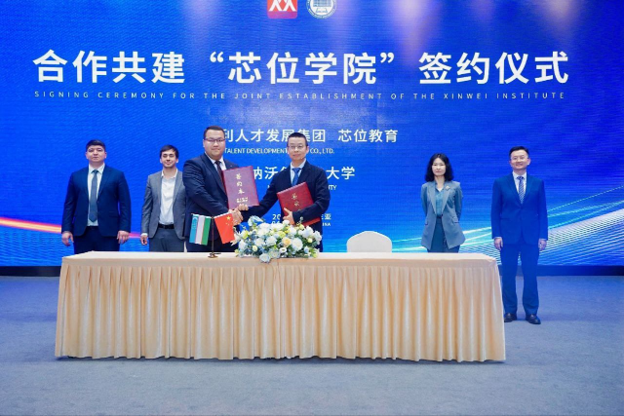
Navoi State University and Geely Holding have signed a strategic partnership agreement aimed at establishing the “Xinwei Institute”, an initiative designed to introduce innovative educational approaches and strengthen the connection between higher education and modern industry.
In an era of rapid technological advancement and growing demand for innovation, the initiative reflects the partners’ shared commitment to modernizing education, integrating advanced technologies into teaching and learning, and preparing highly qualified specialists who meet the needs of the contemporary industrial sector.
The planned “Xinwei Institute” is expected to become a distinctive innovative educational institution, with ambitions to serve not only Uzbekistan but also the wider Central Asian region. Its proposed activities will focus on introducing advanced educational technologies, personalizing learning processes, and developing practice-oriented training programmes aligned with the evolving requirements of modern industry.
As part of the cooperation initiative, an official meeting was held with the participation of more than 100 representatives of leading educational institutions, international experts, and relevant organizations. During the meeting, the parties signed a strategic partnership agreement, marking an important milestone in strengthening institutional cooperation and advancing plans for a new generation of educational infrastructure.
The partnership is expected to create opportunities for international knowledge exchange, closer collaboration between academia and industry, and the development of innovative approaches to professional education. It also reflects the growing importance of strategic partnerships in preparing graduates with the technical knowledge, practical competencies, and adaptability required in a rapidly changing global economy.
Navoi State University, in collaboration with its international partners, has developed and launched a joint digital platform to strengthen international cooperation, promote educational innovation, and facilitate the exchange of scientific and technical knowledge.
The initiative builds on the university’s strategic partnerships with Beijing Vocational College of Agriculture and Beijing Shengxi Agricultural Development Company, as well as its cooperation with Geely Holding in connection with the establishment of the proposed “Xinwei Institute.”
The digital platform provides an online space for presenting collaborative initiatives, sharing information about educational and research activities, and promoting opportunities for academic exchange and technological innovation. It strengthens communication between partner institutions and supports the dissemination of information to students, researchers, educators, and industry representatives.
This initiative demonstrates good practice in digital transformation and international partnership development by using digital technologies to connect higher education, scientific research, and industry. It contributes to more accessible information exchange, strengthens institutional collaboration, and supports the university’s efforts to modernize its educational and research environment.
Navoi State University held a meeting of its University Council for the 2025–2026 academic year, chaired by the Rector and Council Chair, Professor Muhiddin Kalonov. The meeting addressed key institutional priorities, including academic development, and innovation, financial sustainability, international cooperation, digital transformation, and graduate employment.
During the meeting, university leaders reviewed the implementation of institutional decisions and measures to strengthen administrative discipline. Vice-rectors presented reports on research and innovation activities, scientific and pedagogical achievements, financial and economic performance, international partnerships, and graduate employment outcomes for the 2025 calendar year. The discussions provided a basis for identifying areas for improvement and assigning responsibilities for further institutional development.
Several initiatives were considered to expand the university’s research capacity and educational infrastructure. These included the establishment of the “Bolalik Akademiyasi” (Childhood Academy), the launch of an electronic academic journal entitled Navoi State University Bulletin: Natural Sciences, and the establishment of a specialized Scientific Council authorized to award the Doctor of Philosophy (PhD) degree in Finance, Money Circulation and Credit (08.00.07) and Accounting and Auditing (08.00.08), subject to the applicable authorization requirements.
The Council also discussed improving digitalization across university operations, approving a new university logo, and establishing an Artificial Intelligence (AI) Centre at the university’s new campus in cooperation with Turonbank Joint-Stock Commercial Bank. The proposed AI Centre represents an opportunity to strengthen collaboration between higher education and the financial sector, encourage the practical application of artificial intelligence, and support the development of digital competencies.
In addition, a number of university professors and lecturers were formally awarded scientific degrees and academic titles during the meeting, recognizing their academic achievements and contributions to research and higher education.
The University Council meeting demonstrates an integrated approach to university governance by connecting strategic decision-making with research development, digital innovation, academic recognition, and graduate employability. The consideration of an AI Centre in partnership with Turonbank illustrates the potential for cooperation between academia and the financial sector, while the proposed research council and academic journal support the development of scientific capacity.
Expected outcomes include improved institutional coordination, expanded research opportunities, stronger digital competencies, closer university–industry collaboration, and enhanced monitoring of graduate employment. These initiatives can support the university’s long-term contribution to regional development and the achievement of the Sustainable Development Goals.
Navoiy State University (NSU), Uzbekistan, in collaboration with Abai Kazakh National Pedagogical University in Almaty, Kazakhstan, jointly organised the First International Conference for Achieving the Sustainable Development Goals. The conference provided an international academic platform for researchers, postgraduate students and participants from different countries to exchange knowledge, share research findings and discuss approaches to sustainable development.
According to NSU’s official SDG 17 report, the conference involved more than 120 research articles covering a wide range of topics. This academic collaboration strengthened opportunities for international knowledge exchange, research dissemination and cooperation between higher education institutions in Uzbekistan and Kazakhstan.
The initiative demonstrates how cross-border university partnerships can bring together academic expertise, encourage collaborative research and support the exchange of ideas on shared development challenges. It also creates opportunities for future joint publications, research projects and continued academic cooperation between the participating institutions.
Collaborations
1.Memorandum with Perlis University of Malaysia
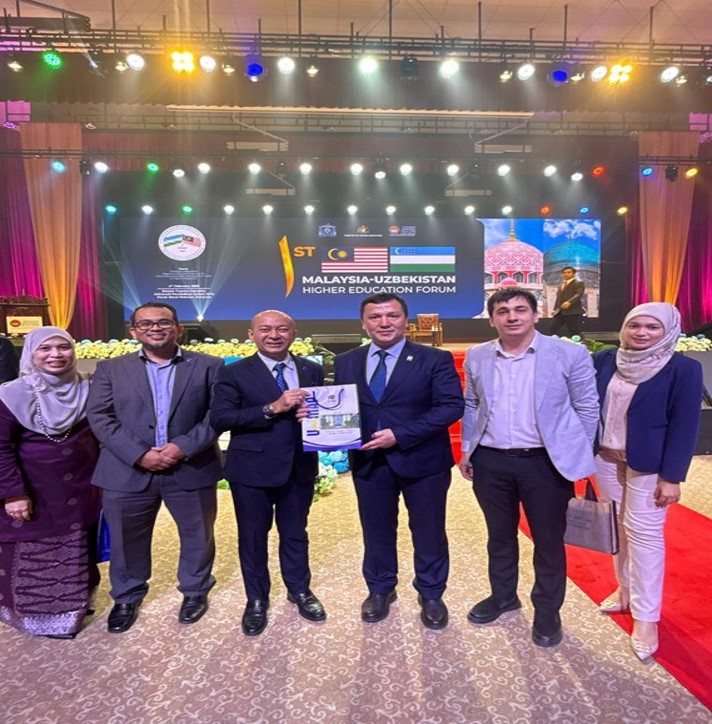
Navoi State University expanded its global cooperation through the signing of a memorandum of understanding with University Malaysia Perlis (UniMAP). The agreement focuses on strengthening academic collaboration and developing joint initiatives in technology-oriented fields with attention to innovation and sustainability priorities.
Under the memorandum, the two universities agreed to establish a joint business incubator, collaborate on modernising study programs in artificial intelligence and logistics, and launch student and faculty exchange programmes. These initiatives support NSU’s efforts to enhance innovation, promote sustainable technological development, and integrate globally relevant skills into academic training.
The cooperation also includes the creation of a joint scientific journal indexed in Scopus, which will increase international research visibility and enable comparative academic work between both institutions, including research related to sustainable development.
2.NAVOI STATE UNIVERSITY AND BELARUSIAN STATE PEDAGOGICAL UNIVERSITY SIGN MEMORANDUM OF COOPERATION
On September 29–30, the 4th Uzbekistan–Belarus Interparliamentary Forum took place in the city of Khiva. The forum was attended by representatives of parliaments, governments, ministries and agencies, local councils, higher education institutions, youth parliaments, and business circles from both countries.
S.O. Khujhiyev, Vice-Rector for Scientific Work and Innovations of Navoi State University, also participated in this prestigious forum.
During the forum, a memorandum of mutual cooperation was signed between Navoi State University and the Belarusian State Pedagogical University named after Maxim Tank.
The memorandum serves to develop cooperation between the two higher education institutions in the fields of education and science, implement joint initiatives, expand academic exchange, and strengthen ties between faculty members and students.
This agreement plays an important role in further expanding Navai State University’s international cooperation ties and taking partnerships with prestigious foreign higher education institutions to a new level.
SDG 4 – Quality Education: Promoting academic exchange, knowledge sharing, and the improvement of educational practices.
SDG 9 – Industry, Innovation and Infrastructure: Creating opportunities for collaborative scientific research and innovation.
SDG 17 – Partnerships for the Goals: Establishing an international institutional partnership to strengthen cooperation in education and science.
Best Practice and Expected Outcomes: The memorandum establishes a framework for international collaboration, creating opportunities for joint research projects, academic mobility, scientific events, and the exchange of effective educational practices. Progress can be measured through future joint projects, research publications, academic exchanges, and SDG-related activities.
3.Navoi State University and M.Tank Belarusian State Pedagogical University Sign Memorandum of Cooperation
A Memorandum aimed at developing mutual cooperation was signed between Navoi State University and the Belarusian State Pedagogical University named after M.Tank.
Additionally, an agreement was signed to train master’s students based on a joint educational program in the “Preschool Education” specialty under the 1+1 format, starting from the 2026–2027 academic year.
Areas of Cooperation Will Be Expanded In accordance with the agreements, the development of cooperation between the universities was established in the following areas:
Philological Education
Primary Education
Inclusive Education
Management and Artificial Intelligence
Machine Learning
Starting from the next academic year, it is planned to launch joint educational programs in 3+1 and 2+2 formats in these fields.
Within the Framework of Cooperation: ▫️ Academic mobility programs; ▫️ Online and offline lectures; ▫️ Free summer schools for students will be organized.
These agreements will serve to elevate the scientific and pedagogical cooperation between the two universities to a new level and expand opportunities for students and faculty members to exchange international experience.
SDG 4 – Quality Education: Developing joint educational programmes in Preschool Education, Philology, Primary Education, and Inclusive Education to improve educational quality and promote inclusive learning opportunities.
SDG 5 – Gender Equality: Promoting equal access to educational opportunities and professional development for all students, regardless of gender, through international academic cooperation.
SDG 8 – Decent Work and Economic Growth: Strengthening students’ professional competencies and employability through international learning experiences, academic mobility, and practice-oriented education.
SDG 9 – Industry, Innovation and Infrastructure: Encouraging cooperation in Artificial Intelligence and Machine Learning to support technological innovation and the integration of digital technologies into education and research.
Navoi State University has signed a Memorandum of Understanding (MoU) with the Medical University of Białystok, Poland, marking an important step towards establishing international cooperation in the field of medical education, scientific research, and academic exchange.
The memorandum aims to strengthen academic ties between the two higher education institutions and create new opportunities for the exchange of knowledge, expertise, and best practices in medical education and healthcare-related research.
Under the terms of the memorandum, the parties plan to focus on the following areas of cooperation:
Joint Educational Programmes: Developing and implementing joint academic programmes in medicine to enhance the quality of medical education and promote international academic standards.
Academic and Student Mobility: Facilitating exchanges of professors, academic staff, and students to encourage cross-cultural learning, professional development, and the sharing of educational experiences.
Scientific Research Cooperation: Expanding collaboration in scientific research, supporting joint research initiatives, and promoting the exchange of research findings and expertise.
Knowledge and Experience Sharing: Creating opportunities for academic staff to share teaching methodologies, innovative approaches, and international best practices in medical education.
International Academic Partnerships: Strengthening institutional relations and laying the groundwork for sustainable, long-term cooperation between the universities.
This partnership represents an important opportunity for Navoi State University to expand its international academic network and strengthen its engagement with European higher education institutions. Cooperation with the Medical University of Białystok is expected to create a foundation for future academic initiatives, enhance educational opportunities, and encourage the development of research activities in the medical field.
Navoi State University continues to turn international agreements into active, real-world results. Currently, 2nd-year master’s students specializing in Russian Language and Literature are undertaking a practical internship and academic exchange at Polotsk State University (Belarus) under the “1+1” joint educational program, led by Dilorom Shamsiyeva, Director of the Registrar’s Office and Associate Professor.
Key Highlights of the Academic Exchange:
Master-Classes & Digital Learning: Following official meetings, students participated in specialized master-classes conducted by leading faculty members, focusing on the effective use of the Moodle distance learning system and the creation of modern electronic educational-methodological complexes.
Immersive Campus Exploration: The master’s students explored Polotsk State University’s advanced educational process, research laboratories, modern libraries, and university museums.
Defense Sessions & Cross-Cultural Learning: To gain deep insight into international academic standards, our students attended and observed the defense sessions of Belarusian undergraduate thesis defenses, acquiring valuable cross-cultural and academic perspectives.
SDG 4 – Quality Education: Second-year master’s students specializing in Russian Language and Literature participated in an academic exchange and practical internship at Polotsk State University in Belarus under the “1+1” joint educational programme. They attended masterclasses on Moodle and the development of electronic educational-methodological resources and observed undergraduate thesis defense sessions.
SDG 9 – Industry, Innovation and Infrastructure: Students explored digital learning practices, research laboratories, and modern educational facilities, gaining practical exposure to innovative teaching and learning technologies.
SDG 17 – Partnerships for the Goals: Navoi State University strengthened international academic cooperation with Polotsk State University through the implementation of the joint “1+1” programme and student mobility.
Best Practice and Outcomes: The exchange enabled master’s students to gain practical experience in digital education, observe international assessment practices, and explore research and learning facilities at a partner university in Belarus.
Interregional cooperation is a vital factor for mutual experience sharing and mutually beneficial relations. On August 21, important meetings and negotiations took place to further develop cooperation between Gomel—one of the major cities of the Republic of Belarus—and the Navoi Region.
During the meetings, representatives of the executive authorities of both regions discussed expanding mutually beneficial cooperation, exchanging experiences, strengthening relations in promising areas, and implementing future joint initiatives.
Parliamentary Diplomacy — A Key Direction of Cooperation
During the visit, special attention was paid to developing cooperation between representative bodies. Specifically, Muhiddin Bakhritdinovich Kalonov, a deputy of the Navoi City Council of People’s Deputies (and Rector of Navoi State University), met with Elena Ivanovna Aleksina, Chairperson of the Gomel City Council of Deputies of the Republic of Belarus. They exchanged views on the activities of local representative bodies, parliamentary practices, and the prospects for mutual experience sharing.
During the dialogue, the parties emphasized the importance of further developing direct contacts between deputies, establishing mutual visits, and studying best practices in the activities of local councils.
Additionally, representatives of the Belarusian side were invited to visit the Navoi Region. This invitation is of great significance for elevating cooperation between the representative bodies of the two regions to a new level, exchanging mutual experience, and practically defining future areas of cooperation.
Notably, such meetings not only strengthen friendly relations between regions but also serve to expand the practical capabilities of parliamentary diplomacy. In the future, regular dialogue, mutual visits, and experience-sharing cooperation between the representative bodies of Gomel and Navoi are envisioned.
SDG 16 – Peace, Justice and Strong Institutions: Navoi City Council deputy and Navoi State University Rector Muhiddin Kalonov met with Elena Aleksina, Chairperson of the Gomel City Council of Deputies, to exchange experiences on local council activities and parliamentary practices.
SDG 17 – Partnerships for the Goals: Representatives of Navoi Region and Gomel discussed strengthening interregional cooperation, establishing direct contacts between deputies, organizing mutual visits, and sharing best practices.
Best Practice and Outcomes: A bilateral meeting was held to discuss cooperation between the representative bodies of Navoi and Gomel. The Belarusian delegation was invited to visit Navoi Region to further develop institutional ties and identify opportunities for future collaboration.
Navoi State University has hosted the grand opening ceremony of a new Korean Language Center, aimed at further advancing educational and international cooperation between Uzbekistan and the Republic of Korea.
During the event, Rector M. Kalonov and Bucheon University Rector Jeon Chun-su delivered speeches highlighting the prospects of cooperation between the two universities, new opportunities created for students, and the importance of expanding educational ties.
🇰🇷 The high-level delegation from Bucheon University included Rector Jeon Chun-su, Vice-Rectors Choi Jun-hyok and Song Eu-jin, Director of the International Relations Department Koo Jung-eun, specialist Kim Oksana, and presidential assistant Bae Cheon-ju, alongside Director of the Korean Education Center Park In-soo and other distinguished foreign guests.
As part of the cultural program, guests were treated to an exhibition showcasing Uzbek national art, traditional costumes, applied arts, and traditional folk dances.
Musical performances and festive dances added a vibrant and inspiring atmosphere to the celebration.
One of the central moments of the ceremony was the ceremonial ribbon-cutting to mark the official opening of the Korean Language Center.
The establishment of this center opens up brand-new opportunities for Navoi State University students to master the Korean language deeply, strengthen academic cooperation with South Korean higher education institutions, and fully leverage international educational opportunities.
SDG 17 – Partnerships for the Goals: The opening ceremony was attended by the rectors of Navoi State University and Bucheon University, alongside representatives of Korean educational institutions, strengthening bilateral academic cooperation.
SDG 8 – Decent Work and Economic Growth: The center creates opportunities for students to develop Korean-language proficiency, potentially supporting future employment and career opportunities involving international cooperation.
SDG 11 – Sustainable Cities and Communities: The opening ceremony promoted cultural exchange through an exhibition of Uzbek national art, traditional costumes, applied arts, and folk dances.
Best Practice and Outcomes: Navoi State University established and officially opened a dedicated Korean Language Center, expanding foreign-language learning opportunities and creating a platform for further academic and cultural cooperation between Uzbekistan and South Korea.
Navoi State University continues to expand its global networks and institutional development initiatives. Recently, an official meeting was held at NSU with distinguished Singaporean professor Visuanathan Gopalan. The meeting brought together faculty members of the Department of English Linguistics, representatives of the university’s Transformation Center, and the International Relations Department.
During the dialogue, key issues aimed at developing Navoi State University, improving the educational process, and elevating international cooperation to a new level were thoroughly discussed.
Key Areas of Discussion:
Strategic Transformation (2026–2030): Transforming the university based on a comprehensive strategic program, introducing modern management practices and innovative approaches to the educational process.
Global Linguistics Programs: Implementing short-term and long-term international cooperation programs in partnership with the Department of English Linguistics.
Enhancing Educational Quality: Studying advanced foreign practices and successfully integrating them into the university’s academic and research ecosystem.
At the conclusion of the meeting, both parties outlined prospective plans to consistently develop mutually beneficial cooperation, implement joint projects in education and scientific research, and further strengthen Navoi State University’s international reputation and global standing.
SDG 4 – Quality Education: Navoi State University held a meeting with Singaporean professor Visuanathan Gopalan to discuss improving educational quality, integrating international best practices, and developing short- and long-term cooperation programmes in English linguistics.
SDG 9 – Industry, Innovation and Infrastructure: The university discussed its 2026–2030 strategic transformation, including modern management practices and innovative approaches to teaching and institutional development.
SDG 17 – Partnerships for the Goals: Faculty members from the Department of English Linguistics, the Transformation Center, and the International Relations Department participated in discussions on international cooperation and prospective joint educational and research projects.
Best Practice and Outcomes: An international expert meeting was held, and prospective areas of cooperation were identified, including strategic university transformation, improvements in teaching quality, international linguistics programmes, and joint research initiatives.
9. NAVOI STATE UNIVERSITY WELCOMES A NEW HONORARY PROFESSOR
Professor Viswanathan Gopalan of Singapore Management University was ceremonially awarded the title of “Honorary Professor” of Navoi State University by the Rector of the University, Professor M.B. Kalonov.
Professor Gopalan brings over 30 years of international experience in education, management, human resource management, strategic management, and research methodology. Since 2024, he has been actively contributing to collaborative programmes with the Department of English Linguistics, teaching postgraduate students research methodology, academic writing, and research design. He has also organized seminars and training sessions for the department’s academic staff and provided academic guidance to doctoral researchers.
During the ceremony, the participants discussed opportunities to expand cooperation between Navoi State University and Singapore in several key areas, including education, scientific research, professional development for academic staff, the introduction of modern teaching methods, and the strengthening of international academic relations.
This honorary title recognizes Professor Gopalan’s valuable contribution to academic collaboration and reflects Navoi State University’s commitment to expanding international partnerships, improving research capacity, and enhancing the quality of higher education through the exchange of expertise and best practices.
We warmly congratulate Professor Dr. Viswanathan Gopalan on receiving this prestigious recognition and wish him continued success in his academic and scientific endeavours!
SDG 4 – Quality Education: Since 2024, Professor Viswanathan Gopalan has taught postgraduate students at Navoi State University research methodology, academic writing, and research design, while delivering professional development seminars for academic staff.
SDG 9 – Industry, Innovation and Infrastructure: Professor Gopalan has supported the development of research capacity by advising doctoral researchers and promoting modern research methodologies.
SDG 17 – Partnerships for the Goals: Navoi State University awarded Professor Viswanathan Gopalan of Singapore Management University the title of “Honorary Professor” in recognition of his contributions to international academic cooperation.
Best Practice and Outcomes: The university formally recognized an international academic who has contributed to postgraduate teaching, staff training, and doctoral research guidance since 2024, strengthening opportunities for continued educational and scientific collaboration between Uzbekistan and Singapore.
10. NAVOI STATE UNIVERSITY ACTIVELY PARTICIPATES IN THE “STUDY IN UZBEKISTAN” INTERNATIONAL EDUCATION EXHIBITION IN CHINA
The Third China–Uzbekistan Interregional Cooperation Forum has officially commenced in Xi’an, a city renowned for its rich historical heritage and modern development in the People’s Republic of China. As part of this prestigious international event, the delegation of Navoi State University is actively participating in the national “Study in Uzbekistan” education exhibition.
The exhibition brings together representatives of 43 leading higher education institutions of Uzbekistan under the leadership of O‘ktam Salomov, Deputy Minister of Higher Education, Science and Innovation. The event aims to enhance the international reputation of Uzbekistan’s higher education system, attract international students to Uzbek universities, and strengthen international cooperation in education.
During the exhibition, Navoi State University is showcasing its research potential, modern academic programmes, international cooperation initiatives, academic mobility opportunities, and the favourable conditions available to international students. The university’s exhibition stand has attracted considerable interest from international partners, representatives of educational institutions, and prospective students.
As part of the event, the university delegation is holding a series of business-to-business (B2B) meetings with representatives of foreign universities, research centres, and educational organizations. Discussions focus on signing new cooperation memoranda, establishing joint academic programmes, expanding student and faculty exchanges, strengthening collaborative research, and implementing promising joint projects.
The “Study in Uzbekistan” international education exhibition serves as an important platform for promoting Uzbekistan as a regional education hub, enhancing the competitiveness of its higher education system, and expanding the geographical reach of international academic cooperation.
Navoi State University’s participation in this international event represents an important step towards strengthening its global reputation, establishing new strategic partnerships, and integrating international best practices into education and scientific research.
Navoi State University — advancing international partnerships, academic excellence, and global educational opportunities!
As part of the ongoing 5th International Investment Forum in Tashkent, Professor Muxiddin Kalonov, Rector of Navoi State University, held a meeting with representatives of Baiyin Hongdao New Energy Technology Co., Ltd., a Chinese company specializing in new energy technologies.
During the meeting, the parties discussed opportunities to establish cooperation, exchange expertise in scientific research, implement joint projects in new energy technologies, and provide internship and professional development opportunities for students and specialists.
Particular attention was given to exploring mutually beneficial areas of collaboration and identifying practical opportunities for cooperation between the university and the company. The discussions also highlighted the potential for combining academic expertise with industry experience to support innovation, strengthen research capacity, and prepare highly qualified specialists in emerging energy fields.
The meeting marks a step towards developing future partnerships between Navoi State University and Chinese enterprises, with the shared goal of expanding scientific and technological cooperation and creating new opportunities for students and researchers.
Navoi State University — building international partnerships and advancing research, innovation, and sustainable development.
SDG 4 – Quality Education: Navoi State University discussed internship and professional development opportunities for students and specialists with representatives of Baiyin Hongdao New Energy Technology Co., Ltd. of China.
SDG 7 – Affordable and Clean Energy: The meeting explored potential cooperation in new energy technologies and the exchange of scientific and technical expertise.
SDG 9 – Industry, Innovation and Infrastructure: The parties discussed joint projects in new energy technologies, research collaboration, and opportunities to connect university research with industry expertise.
SDG 17 – Partnerships for the Goals: Professor Muxiddin Kalonov, Rector of Navoi State University, met with representatives of the Chinese company during the 5th International Investment Forum in Tashkent to discuss future cooperation.
Best Practice and Outcomes: A meeting was held to identify potential areas for university–industry collaboration in clean energy research, joint technological projects, and student internships. These discussions established a basis for developing future partnerships; implementation results remain to be documented.
In June 2026, faculty members and students of Navoi State University are actively participating in the China–Uzbekistan Industry Digital Talent Specialized Training Programme in Chongqing, China.
The international programme provides participants with valuable opportunities to develop practical skills, gain hands-on experience, and explore the latest technological advancements. Key activities include practical training in artificial intelligence (AI) and Big Data, exploring digital technologies, exchanging expertise in smart agriculture and modern manufacturing laboratories, and working with robotics, industrial equipment, and innovative technological solutions.
Participants are also enhancing their professional knowledge through training sessions and practical visits to leading Chinese enterprises and educational centres. These activities offer valuable insights into the application of advanced technologies in industry, research, agriculture, and production, while encouraging the exchange of knowledge and international best practices.
This practical training programme represents an important opportunity to strengthen the professional competencies of Navoi State University’s faculty members and students, support digital transformation, and foster innovation-oriented education. It also contributes to further strengthening the longstanding friendship and mutually beneficial cooperation between Uzbekistan and China.
Navoi State University — empowering future professionals through international cooperation, digital innovation, and advanced technological education.
SDG 4 – Quality Education: Navoi State University faculty members and students participated in the China–Uzbekistan Industry Digital Talent Specialized Training Programme in Chongqing in June 2026, receiving practical training in AI, Big Data, robotics, and digital technologies.
SDG 8 – Decent Work and Economic Growth: Participants developed professional skills through practical training and visits to Chinese enterprises and educational centres, gaining exposure to technologies used in modern industries.
SDG 9 – Industry, Innovation and Infrastructure: The programme provided hands-on experience with robotics, industrial equipment, smart agriculture, and modern manufacturing technologies.
SDG 17 – Partnerships for the Goals: The programme strengthened educational and technological cooperation between Uzbekistan and China through international training and the exchange of expertise.