16 Student Financial and Insurance Literacy
The university, “KAFIL-SUG‘URTA” and the Uzbekistan Volunteers Association investigated students’ understanding of insurance information. The study examined the terms and decision situations that learners found difficult to interpret.
Anonymous questionnaires combined terminology questions with short examples. University researchers analysed responses, company specialists checked technical accuracy and Association representatives reviewed the accessibility of explanations. A learning-needs brief guided the preparation of educational cases.
This cooperation reflects SDG 17 through the combination of academic, professional and community perspectives. Evidence-informed teaching materials advance SDG 4, while understanding financial services and related professional practices connects the research with economic participation under SDG 8 — Decent Work and Economic Growth.
17 Community Oriented Innovation Research
University researchers worked with the regional Chamber of Commerce and Industry and Ekolog to investigate practical problems suitable for student innovation projects. Consultations focused on resource use and operational challenges in manufacturing, agriculture and logistics.
Teams prepared problem briefs identifying affected users, practical constraints and assumptions requiring investigation. Environmental advisers reviewed resource implications, while business representatives explained operating conditions. The resulting prototype proposals provided a basis for selecting projects for further development.
Joint problem definition exemplifies SDG 17 by bringing different forms of knowledge together before solutions are chosen. Applied investigation relates to SDG 9 — Industry, Innovation and Infrastructure, while attention to materials, waste and efficiency connects with SDG 12.
Development of Educational Resources
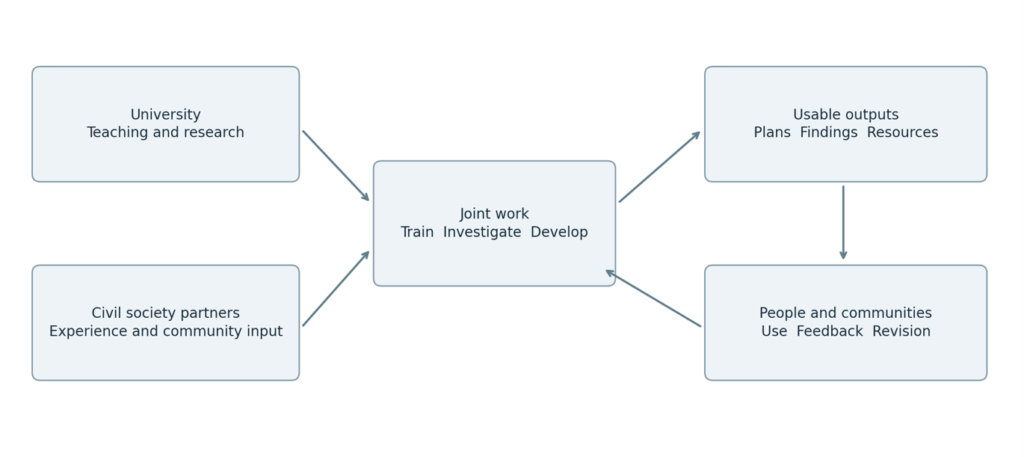
Joint resource development turns partner expertise into materials that educators, students and community organisations can use and adapt.
18 Reading Resources for School No 15
The Faculty of Exact Sciences, the Navoi City Council of the Environmental Party and local entrepreneurs provided more than 250 books to School No. 15 in Karmana district. University staff and student volunteers complemented the donation with materials for guided reading.
Teachers helped identify suitable age groups, while university educators prepared reading lists, discussion questions and activity sheets. Poetry tasks examined imagery and interpretation; prose activities invited learners to consider characters’ decisions and compare perspectives.
The partnership translates SDG 17 into a shared educational contribution. Its connection with SDG 4 extends from access to books to their use in structured learning. The supplementary materials helped teachers connect the donated collection with classroom reading and discussion.
19 Adapting Career Guidance Resources
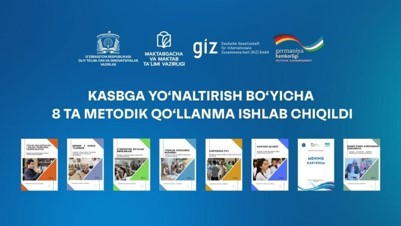
University educators and the Uzbekistan Volunteers Association prepared a local facilitation pack drawing on eight methodological guides developed through a project involving education ministries, GIZ and other partners.
The adaptation addressed workplace visits, peer mentoring and reflection on career pathways. Students received questions for employer visits, facilitators used discussion notes and learners completed worksheets connecting their interests with possible next steps. Attribution to the original guides was retained.
This circulation and adaptation of knowledge illustrates SDG 17 through cooperation in making resources usable for a local audience. Structured exploration advances SDG 4, while understanding occupations and workplace expectations connects the materials with SDG 8.
20 Environmental Volunteer Facilitator Pack
University educators, the Volunteers Association and Ekolog prepared a reusable pack supporting environmental volunteer training. The materials connected the national seminar with practical planning for later activities.
A facilitator outline organised the learning sequence. Role cards clarified team responsibilities, an action template guided the definition of a community problem, and a reflection sheet helped participants review their experience. The materials could be adapted to different local environmental issues.
Co-development gives SDG 17 a lasting educational product. The pack contributes to SDG 4 through structured practical learning, while its environmental content links the activities with waste responsibility under SDG 12 and awareness relevant to SDG 13.
21 Start Up Learning Toolkit
The university, Chamber specialists and Ekolog developed a toolkit helping students move from an initial idea to a coherent project proposal.
A problem-definition worksheet required teams to identify the people affected and explain the need being addressed. A budget introduced resource planning, a stakeholder map clarified relationships and an environmental checklist prompted consideration of material use and waste. Peer review tested whether proposed activities responded to the stated problem.
The combination of teaching, business and environmental expertise reflects SDG 17. Enterprise preparation relates to SDG 8, applied project development to SDG 9, and consideration of resource use to SDG 12.
22 Introduction to Responsible Volunteering
The university and the Uzbekistan Volunteers Association developed an introductory module combining practical experience, thematic video materials and discussion.
An ethics handout introduced respectful engagement, while scenario cards examined consent, requests beyond a volunteer’s competence and communication with organisers. An interest form helped students consider suitable roles. Learners concluded by identifying the information and preparation they needed before accepting a particular responsibility.
Shared development advances SDG 17 by translating civil society experience into university learning. Applied ethical reasoning contributes to SDG 4, while the emphasis on responsible participation connects the module with SDG 16.
23 Health Volunteer Orientation Materials
Faculty educators and Association facilitators prepared resources addressing the responsibilities of students entering supervised health-related volunteering.
The set included a role guide, communication cases and a planning sheet for awareness activities. Students identified an appropriate supervisor and information source, considered privacy requirements and practised recognising situations requiring referral. The materials distinguished volunteer assistance from decisions reserved for qualified professionals.
The joint preparation process illustrates SDG 17 through cooperation on a defined educational need. Scenario-based preparation advances SDG 4, while accurate communication, supervision and referral connect the resource set with SDG 3.
24 Civic Participation Learning Pack
Following student participation in the Young Politicians Marathon, university educators and student representatives developed a campus learning pack.
An initiative template guided learners through defining a community issue, identifying affected groups and planning consultation. Leadership tasks examined representation and accountability. Peer discussion tested whether proposals reflected the perspectives of the people concerned.
The cooperation extends SDG 17 through the adaptation of external learning for a wider university audience. Practical civic education relates to SDG 4, while consultation, accountability and informed participation establish a substantive connection with SDG 16.
25 Peaceful Nuclear Technologies Learning Package
University departments and the Nuclear Technology Information Centre developed a package combining scientific explanation with interactive discussion. Ekolog contributed environmental and community questions.
Diagrams introduced physical principles, quizzes checked understanding and debate prompts invited students to examine evidence about energy applications. Facilitator notes distinguished scientific explanation from policy judgments and encouraged learners to identify questions requiring further investigation.
This cooperation demonstrates SDG 17 through the integration of educational, scientific and environmental perspectives. The package strengthens scientific literacy under SDG 4, enables discussion of energy choices under SDG 7 — Affordable and Clean Energy, and introduces technological applications relevant to SDG 9.
26 Library Resources Developed with Civil Society Users
The university Information Resource Centre worked with the Volunteers Association and a local organisation representing people with visual impairments to improve access to selected learning resources.
Users identified difficulties in locating and navigating materials. Librarians prepared an accessible catalogue guide, curated an audio reading selection and assembled a thematic collection for volunteer education. Partner feedback informed revisions to organisation and presentation.
The collaboration puts SDG 17 into practice by involving community users in resource development. Its contribution to SDG 4 lies in making learning materials easier to use. Addressing access barriers identified by users connects the work with SDG 10.
27 Insurance Literacy Learning Cases
University educators, “KAFIL-SUG‘URTA” specialists and the Volunteers Association developed learning cases informed by students’ questions about insurance.
Participants compared fictional policy summaries, explained unfamiliar terms and identified questions they would ask before making a decision. Self-assessment tasks checked understanding, and a facilitator guide explained the reasoning behind answers. Professional specialists reviewed the content for accuracy.
The partnership advances SDG 17 through shared educational production. Practical comparison and feedback contribute to SDG 4 by helping learners engage with unfamiliar financial information and formulate informed questions. The materials serve an educational purpose rather than promote a particular product.
28 Youth Opportunity Navigation Guide
The university, regional Youth Affairs Department and the Volunteers Association developed a guide connecting students with volunteering, training and employment information.
Each entry explained the intended audience, responsible contact and next step. A companion worksheet helped students compare opportunities and identify questions requiring advice. University staff clarified educational pathways, public-sector partners explained available services and the Association contributed volunteering information.
The shared guide illustrates SDG 17 through coordinated information and referral. Navigating learning opportunities relates to SDG 4, career preparation to SDG 8, and making information accessible beyond personal networks to the inclusion objectives of SDG 10.
30 Responsible Tourism Learning Pack
University educators, the regional Tourism Department and Ekolog developed materials linking professional tourism learning with environmental care.
A visitor code explained practical expectations, while a route observation sheet directed attention to signage, waste facilities and pressures on shared spaces. Students used observations to prepare improvement proposals. Tourism specialists supplied professional context and environmental advisers reviewed the issues raised.
The partnership expresses SDG 17 through joint teaching design. Observation and reflection support experiential learning under SDG 4. Care for places used by residents and visitors relates to SDG 11, while litter prevention connects the activities with SDG 12.
31 International Student Orientation Resources
The university, “Yatri Educational Consultancy” and the Volunteers Association prepared an orientation pack for incoming international students.
The pack brought together service information, peer-support contacts and opportunities for voluntary community participation. Student reviewers tested whether readers could identify where to seek assistance. University staff checked academic and administrative information, while volunteers contributed practical explanations of student life.
The cooperation reflects SDG 17 through coordinated support across different organisations. Clearer navigation of university services contributes to educational access under SDG 4, while addressing information barriers in an unfamiliar environment connects the resources with SDG 10.
32 Legal Awareness Resources
University educators, legal specialists and the Volunteers Association developed discussion cases and a short booklet on rights, responsibilities, corruption prevention and seeking assistance.
Cases invited students to identify the issue, consider appropriate responses and locate a suitable source of advice. Legal specialists reviewed accuracy, educators designed discussion tasks and volunteer representatives contributed situations relevant to community activity.
Complementary expertise gives SDG 17 a practical educational outcome. Understanding rights and routes for assistance relates to SDG 16, while guided discussion contributes to SDG 4 by helping students apply general principles to situations they may encounter.
33 Career Preparation and Workplace Learning Toolkit
University educators, “MENGI TEKSTIL GROUP”, the Chamber of Commerce and Industry and the Volunteers Association prepared a toolkit connecting study, volunteering and workplace expectations.
Students developed questions before workplace visits, used a transferable-skills checklist and prepared examples explaining what they had learned through collective tasks. Employers commented on the clarity of those examples, while educators and volunteer practitioners guided reflection.
The toolkit demonstrates SDG 17 by connecting educational, employer and community perspectives. Structured career learning advances SDG 4, while understanding workplace expectations and communicating relevant experience contribute to preparation for employment under SDG 8.
Programme outputs and intended users
The table brings together the concrete outputs described in the portfolio and identifies their principal users. Evidence numbers refer to the preceding sections.
No | Initiative | Output | Principal users |
1 | National volunteer training | Action plans and peer learning | Volunteers and local teams |
2 | Volunteer preparation | Introductory pathway and thematic groups | Student volunteers |
3 | Health volunteers | Supervised preparation and awareness activities | Medical students and community participants |
4 | Community plogging | Cleaned area and prevention discussion | Students and users of Umid area |
5 | Nature campaign | Clean-up and visitor awareness | Volunteers and recreational users |
6 | Arts volunteering | Workshops and collaborative performances | Community participants |
7 | Donor campaign | Donation participation and approved information | Donors and health services |
8 | Yashil Makon | Planting, watering and observation records | Student teams and site users |
9 | Ziyolilar garden | Care schedule and plant explanations | Volunteers and learning groups |
10 | Karmana planting | Team contribution and follow-up observation | Regional planting teams |
11 | Inclusive support | Coordinated assistance and reflection | Recipient and student volunteers |
12 | Navoi heritage | Thematic synthesis and recommendations | Educators and researchers |
13 | Timurid heritage | Annotated research bibliography | Students and scholars |
14 | Youth opportunities | Access analysis and recommendations | Students and service coordinators |
15 | Health preparedness | Training-needs recommendations | Faculty educators and mentors |
16 | Insurance research | Learning-needs brief | Educators and students |
17 | Innovation research | Problem briefs and prototype proposals | Project teams and external partners |
18 | School reading | Book contribution, reading lists and activities | School pupils and teachers |
19 | Career guidance | Adapted facilitation pack | Student facilitators and school learners |
20 | Environmental facilitation | Role cards, action template and reflection sheet | Volunteer trainers |
21 | Start-up toolkit | Budget, stakeholder map and efficiency checklist | Student project teams |
22 | Volunteer introduction | Ethics handout and discussion cases | New student volunteers |
23 | Health orientation | Role guide and planning sheet | Supervised health volunteers |
24 | Civic learning | Initiative template and leadership tasks | University students |
25 | Nuclear technologies | Diagrams, quizzes and debate prompts | Students and facilitators |
26 | Library access | Catalogue guide, audio selection and collection | Library and civil society users |
27 | Insurance cases | Comparison tasks and facilitator guide | Students and educators |
28 | Youth navigation | Opportunity guide and comparison worksheet | Students and advisers |
29 | Medical mentorship | Learning log and role guidance | Medical students and mentors |
30 | Responsible tourism | Visitor code and route observation sheet | Tourism students and educators |
31 | International orientation | Services and peer-support pack | Incoming international students |
32 | Legal awareness | Booklet and discussion cases | Students and facilitators |
33 | Career preparation | Workplace questions and skills checklist | Students and employers |