2 Dialogue with Zarashon Golden Group on Dual Education and Applied Research
University role and partners University initiator of negotiations. External participation: industry and employers.
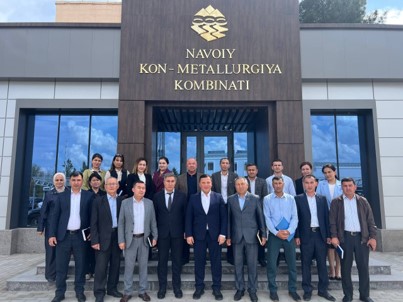
Navoiy State University is developing cooperation with Zarashon Golden Group (ZGG) to strengthen connections between university education and regional industry. Rector Professor Muxiddin Kalonov met with company founder Ulug‘bek Fayziyev for negotiations on practical training, research and the exchange of expertise.
The discussion addressed student placements in enterprises and organisations, the effective implementation of dual education and an industry–enterprise–university relationship. These topics connected the university’s responsibility for professional preparation with the experience and opportunities available within a business organisation.
The negotiations also considered research activity and exchanges of experience in major enterprises. The meeting established areas for developing cooperation, with practical learning and the relationship between academic preparation and workplace experience central to the discussion.
Sustainable Development Goals SDG 4 Quality Education • SDG 8 Decent Work and Economic Growth
Practical training and dual education relate to SDG 4 through the acquisition of professionally relevant skills. Discussion of placements and workplace preparation connects to SDG 8 by addressing students’ transition into employment and the competencies needed in economic activity.
3 Cooperation and Technical Exchange with Navoiyazot
University role and partners University predecessor co-organiser. External participation: industry and employers; civil society and public organisations.
Navoiy State University maintains cooperation with Navoiyazot JSC, connecting education in chemistry with professional expertise in the chemical industry. A documented example is a visit organised by the university’s predecessor institution, Navoiy State Pedagogical Institute, together with the Yoshlar Kelajagimiz Foundation.
First-year Chemistry students took part under the guidance of institutional youth leaders and a tutor. The activity brought higher education, an industrial enterprise and a youth-support organisation together around professional learning.
Students became acquainted with production activities including mineral fertilisers and other organic and inorganic chemical products. They raised questions arising from their interests and received explanations directly from company specialists. This question-and-answer exchange linked chemical knowledge acquired through study with the experience of professionals working in production.
Sustainable Development Goals SDG 4 Quality Education • SDG 8 Decent Work and Economic Growth
The professional learning component connects to SDG 4 through technical knowledge and skills development. Exposure to industrial work and exchanges with specialists relate to SDG 8 through preparation for professional activity. The contribution described is an educational exchange within university–industry cooperation.
4 Agricultural Cooperation through the Asparagus and Ipak Yoli Centres
University role and partners University host and institutional partner. External participation: industry and employers; external education and international networks.
Navoiy State University established cooperation with Beijing Agricultural Vocational College and Beijing Shengxi Agricultural Development Company through the opening of the Asparagus Research Centre and the Ipak yo‘li Agricultural Specialist Practical Training Centre.
The partnership combines university research and teaching, vocational education and agricultural business expertise. The Asparagus centre is intended to introduce modern agricultural technologies and develop the cultivation of export-oriented products. The Ipak yo‘li centre focuses on specialist preparation, the relationship between theory and practice, and practical skills for students and professionals.
The opening brought together Rector Muxiddin Kalonov, visiting Chinese partners, academic staff, students and sector specialists. Participants reviewed the centres’ facilities, laboratory equipment, innovative developments and opportunities for research. The centres provide a practical institutional framework for the participating partners’ stated areas of cooperation.
Sustainable Development Goals SDG 4 Quality Education • SDG 9 Industry, Innovation and Infrastructure
Practical agricultural training relates to SDG 4 through technical and professional skills. The research centre’s focus on agricultural technologies connects to SDG 9 through applied research and innovation. The centres provide facilities for cooperation around these educational and technical priorities.
5 Consultation with Employers and the National Education Quality Assurance Agency
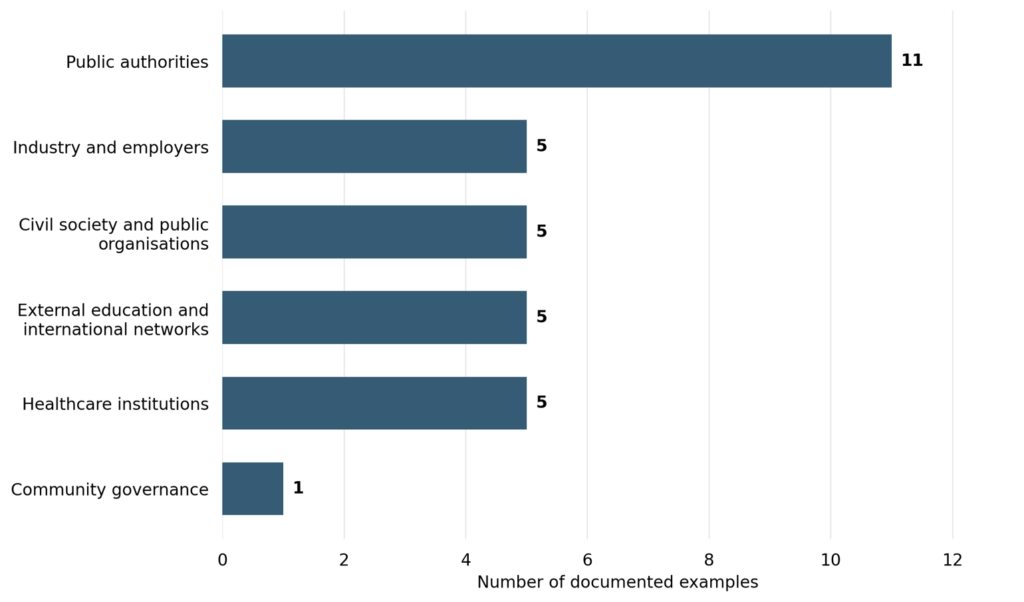
University role and partners University consultation partner. External participation: public authorities.
Navoiy State University engaged in meetings and interviews within the framework of a nationwide employer survey intended to improve educational quality and strengthen the relevance of university programmes to professional practice.
University representatives and Diyorbek Umarov, a representative of the National Education Quality Assurance Agency, visited organisations employing university graduates. A meeting with Nodir Niyazov, Head of the Navoiy Regional Department of Culture, explored graduates’ professional preparation, knowledge and practical skills.
The discussion highlighted creative thinking, initiative and the ability to respond to contemporary labour-market expectations. Further exchanges with the rector and university representatives addressed programme improvement and stronger cooperation with employers.
This consultation brought together the university, a national quality assurance body and a public-sector employer. It created a channel through which experience of graduates’ work could inform discussion of educational provision, connecting academic preparation with the competencies required in employment.
Sustainable Development Goals SDG 4 Quality Education • SDG 8 Decent Work and Economic Growth
Employer feedback on graduates’ skills relates to SDG 4 by informing discussion of relevant educational provision. The emphasis on professional competencies and workplace expectations also connects to SDG 8 and the transition from university education into employment.
6 Expert and Employer Dialogue on New Agricultural Programmes
University role and partners University consultation partner. External participation: industry and employers.
Navoiy State University held discussions involving visiting experts, prospective employers and university representatives concerning the proposed introduction of programmes in Agrochemistry and Soil Science and Agricultural Product Storage and Processing Technology.
Participants examined the relevance of the proposed programmes, employer involvement in curriculum development and the professional competencies expected of graduates. They also discussed practical training and the conditions required to achieve programme objectives.
The dialogue connected academic planning with external professional expectations. It enabled participants to consider how disciplinary knowledge, workplace experience and practical skills could be reflected in the proposed educational provision.
By involving employers and experts in these discussions, the university supported an exchange on the preparation of specialists for agriculture and related industries. The subject matter connects educational development with sectors concerned with food production, processing and the management of natural resources.
Sustainable Development Goals SDG 4 Quality Education • SDG 8 Decent Work and Economic Growth
Consultation on curricula, professional competencies and practical training relates to SDG 4. The involvement of prospective employers connects the discussion to SDG 8 by considering the preparation of graduates for work in agriculture and related industries.
Environmental Sustainability and Regional Development
7 National Scientific Practical Conference on Climate Change Ecology Economy and Sustainable Development
University role and partners University host. External participation: public authorities.
Navoiy State University hosted the national scientific-practical conference “Climate Change, Ecology, Economy, and Sustainable Development: Challenges and Solutions.” The conference brought together scientists, specialists and representatives of organisations and institutions to examine the relationships between environmental challenges and economic development.
Rector Professor Muxiddin Kalonov opened the event by emphasising the importance of addressing climate change, ecological concerns and sustainable economic development in Uzbekistan. Presentations and exchanges enabled participants to share research findings, offer professional perspectives and discuss possible responses to environmental and economic pressures.
The participation of academic, government and other stakeholders gave the conference a scope extending beyond disciplinary research. It provided a setting in which scientific knowledge could be considered alongside institutional responsibilities and practical experience.
By convening this discussion, the university supported an interdisciplinary exchange on sustainability and encouraged consideration of environmental and economic priorities within a shared agenda.
Sustainable Development Goals SDG 13 Climate Action • SDG 12 Responsible Consumption and Production
The examination of climate change and possible responses connects this conference to SDG 13. Discussion of environmental pressures and their relationship to economic activity also relates to SDG 12, through consideration of how development can account for environmental responsibility
8 Dialogue with the Ecological Party on Environmental Responsibility and Education
University role and partners University host with an external organiser. External participation: civil society and public organisations.
The university’s Faculty of Exact Sciences hosted a round table organised by the Chair of the Navoiy City Council of the Ecological Party of Uzbekistan. The event brought an external environmental-policy perspective into discussion with the university community.
Participants exchanged views on environmental safety, the responsible use of natural resources and the development of environmental education. Particular attention was given to the role of educational institutions in strengthening ecological awareness and encouraging responsible attitudes towards nature.
The discussion also addressed teaching practice. Recommendations encouraged lecturers to incorporate concepts of environmental culture, responsibility and nature protection into their lessons, connecting wider environmental priorities with students’ everyday learning.
This engagement illustrates dialogue between higher education and a public organisation on shared environmental concerns. Its practical focus linked discussion of ecological priorities with the university’s role in developing knowledge, values and responsible behaviour.
Sustainable Development Goals SDG 12 Responsible Consumption and Production • SDG 4 Quality Education
The discussion of responsible natural-resource use relates to SDG 12. Recommendations for incorporating ecological awareness into teaching connect the dialogue to SDG 4 by addressing the knowledge and attitudes students need to participate in sustainable development.
9 Participation in the Third International Congress of Tourism and Ecology
University role and partners University participant. External participation: civil society and public organisations; external education and international networks.
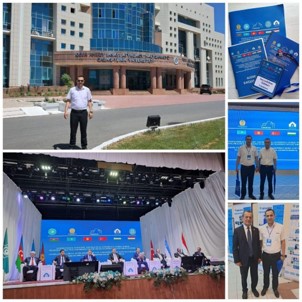
Students and youth representatives from Navoiy State University participated in the Third International Congress of Tourism and Ecology, held under the slogan “Youth Are the Creators of Our Future.” The event brought together participants from more than 15 countries for exchanges on tourism, ecological awareness and youth leadership.
The congress offered opportunities for university representatives to engage with wider tourism and environmental initiatives. Akmal Zakirov, the university’s youth leader, was elected Chair of the Council of Tourism Ambassadors of Navoiy Region. Kamronbek Sultanmuradov, a third-year History student and youth coordinator, was appointed Chair of the Movement of Young Environmentalists of Navoiy Region.
These appointments connected university participation with regional structures supporting youth engagement in tourism and environmental activity. The event also enabled students to exchange experiences internationally and explore the relationship between local development, ecological responsibility and youth participation.
Sustainable Development Goals SDG 8 Decent Work and Economic Growth • SDG 12 Responsible Consumption and Production
Tourism development connects the exchange to SDG 8, including its concern with sustainable tourism. The emphasis on ecological responsibility relates to SDG 12. The congress enabled students to discuss these themes and take on regional tourism and environmental leadership responsibilities.
Education and Community Development
10 Participation in the First Central Asian Universities Forum
University role and partners University participant. External participation: public authorities; external education and international networks.
Navoiy State University participated in the First Central Asian Universities Forum, hosted by Yangi O‘zbekiston University. The forum brought together academic leaders, policymakers and international partners to discuss the development of higher education and its contribution to regional progress.
The event involved more than 300 participants, including nearly 200 international experts from over 20 countries. Its international representation included participants from 97 foreign universities and 60 leaders of international educational organisations.
Discussions examined the development of emerging universities, the alignment of educational programmes with labour-market requirements, talent development, academic mobility and new approaches to institutional cooperation. These themes connected university development with broader questions of professional preparation and social and economic opportunity.
Through its participation, Navoiy State University joined an exchange involving academic, policy and international educational perspectives. The forum provided opportunities to consider how institutions can respond collaboratively to changing regional needs.
Sustainable Development Goals SDG 4 Quality Education • SDG 8 Decent Work and Economic Growth
Discussion of educational quality, mobility and talent development relates to SDG 4. Consideration of labour-market requirements connects the forum to SDG 8, linking the development of universities with professional preparation and regional economic needs.
11 Dialogue with Mahalla Chairpersons on Social Work Education and Community Needs
University role and partners University organiser. External participation: community governance.
Navoiy State University organised a meeting with 98 mahalla chairpersons from Navoiy, Bukhara and Kashkadarya regions who had been recommended for part-time study in Social Work under a state grant programme.
The initiative connected higher education with community governance and state-supported professional development. University representatives and local leaders discussed social challenges within communities, the need for qualified social workers and the contribution of professional education to community-level services.
The meeting brought the practical experience of mahalla leaders into the university’s educational environment. It also provided an opportunity to discuss how the Social Work programme could develop competencies relevant to their responsibilities.
This exchange demonstrates a direct relationship between educational access and community capacity. Its focus on local social needs connected professional learning with the work of grassroots leaders and the provision of support within communities.
Sustainable Development Goals SDG 4 Quality Education • SDG 17 Partnerships for the Goals
Access to professional Social Work education relates to SDG 4 through adult learning and skills development. The exchange also relates to SDG 17 by connecting university expertise with community governance and discussing how education can respond to local social-service priorities.
12 National Conference on Digital Technologies in Primary Education and Speaking Competence
University role and partners University host. External participation: public authorities; external education and international networks.
The Faculty of Preschool and Primary Education hosted the national conference “Digital Technologies in Primary Education and Developing Speaking Competence: Modern Conditions and Prospects.”
The conference brought together academics, researchers, government representatives and educational organisations, including participants from Tashkent, Samarkand, Bukhara and Khorezm. Discussions examined digital technologies in primary education and approaches to developing children’s speaking and communicative competence.
The event provided a setting in which educational research could be considered alongside policy perspectives and professional practice. Participants explored the relationship between technological change, teaching approaches and the learning needs of young children.
Through this conference, the university supported a national exchange on educational quality and the development of foundational competencies. Its role as host enabled participants from different institutions and professional backgrounds to discuss approaches to improving primary education.
Sustainable Development Goals SDG 4 Quality Education
The conference relates to SDG 4 through its focus on primary education, teaching practice and foundational communication skills. Dialogue about digital tools considers their educational purpose and their application to the learning needs of children.
13 Dialogue with a Regional Centre on Paediatrics Student Development
University role and partners University participant. External participation: healthcare institutions.
Navoiy State University participated in an open meeting with leaders of the Navoiy Regional Children’s Multidisciplinary Centre on the occasion of Youth Day. First-year Paediatrics students from the Faculty of Natural Sciences and Medicine took part in the exchange.
The discussion addressed identifying and developing young people’s abilities, participation in extracurricular activities and innovative projects, and the acquisition of contemporary knowledge and skills. Participants exchanged views on the conditions available at the centre, the effectiveness of learning activities and future plans.
The open format enabled participants to ask questions and receive detailed answers. The meeting connected students preparing for paediatric careers with an external institution in the children’s healthcare environment, providing a setting for discussing their development and professional learning.
Sustainable Development Goals SDG 4 Quality Education • SDG 3 Good Health and Well-being
The discussion of students’ abilities, knowledge and learning opportunities relates to SDG 4. Its connection to SDG 3 is through the preparation of future paediatric professionals and engagement with a children’s healthcare institution; the meeting’s focus was student development.
Civic Participation and Responsible Institutions
14 Open Dialogue with the Association of Volunteers of Uzbekistan
University role and partners University host. External participation: civil society and public organisations.
Navoiy State University hosted Shirin Abidova, Head of the Association of Volunteers of Uzbekistan, for an open dialogue with university volunteers.
The discussion explored the contribution of volunteering to social development and its role in encouraging compassion, tolerance and social responsibility. Drawing on practical experience, the association’s representative discussed the importance of an active civic position and young people’s participation in community life.
The programme included thematic videos and opportunities for students to ask questions. This exchange connected students’ interests and experiences with the perspective of an organisation working in the voluntary sector.
By hosting the meeting, the university provided a direct point of contact between higher education and organised civil society. The dialogue encouraged consideration of volunteering as a form of civic participation and a means of contributing to wider social needs.
Sustainable Development Goals SDG 17 Partnerships for the Goals • SDG 16 Peace, Justice and Strong Institutions
Cooperation with an organised civil society partner relates to SDG 17. Discussion of active citizenship and social responsibility also connects to SDG 16 through participation in community life. The exchange focuses on how students can engage constructively beyond the university.
15 International Dialogue on Electoral Systems and Institutional Development
University role and partners University presenter and participant. External participation: public authorities; external education and international networks.
Navoiy State University participated in the international scientific-practical conference “Electoral Systems in the Turkic World: Development, Practices, and Perspectives,” held at Khoja Ahmad Yassawi International Kazakh-Turkish University in Turkistan, Kazakhstan.
The conference brought together electoral commission members, senators, deputies, researchers and students from Uzbekistan, Kyrgyzstan, Kazakhstan, Azerbaijan, Türkiye, Tajikistan and other countries. Its composition enabled exchanges between academic researchers and representatives involved in electoral and legislative institutions.
Representing Navoiy State University, third-year doctoral candidate and History lecturer Sayyodjon Salimov presented research entitled “The Evolution of Parliamentary Elections in Uzbekistan during the Years of Independence.”
The university’s contribution connected historical scholarship with an international discussion of electoral development and institutional practice. It provided a clear example of academic participation in dialogue with public institutions on governance and representation.
Sustainable Development Goals SDG 16 Peace, Justice and Strong Institutions
The examination of electoral institutions and representative processes relates to SDG 16. Bringing research into discussion with electoral commission members and legislators connects academic inquiry with questions of public participation and institutional development.
16 Round Table with Regional Tax Authorities on Financial Transparency
University role and partners University host. External participation: public authorities.
Navoiy State University hosted a round table with representatives of the regional tax administration to discuss cashless payments, financial transparency and measures addressing the informal economy.
Participants exchanged views on the public’s role in supporting economic transparency. The meeting also covered practical aspects of income declarations and digital financial procedures, with university employees asking questions and receiving explanations from the responsible specialists.
The event connected public administration with the information needs of the university community. Its discussion format enabled participants to raise practical questions while officials explained the processes under consideration.
This engagement illustrates the university’s role as a venue for dialogue on financial awareness and transparent economic practices. It brought administrative expertise into an accessible institutional setting and supported direct communication between public authorities and university employees.
Sustainable Development Goals SDG 16 Peace, Justice and Strong Institutions
The exchange relates to SDG 16 through its focus on transparency and communication between public authorities and citizens. Discussion of declarations and digital procedures supports understanding of public financial processes.
17 Dialogue on Peace Education and Social Responsibility
University role and partners University co-organiser. External participation: public authorities.
In cooperation with the Committee on Religious Affairs of the Republic of Uzbekistan, Navoiy State University organised a round table on “Peace Is the Highest Blessing” and “Countering Ignorance through Enlightenment.”
Students from Uzbek Language and Literature programmes and the Faculty of History participated in the event. Jonibek Shuhratov, Head of the Navoiy Regional Tafakkur centre, contributed to the discussion.
The exchange addressed the importance of education, reflection and reliable information in helping young people navigate a complex information environment. Participants considered respect for national and universal values and the role of knowledge in responding constructively to harmful ideas.
The university’s cooperation with an external state body and a regional specialist provided a forum for discussing peaceful social relations and informed civic responsibility. The event connected educational concerns with wider questions of social cohesion.
Sustainable Development Goals SDG 16 Peace, Justice and Strong Institutions • SDG 4 Quality Education
Discussion of peaceful social relations and social cohesion connects to SDG 16. The emphasis on education, reliable information and respect for shared values also relates to SDG 4, particularly learning that supports informed and responsible participation in society.
Health Equality and Safe Learning Environments
18 Professional Dialogue on Maternal and Child Health
University role and partners University initiator of a visit and professional exchange. External participation: healthcare institutions.
Navoiy State University engaged with the Navoiy Regional Branch of the Republican Specialised Scientific and Practical Medical Centre for Maternal and Child Health through a visit and an open professional discussion involving first-year Paediatrics students.
Tutors from the Faculty of Natural Sciences and Medicine initiated the visit. Students became acquainted with the centre’s services, scientific and practical activities, and maternal and child screening unit, including diagnostic and preventive processes.
University Clinical Sciences lecturer G‘. Aslanov and the centre’s physicians M. Hamrayeva, A. Muhammadiyeva and X. Hasanov participated in an open exchange. They discussed contemporary paediatric approaches, the protection of maternal and child health and situations encountered in medical practice. Students asked questions and received detailed explanations from the specialists.
Sustainable Development Goals SDG 3 Good Health and Well-being • SDG 4 Quality Education
Maternal and child health, screening and prevention connect the exchange directly to SDG 3. Engagement between a university lecturer, practising physicians and students also relates to SDG 4 through professional medical learning that draws on clinical experience.
19 Institutional Dialogue on a Safe and Respectful Educational Environment
University role and partners University organiser. External participation: public authorities.
Navoiy State University organised a round table on “Current Issues in Creating a Safe and Respectful Educational Environment.” Participants included university leaders, psychologists, lecturers, youth affairs tutors, students and inspectors responsible for women’s issues from the Navoiy City internal affairs authorities.
The discussion addressed safety, legal awareness, professional ethics and the protection of women from harassment and violence. Participants examined the responsibilities of university employees and the importance of appropriate professional boundaries in educational relationships.
Rector Professor Muxiddin Kalonov emphasised the university’s responsibility to maintain a safe, fair and respectful environment. Preventive approaches, clear expectations and the responsibilities of staff working with students formed central parts of the exchange.
The participation of external inspectors alongside university leadership and support services brought legal, educational and psychological perspectives into one discussion. This provided a substantive platform for considering dignity, equality and institutional responsibility.
Sustainable Development Goals SDG 5 Gender Equality • SDG 4 Quality Education • SDG 16 Peace, Justice and Strong Institutions
Protection of women from harassment and violence relates to SDG 5. The discussion of a safe educational environment connects to SDG 4, while attention to legal responsibilities and institutional conduct relates to SDG 16. These connections arise from the issues examined by university and external participants.
20 Participation in Community Dialogue on Preventing Domestic Violence
University role and partners University participant. External participation: public authorities; healthcare institutions.
Students from the university’s Primary Education programme participated in a round table at the Navoiy City Monomarkaz entitled “A Happy Family Life Without Domestic Violence.”
The event brought together university students, psychologists from the Navoiy Regional Centre for the Rehabilitation and Adaptation of Women, a representative of the city civil registration office and leaders of the regional Baxt Qasri centre.
Participants discussed respectful communication, managing anger, resolving problems jointly and seeking assistance from trusted people and qualified specialists. Practical recommendations addressed the importance of a safe family environment for children’s development and community well-being.
The university’s participation connected future educators with professionals working in family relations and support for women. It enabled students to consider domestic violence prevention through psychological, social and public-service perspectives.
Sustainable Development Goals SDG 5 Gender Equality • SDG 16 Peace, Justice and Strong Institutions
The focus on preventing domestic violence relates to SDG 5, including protection of women from violence. Discussion of safe relationships and access to professional assistance also connects to SDG 16 through the prevention of violence and protection of personal dignity.
21 Dialogue with Healthcare Specialists on Women and Reproductive Health
University role and partners University initiator and host. External participation: healthcare institutions.
The Faculty of History hosted a round table on “Promoting Healthy Lifestyles among Women and Strengthening Reproductive Health.” The event was initiated by the rector’s adviser on women’s issues, Sh. Nosirova, and university psychologist D. Abduraimova.
Specialists from the regional AIDS prevention centre and qualified gynaecologists joined discussions with female students. The programme addressed women’s health, preventive practices and the importance of obtaining professional advice.
Psychological activities formed part of the event, while the concluding exchange enabled students to ask questions and receive recommendations directly from healthcare professionals.
The initiative brought university support services and external medical expertise together around student health and well-being. Its interactive format provided an accessible setting for discussing sensitive subjects and connected health education with the university’s support for women students.
Sustainable Development Goals SDG 3 Good Health and Well-being
The dialogue relates directly to SDG 3 through reproductive health, prevention and access to professional health information. University support staff and medical specialists discussed health questions with students in a setting that enabled direct requests for advice.
22 Open Public Health Dialogue on HIV Prevention and Healthy Lifestyles
University role and partners University organiser. External participation: healthcare institutions.
The Faculty of Languages organised an open round table entitled “We Support a Healthy Lifestyle!”, involving epidemiologists from the Navoiy City AIDS prevention centre.
The discussion addressed HIV transmission, prevention and informed approaches to personal health. Medical specialists explained relevant health information and discussed preventive measures with students.
The open-dialogue format established direct contact between the university community and public health practitioners. It enabled students to engage with specialist knowledge in a familiar educational setting and discuss matters relevant to their well-being.
Through this event, the university supported cooperation between higher education and professional health services. The exchange contributed to student health awareness and demonstrated the value of external expertise in preventive education.
Sustainable Development Goals SDG 3 Good Health and Well-being
The focus on HIV transmission and prevention connects directly to SDG 3. The university’s engagement with epidemiologists provides a channel for professional health information and discussion of preventive practices with students.
23 Interactive Dialogue on Crime Prevention Drug Awareness and Cybersecurity
University role and partners University organiser. External participation: public authorities.
Navoiy State University organised an interactive round table involving regional law-enforcement representatives, university leadership, lecturers and students.
The discussion covered crime prevention, the harmful consequences of drug use, legal awareness and safe behaviour online. Specialists addressed personal information protection, internet fraud and responsible participation in digital environments.
Students asked questions and exchanged views with the participating professionals. The discussion also considered the contribution of sport, cultural participation and constructive use of free time to young people’s development.
The event brought legal and preventive expertise into direct conversation with the university community. Its interactive character enabled discussion to reflect students’ questions and connected institutional cooperation with practical concerns about safety, health and digital responsibility.
Sustainable Development Goals SDG 3 Good Health and Well-being • SDG 16 Peace, Justice and Strong Institutions
Drug awareness and prevention relate to SDG 3. Discussion of crime prevention, personal safety and internet fraud connects to SDG 16. The event brought these health and safety themes into an interactive exchange with law-enforcement specialists.
Cultural Heritage and Public Engagement
24 Joint Conference on the Heritage of Amir Temur
University role and partners University co-organiser. External participation: public authorities; civil society and public organisations.
Navoiy State University co-organised the regional scientific-online conference “The Heritage of Amir Temur: A Source of National Pride and Spiritual Strength” with the Ministry of Higher Education, Science and Innovation, the International Amir Temur Public Foundation and the Navoiy Regional Administration.
The conference brought together academics from the university and neighbouring regions within a partnership involving government and a public foundation. Presentations examined Amir Temur’s historical role in governance, support for science, architectural development and cultural and intellectual life.
The programme provided opportunities for scholarly exchange and discussion of further research cooperation. Participants also visited the university’s Museum of Remembrance of the Victims of Repression, placing the academic programme within a wider context of historical learning and cultural memory.
The event demonstrates the university’s capacity to convene public authorities, a civil society institution and the academic community around the study and transmission of cultural heritage.
Sustainable Development Goals SDG 11 Sustainable Cities and Communities • SDG 4 Quality Education
The study and transmission of cultural heritage relates to SDG 11 and its concern with safeguarding heritage. The educational and research exchange also connects to SDG 4 by supporting historical knowledge and understanding of cultural contributions to society.
Sustainable Development Goals Addressed through Dialogue
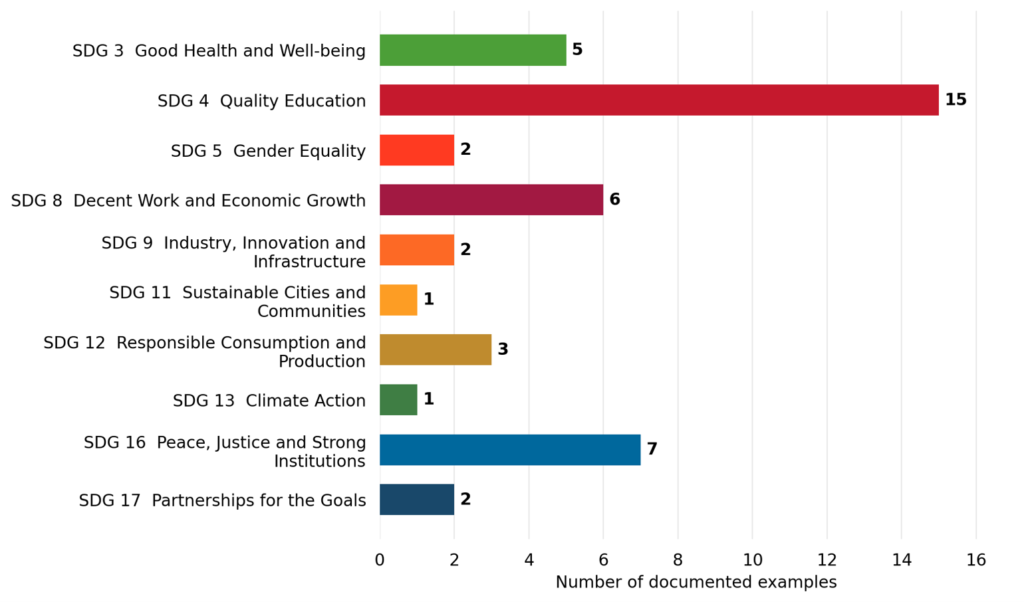
The chart summarises the themes addressed in the 24 examples. Each SDG is assigned on the basis of the subject discussed and the explanation provided in the corresponding narrative.
An example may address more than one SDG, so the counts are not mutually exclusive. Thematic coverage indicates the subjects of dialogue; it does not represent measured progress against national or global SDG indicators.
Connecting Dialogue with Institutional and Community Priorities
The examples connect sustainable development themes with the responsibilities and experience of different sectors. Industrial exchanges address research and professional skills; healthcare discussions concern prevention and medical learning; public and community engagement examines educational relevance, safety and civic participation.
The university’s contribution includes convening stakeholders, bringing research into professional discussions and enabling students to engage with external expertise. Agreements on contractual research and dual education, the opening of two agricultural centres and consultation with 98 mahalla chairpersons illustrate different forms of follow-through. These sit alongside knowledge-sharing exchanges that strengthen communication between the university and its partners.
Taken together, the activities demonstrate the university’s role as an organiser and participant in cross-sectoral dialogue on issues connected to the Sustainable Development Goals. Their value rests in the specific concerns examined, the perspectives exchanged and the documented actions through which cooperation is developed.