Navoi State University is committed to fostering environmental sustainability and resource optimization across its campus facilities. In accordance with the university’s strategic sustainability goals and national energy management regulations, the institution has established and implemented a comprehensive Energy Efficiency and Energy Saving Action Plan. This plan sets targeted measures to reduce overall energy consumption, improve operational efficiency, and transition towards renewable energy integration.
Key Strategic Initiatives and Targets
To achieve a measurable reduction in total energy consumption, the university has deployed several institutional initiatives:
Renewable Energy Infrastructure:
Installation of rooftop solar photovoltaic (PV) systems with a total capacity of [e.g., 250 kW], substantially reducing reliance on the main grid during peak operational hours.
Integration of solar water heating systems across student dormitories and administrative buildings.
Energy Efficiency Upgrades & Smart Monitoring:
100% LED Lighting Transition: Complete replacement of conventional lighting fixtures with energy-efficient LED systems across all classrooms, laboratories, and administrative areas.
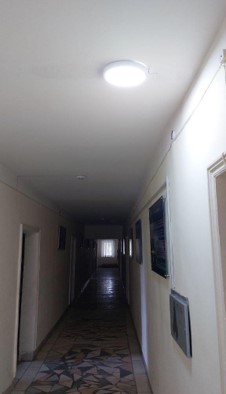
Automated Controls & Sensors: Installation of motion sensors and automated timer controls in public areas, hallways, and lecture rooms to eliminate standby power waste.
Building Insulation & Retrofitting: Installation of double-glazed energy-efficient windows and thermal insulation retrofits on main academic buildings to optimize thermal efficiency.
Monitoring, Auditing & Behavioral Campaigns:
Regular internal energy audits to monitor electricity and natural gas consumption patterns across all campus zones.
Awareness campaigns encouraging students and faculty members to adhere to “Turn Off When Not in Use” protocols and energy-saving habits.
Official Energy Efficiency Strategy / Action Plan (PDF): [Insert Direct URL Link
Institutional Alignment & Strategic Context:
Navoi State University (NSU) actively contributes to Uzbekistan’s National Renewable Energy Strategy 2030 by serving as a regional hub for green transformation and clean energy innovation. To achieve carbon footprint reduction and advance campus-wide sustainability, NSU systematically deploys energy-efficient infrastructure—including rooftop solar photovoltaic systems, LED lighting transitions, solar water heating units (boilers), and experimental wind turbines.
Strategic Vision, Mission, and Core Principles:
Vision: To establish NSU as a leading national model in sustainable campus infrastructure management, green technology research, and clean energy innovation.
Mission: To seamlessly integrate renewable energy technologies, energy-efficient operational standards, and behavioral sustainability into higher education curricula and daily institutional management.
Core Principles: Innovation, Affordability, Inclusiveness, Transparency, and Institutional Accountability.
Implementation of Campus Clean Energy Infrastructure and Launch of the “Green Energy” Scientific-Educational Platform
As part of its comprehensive strategy to promote clean energy and enhance campus energy efficiency, Navoi State University has established the “Green Energy” Scientific and Educational Platform under the Department of Physics and Astronomy, in strategic partnership with “NAVOIY GOLD” LLC.
This clean energy infrastructure initiative directly supports the university’s energy reduction and sustainability targets through several key components designed, built, and installed by university faculty and engineers:
Mini Photovoltaic Power Stations: Two mini solar PV stations were constructed to generate clean electricity, directly reducing reliance on grid power for laboratory and educational operations.
“SMART STOP” Intelligent Bench: A smart, solar-powered bench integration demonstrating energy-efficient urban infrastructure and off-grid renewable energy usage.
Solar Kitchen Prototype: A specialized renewable thermal application deployed to explore alternative, zero-emission cooking and heating technologies.
Starting from the 2026–2027 academic year, this platform serves as an active research and operational testing ground for Master’s students specializing in “Renewable Energy Sources.” It combines physical clean energy generation on campus with applied scientific research and energy conservation training.
Preliminary Results and Expansion of the Campus “Green Energy” Scientific and Educational Platform
As part of Navoi State University’s ongoing strategy to promote campus energy efficiency, renewable energy transition, and practical sustainability education, the Department of Physics and Astronomy—in strategic partnership with “NAVOIY GOLD” LLC—has achieved its initial operational milestones for the “Green Energy” Scientific and Educational Platform.
This campus clean energy deployment integrates both energy generation and thermal/off-grid applications to reduce overall dependency on non-renewable grid electricity:
Solar Photovoltaic (PV) Infrastructure: Two operational mini solar PV power stations have been successfully commissioned to generate clean electricity for campus needs.
Thermal & Off-Grid Applications (In Progress/Deployment Phase):
Solar Water Heater: Deployed to demonstrate and utilize solar energy for domestic water heating, replacing electric heating units.
Solar Fruit Dryer: A dedicated solar-thermal unit designed for energy-efficient agricultural processing and research.
Solar Kitchen Prototype: Applied thermal installation exploring alternative zero-emission cooking technologies.
This initiative serves a dual function: directly reducing the university’s non-renewable energy consumption footprint while serving as an active hands-on laboratory for students specializing in “Renewable Energy Sources” to develop practical skills in clean energy technology development.
Alignment with National Policy: “Future Entrepreneur” Startup Funding Program for Energy-Saving and Clean Technologies
Navoi State University’s energy efficiency and innovation strategy aligns closely with Uzbekistan’s national initiatives aimed at promoting green entrepreneurship and sustainable technologies. Pursuant to Presidential Decree No. UP-127 (issued August 27, 2026), the Government of Uzbekistan announced the launch of the national “Future Entrepreneur” (Kelajak Tadbirkori) program for 2027–2030.
Under this framework, the National Venture Capital Fund (UzVC) will provide financial backing to up to 30 selected innovative startups across priority economic sectors, explicitly including water and energy-saving technologies.
Investment Scale: Up to 5 billion UZS per project.
Financial Mechanism: Provided as a 3-year interest-free, collateral-free convertible loan or SAFE (Simple Agreement for Future Equity) agreement.
Target Areas: Energy efficiency technologies, renewable integration, pharmaceutical, chemical, and engineering innovations.
This national funding mechanism provides a direct pathway for Navoi State University’s student-led eco-innovations, green research projects, and university-spinoff startups (such as those developed within the “Green Energy” scientific-educational platform) to scale into commercial, high-impact clean energy enterprises.
Official Reference:
National Policy Reference: Decree of the President of the Republic of Uzbekistan (August 27, 2026) on the implementation of tasks set in the 6th Open Dialogue with Entrepreneurs. https://lex.uz/uz/docs/-8442717
Local Municipality Collaboration and Presentation of Piezoelectric Clean Energy & IT Startup Projects at IT Park Navoi Startup Studio
Navoi State University continuously bridges academic research and local government initiatives to support sustainable urban development, energy harvesting innovations, and youth entrepreneurship. During an official startup demonstration event held at the IT Park Navoi Startup Studio, the Mayor of Navoi City, Dilmurod Ergashev, reviewed innovative projects presented by young innovators and university-linked researchers.
Among the presented high-impact technological solutions, a flagship clean energy project was highlighted:
Kinetic Energy Harvesting from Pedestrian Walkways: An innovative renewable energy system designed to capture kinetic/piezoelectric energy from pedestrian footsteps, store it in dedicated energy banks, and distribute it to local campus/urban consumers (e.g., smart lighting, charging stations).
Broader Eco-System & Urban Innovation Context:
In addition to clean energy harvesting, the presentation showcased multidisciplinary digital innovations, including:
UnicalMed: An NFC-based digital healthcare system unifying patient history and diagnostics.
Praktoruz: An online knowledge assessment platform.
LeadNova: An AI-powered B2B customer search system for exporting enterprises.
Multifunctional Mobile Platform: Integrating employment opportunities, local commerce, and digital interaction.
The local administration emphasized active institutional support, mentorship, and integration pathways to transition these clean energy and digital startup prototypes into practical urban infrastructure across Navoi City. https://gov.uz/oz/navoiy/news/view/150202
Implementation of Smart Motion-Sensor Lighting Systems for Idle Energy Waste Reduction
Navoi State University (NSU) has implemented motion-activated smart lighting systems across high-traffic and low-traffic common areas, including hallways, restrooms, lecture halls, and administrative corridors, as part of its campus-wide Energy Efficiency Action Plan.
Operational Mechanism: The installed smart occupancy sensors detect movement to automatically toggle LED lighting, ensuring illumination is active exclusively during occupancy and eliminating unnecessary standby power consumption.
Targeted Efficiency: The system specifically targets intermittent-use zones where manual lighting control traditionally results in prolonged energy waste.
Environmental & Economic Impact: By eliminating idle electricity usage, this initiative directly contributes to lowering institutional carbon emissions, optimizing baseline power demand, and reducing operational utility expenditures.
Strategic Alignment: The rollout reflects NSU’s broader commitment to integrating smart building technologies and sustainable infrastructure practices into daily campus operations.
Awareness, Education, and Research:
NSU integrates clean energy into academic instruction through elective courses and student research projects, supported by flagship events like “Green Campus Week” and the “Energy Innovation Challenge.”
Strategic Partnerships :
NSU collaborates with IT Park Uzbekistan, Chinese Academy of Renewable Energy Technologies, and Debrecen University (Hungary) to advance clean technology research, knowledge exchange, and sustainable infrastructure benchmarks.
Detailed Campus Baseline Energy Assessment and 5-Year Implementation Roadmap (2026–2030)
Navoi State University (NSU) has executed a comprehensive Baseline Energy Assessment across all university assets (academic buildings, research laboratories, dormitories, administrative units, and sports facilities) using historical utility data, smart meter readings, and portable energy analyzers. This data-driven baseline establishes standardized energy intensity metrics (kWh per capita and kWh per. m2 ).
Identification of Core Energy Drivers:
Through audit profiling, NSU identified key energy consumption areas:
Classroom/corridor lighting and ICT computer laboratories.
Seasonal HVAC (heating/cooling) loads and centralized gas-boiler operation.
Student dormitory hot water demand and high-power specialized research lab equipment.
Targeted Efficiency Interventions:
Electricity Profile & Smart Monitoring): Progressive annual reduction targets per capita supported by LED transitions, smart occupancy sensors, smart metering deployment, and rooftop solar PV expansion.
Thermal & Heating Optimization: Scaled deployment of solar water boilers, double-glazed window retrofits, insulation upgrades, and optimized combustion maintenance for centralized gas boilers.
Year-by-Year Implementation Roadmap (2026–2030):
2026: Institutionalization of the Energy Management Office (EMO), finalizing solar PV engineering designs, completing priority LED retrofits, and launching student awareness campaigns.
2027: Rooftop solar PV expansion, pilot smart metering, curriculum integration, and student-led energy tracking.
2028: Campus-wide smart meter coverage, online energy dashboard launch, and hosting the International ‘Green Campus and Clean Energy’ Conference.
2029: Deployment of AI-driven anomaly detection analytics, industry partnership expansion, and launching SDG 7 innovation research grants.
2030: Target verification, publication of the comprehensive SDG 7 Progress Report, and strategic cycle renewal.
To track the progress of the Energy Efficiency Plan and evaluate the effectiveness of clean energy measures, Navoi State University utilizes the following institutional Key Performance Indicators (KPIs):
Energy Intensity Reduction: Percentage reduction in annual electricity consumption ($kWh$) per capita (student and staff) and per square meter ($m^2$) of campus built area.
Renewable Energy Share: Percentage of total campus electricity demand supplied by on-site solar photovoltaic (PV) and alternative clean energy installations.
Thermal Efficiency: Percentage of domestic hot water demand met by solar boilers across dormitories and laboratory facilities.
Smart Infrastructure Deployment: Percentage of academic and administrative facilities equipped with smart meters, motion sensors, and automated LED lighting systems.
Carbon Footprint Reduction: Annual metric tons of $CO_2$ equivalent emissions avoided through energy-saving initiatives and green technology adoption.
12. Financial Mechanisms and Resource Allocation
The implementation of the 2026–2030 Roadmap relies on a diversified financial framework ensuring long-term sustainability:
Internal University Budget: Annual budgetary allocations dedicated to routine maintenance, energy audits, LED retrofits, and smart sensor upgrades.
Government Grants & State Programs: Participation in national green transformation funds, including the “Future Entrepreneur” (Kelajak Tadbirkori) program supported by the National Venture Capital Fund (UzVC) for energy-saving startups and research.
Private Sector & Industry Partnerships: Co-financing and technical equipment sponsorship through public-private partnerships (e.g., collaboration with “NAVOIY GOLD” LLC and IT Park Uzbekistan).
International Grants & Academic Mobility: Resource mobilization through joint research grants and infrastructure cooperation with international partners (such as the Chinese Academy of Renewable Energy Technologies and Debrecen University).