Supporting Government Policy Development for Clean Energy and Energy Efficiency
The development of clean energy and energy-efficient technologies is an important component of Uzbekistan’s sustainable development agenda. The Law of the Republic of Uzbekistan No. O‘RQ-539 of 21 May 2019, “On the Use of Renewable Energy Sources,” establishes the legal framework for renewable energy use. This framework is complemented by Law No. O‘RQ-940 of 7 August 2024, “On Energy Saving, Rational Use of Energy and Improvement of Energy Efficiency,” which regulates energy conservation and efficient energy use. Together, these laws provide a national legislative foundation for advancing clean energy and energy efficiency.
Within this national context, universities can make an important contribution by providing scientific evidence, technical expertise and practical recommendations to public authorities. Research-based advice, expert consultations and participation in policy discussions can help government bodies assess technological options and develop effective energy policies and programmes.
The following section presents the relevant activities and supporting evidence, with attention to the public authorities involved, the university’s contribution and the policy-related outputs.
Collaboration with Government Organizations
Collaboration between Navoi State University (NSU) and government organizations offers opportunities to connect academic expertise with public policy priorities in clean energy and energy efficiency. The university’s research and educational capacity can support informed discussions on renewable energy technologies, efficient energy use and sustainable development at local and regional levels.
Relevant areas for cooperation include providing research-based recommendations to public authorities, contributing to consultations on regional energy programmes and sharing technical knowledge with government specialists. NSU’s campus experience with solar energy and energy-saving measures can also provide practical insights for discussions on improving energy efficiency in public institutions.
For this cooperation to contribute effectively to policy development, technical findings should be translated into clear recommendations addressing the needs of public authorities. Documented consultations, jointly prepared proposals and expert reports would demonstrate how university knowledge informs the development of clean energy and energy-efficiency policies.
Over the past several years, Navoi State University has held a number of meetings and discussions on clean energy and energy efficiency. These meetings have provided opportunities to review the university’s energy needs, discuss practical approaches to reducing energy consumption and identify priorities for improvement. The discussions have contributed to important changes in the university’s approach to energy management, encouraging the adoption of energy-saving measures and more efficient use of resources across campus. This ongoing dialogue has supported NSU’s broader efforts to strengthen environmental sustainability and promote responsible energy use. https://sdg.nsuni.uz/university-contribution-in-policy-development/
No | Event/ Meeting Title | Date | Key outcomes from the event |
1. | A scientific-practical conference has started at the university | October 3-4, 2025 | Scientists, specialists, and representatives from various organizations and institutions are participating in the conference, presenting their scientific opinions and research within the scope of the topic.Today, the official opening ceremony of the conference took place. The rector of Navoi State University, Professor M. Kalonov, opened the event and shared his thoughts on climate change, environmental issues, and sustainable economic development in our country. |
2. | An official meeting with Chinese partners was held | March, 2025 | During the bilateral official negotiations, the Mayor of Navoi city, Dilmurod Ergashev, and the Rector of Navoi State University, Professor Mukhiddin Kalonov, discussed prospects for cooperation, strengthening mutual relations in the fields of education and science, establishing student and faculty exchange programs, as well as implementing innovative projects.In particular, proposals were made to establish the “Geely–Navoi” STEM School, turn Navoi city into Geely’s Central Asian export hub, create a Geely Technopark and Innovation School, develop a “Green” Industry and Environmental Technologies Park, and implement joint projects in electric vehicle technologies. |
3. | Environmental culture should become a lifestyle for every citizen | May 15, 2025 | The purpose of the event was to promote the essence and significance of the Presidential Decree of the Republic of Uzbekistan dated May 15, 2025, “On the Concept for Enhancing the Environmental Culture of the Population for the Period up to 2030” among the general public, especially the youth.During the event, special attention was also given to the historic meeting held between the President and young people on February 14, 2025. The ideas put forward during this dialogue — especially those related to ecology, education, and youth — were interpreted as a symbol of the great trust and responsibility placed on the younger generation. |
4. | Raising Environmental Awareness Among the community – A Guarantee of a Sustainable Future! | May 15, 2025, | a roundtable discussion was held by the Navoi Regional Council of the Ecological Party of Uzbekistan in cooperation with the Faculty of Preschool and Primary Education of Navoi State University. The event aimed to convey the essence and significance of the Presidential Decree of the Republic of Uzbekistan No. PQ–184 dated May 15, 2025, “On Approval of the Concept for Raising Environmental Awareness Among the Population Until 2030.”This concept serves as an important legal foundation for ensuring environmental sustainability, fostering a responsible attitude toward nature, developing environmental thinking among the younger generation, and increasing the activity of civil society in this process. |
5. | Open Dialogue with Students Held at Navoi State University | May, 2025 | an open dialogue was held at Navoi State University on the implementation of the “Uzbekistan – 2030” strategy within the framework of the 2025 “Year of Environmental Protection and Green Economy”, focusing on sustainable energy and green energy issues.The event was attended by Botirali Shodiyev, Deputy of the Legislative Chamber of the Oliy Majlis of the Republic of Uzbekistan and member of the Ecological Party faction; a Deputy of the People’s Council of Navoi City elected from our party; as well as the Rector of Navoi State University, Professor Mukhiddin Kalonov; Chairman of the Navoi Regional Council, Alijon Jalilov; university faculty members; and student-youth representatives.During the event, topics such as sustainable energy, renewable energy sources, energy efficiency, and the development of environmentally friendly technologies were discussed, along with opportunities for students to engage in scientific and practical activities in the energy sector. |
In 2026, Navoi State University undertook the following collaborative activities with government organizations in the field of clean energy and energy efficiency:
University–Industry Cooperation: Opportunities to Advance Energy Efficiency
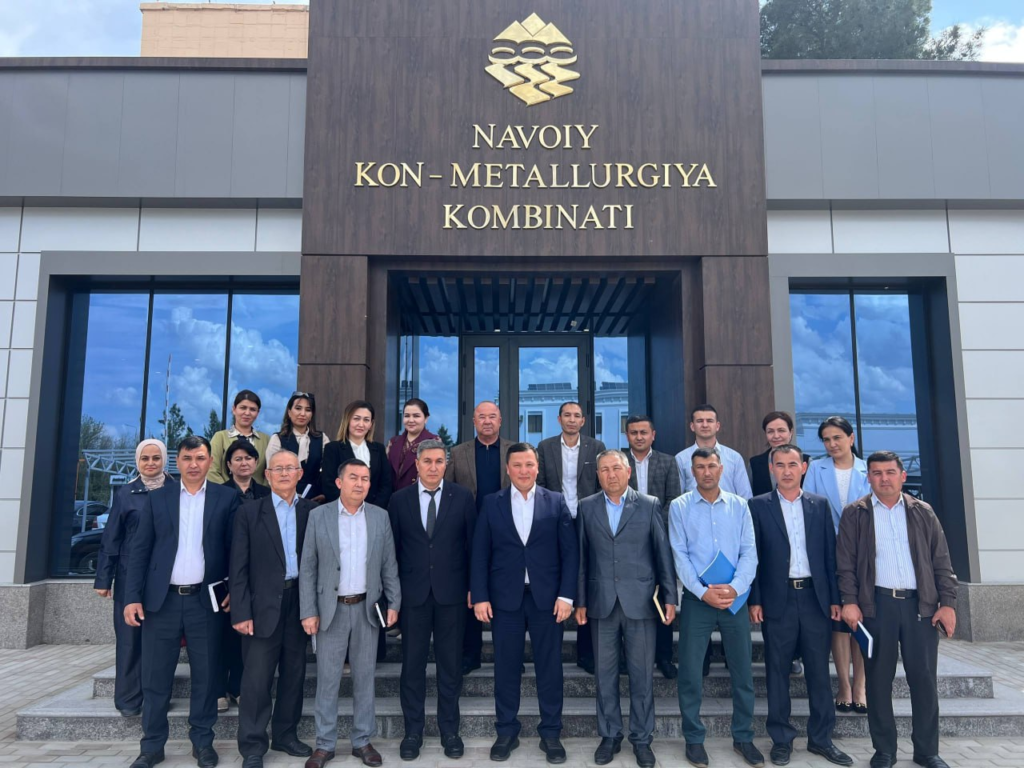
Navoi State University (NSU) and Navoi Mining and Metallurgical Company (NMMC) JSC discussed opportunities to strengthen cooperation across research, education and industrial practice. At the initiative of NMMC Director General Professor Quvondiq Sanaqulov, NSU Rector Professor Muxiddin Kalonov, Vice-Rector for Research S. Xujjyev and academic staff from the chemistry and biology departments participated in scientific and practical discussions.
During the meeting, the participants examined pressing scientific and technical challenges facing NMMC and opportunities to draw on the university’s research expertise to develop practical solutions. The parties agreed to pursue research under contractual arrangements and introduce dual education opportunities for undergraduate and master’s students. Joint scientific and technical project presentations involving chemistry, biology, physics, mathematics and computer science were scheduled for 15 April 2026.
This cooperation provides a potential foundation for addressing energy efficiency in industrial operations. Joint research in these disciplines could help identify opportunities to optimise production processes, reduce energy losses and improve resource use. By connecting academic expertise with practical industrial needs, the partnership offers opportunities to develop research-based solutions that support more energy-efficient and environmentally sustainable production.
2. Physics Education and Innovation: Relevance to Energy Efficiency
Navoi State University hosted a national scientific and practical conference entitled “Modern Trends in Teaching Physics in an Environment of Information and Innovative Technologies: Problems and Solutions.” The conference was opened by Ilhom Nasriddinov, Vice-Rector for Research and Innovation, who welcomed participants and wished them productive discussions.
The conference’s focus on physics education and innovative technologies is relevant to developing the knowledge and skills needed to address energy-efficiency challenges. An understanding of physical principles provides a foundation for analysing energy conversion, heat transfer and electricity consumption. Innovative teaching approaches can help students apply these principles to practical questions concerning energy conservation and the efficient use of technologies. In this context, the conference’s educational focus has potential relevance to strengthening the scientific capacity needed for a more energy-efficient future.
3. Supporting Innovation through a Ministry-Led Initiative
Navoi State University organised the first qualifying stage of the national “Best Higher Education Inventor” competition in accordance with Order No. 14 of the Minister of Higher Education, Science and Innovation of the Republic of Uzbekistan. The competition brought together academic staff, undergraduate and master’s students, and PhD researchers, who presented innovative inventions across eight priority areas.
Participants demonstrated their projects through presentations and working prototypes, enabling the judging panel to assess their practical applications. The event provided a platform for identifying promising inventions and connecting university research with nationally coordinated innovation initiatives.
Such initiatives can provide a foundation for future engagement with public authorities on clean energy and energy-efficient technologies. Where relevant inventions are identified, their technical findings could be developed into evidence-based recommendations to inform government programmes and policy discussions.
4. Geography and Sustainable Development: Relevance to Energy Efficiency
The Department of Geography within the Faculty of Natural Sciences and Medicine at Navoi State University organised an international scientific and practical conference entitled “Geography in Sustainable Development: Integration of Science, Education and Technologies.” Held on 25–26 September at the Centre for Spirituality and Enlightenment, the conference brought together scientists, academic staff, researchers, industry specialists and students. Participants discussed the role of geography in sustainable development, the integration of innovative technologies into research and education, and priority areas for scientific investigation. They also shared proposals for improving research effectiveness and strengthening cooperation between education and practice.
These themes are relevant to energy efficiency and clean energy planning. Geographical research can support the assessment of renewable energy potential, the analysis of spatial patterns of energy demand and the identification of suitable locations for energy infrastructure. By encouraging interdisciplinary exchange, the conference provided a platform for developing knowledge that can inform more efficient resource use and sustainable regional development.
5. Developing Student Research Capacity Relevant to Clean Energy Innovation
Navoi State University held a presentation session for students on developing and implementing fundamental, applied, innovative and startup projects. The session aimed to encourage participation in research and help students turn their ideas into clearly structured project proposals.
Participants received guidance on organising research, developing project concepts, defining objectives and demonstrating practical relevance and expected outcomes. The session also introduced approaches to startup development, commercialising innovative products and services, presenting projects effectively and participating in competitions and grant programmes.
These research and project-development skills can be applied to clean energy and energy-efficient technologies. They provide a foundation for students to investigate practical challenges, assess proposed solutions and communicate research findings. Where future projects address energy issues, their results could inform technical recommendations for public authorities and contribute to evidence-based policy discussions.
6. Physics Students’ Seminar and Training on Electricity Conservation
A seminar and training session on electricity conservation was organised by physics students at Navoi State University. The event focused on raising awareness of efficient electricity use and explaining how knowledge of physics can help address practical energy-saving challenges.
The seminar provided an educational setting for connecting scientific principles with responsible energy consumption. Activities of this kind can strengthen students’ ability to explain energy efficiency, assess opportunities for reducing electricity waste and communicate practical recommendations to wider audiences.
In relation to government policy development, student-led initiatives can provide a starting point for preparing recommendations on electricity conservation in public institutions. Their contribution to THE indicator 7.4.4 would depend on documented engagement with public authorities, such as presenting technical findings or submitting recommendations for consideration in local energy-efficiency programmes.