Relationships to support the goals
Navoi State University adheres to a comprehensive strategic vision focused on intensive internationalization, academic integration, and cross-border scientific cooperation. In full alignment with United Nations Sustainable Development Goal 17 (Partnerships for the Goals), the university actively positions itself as an open, globally connected institution dedicated to improving educational quality, advancing joint research, and fostering sustainable socioeconomic development.
As a leading regional higher education institution, Navoi State University regularly organizes and hosts a wide array of international scientific-practical conferences, symposia, and expert forums. These events serve as vital platforms for convening distinguished scholars, researchers, and policymakers from numerous foreign countries across Europe, Asia, and the CIS region.
Navoi State University maintains active bilateral and multilateral cooperation agreements with a growing network of prestigious foreign universities, research institutes, and international organizations. These partnerships extend beyond formal memoranda into active, practical collaborations that directly enhance institutional capacity:
- Academic Mobility & Exchange: Systematically implementing student and faculty exchange programs to build cross-cultural competencies and global academic standards.
- Joint Educational & Research Projects: Collaborating with international counterparts on cutting-edge research domains, curriculum enhancement, and digital innovation.
International Centers & Training Hubs: Establishing specialized language, cultural, and technological centers in cooperation with foreign academic leaders to promote linguistic diversity and professional skill development.
NAVOI STATE UNIVERSITY
1.
SDG Indicator Focus: | SDG 3, SDG 8, SDG 13, SDG 15 |
Event Name: | International Scientific and Practical Conference on “Problems and Solutions of Biodiversity, Green Economy, and Ecological Balance” |
Host Institution: | Navoi State University, Uzbekistan |
Participating Countries: | Uzbekistan, Russia, Kazakhstan, India, Belarus, Nepal, and representatives from over 10 foreign nations. |
- Executive Summary
Navoi State University actively participates in international collaborations aimed at gathering, measuring, and evaluating data related to the United Nations Sustainable Development Goals (SDGs). As a core part of its institutional strategy for environmental sustainability and international research partnerships, the university organized and hosted an international scientific and practical conference addressing key ecological, economic, and biodiversity challenges. This official document provides formal evidence of cross-border academic collaboration, joint scientific exchange, and data-driven policy dialogue.
- Institutional Conference Report & Collaboration Details
Navoi State University hosted an international scientific and practical conference titled “Problems and Solutions of Biodiversity, Green Economy, and Ecological Balance.” The conference convened distinguished scholars, environmental experts, researchers, and policymakers from more than ten foreign countries, including Russia, Kazakhstan, India, Belarus, and Nepal.
The opening ceremony was led by the Rector of Navoi State University, Professor Muxiddin Kalonov. In his keynote address, Professor Kalonov emphasized the paramount importance of international cooperation and joint scientific monitoring in addressing global ecological challenges. He highlighted the significance of integrating academic research with national environmental initiatives, such as the “Yashil Makon” (Green Space) nationwide movement, to ensure sustainable ecological balance.
During the plenary and breakout sessions, international delegates presented empirical reports, scientific measurements, and analytical models. Key thematic areas aligned with the Sustainable Development Goals included:
- Biodiversity Preservation (SDG 15 – Life on Land): Presenting and measuring research data regarding ecosystem preservation, wildlife protection, and regional flora dynamics.
- Green Economy & Climate Action (SDG 13 – Climate Action & SDG 8 – Decent Work and Economic Growth): Analyzing sustainable economic frameworks, renewable energy transitions, and environmental impact metrics.
- Food Security & Environmental Health (SDG 2 – Zero Hunger & SDG 3 – Good Health and Well-Being): Evaluating environmental quality data and its direct correlation with public health and food safety.
Following the thematic presentations, participants engaged in detailed group discussions across specialized sections. The conference concluded with the adoption of actionable resolutions and collaborative research proposals aimed at environmental protection, laying a structured foundation for continuous international data collection and academic partnership.
- Summary Matrix of Evidence Alignment
|
|
Institutional Leadership as a Body | Navoi State University officially initiated, organized, and hosted the international conference under the direction of the University Rector. |
International Participation | Participation of leading scholars and environmental specialists from over 10 countries (Russia, Kazakhstan, India, Belarus, Nepal, etc.). |
SDG Data & Measurement | Joint gathering, analysis, and discussion of empirical data focused on biodiversity conservation, climate resilience, and green economy indicators. |
|
NAVOI STATE UNIVERSITY
2.
SDG Indicator Focus: | SDG 9, SDG 4 |
Partner Institution: | Bucheon University (Republic of Korea) |
Host Institution: | Navoi State University (Republic of Uzbekistan) |
Key Signatories: | Prof. Muxiddin Kalonov (Rector, NSU) & Han Chung Such (President, Bucheon University) |
Executive Summary
Navoi State University continues to systematically expand its international academic partnerships in alignment with United Nations Sustainable Development Goal 17 (Partnerships for the Goals). As part of this commitment, a high-level delegation from Bucheon University (Republic of Korea) visited Navoi State University. The primary objective of the visit was to establish a dedicated Korean Language Center at Navoi State University and sign a bilateral cooperation agreement aimed at enhancing joint educational, technological, and scientific initiatives.
Official Visit & Agreement Overview
During the official visit, an executive meeting was conducted between Professor Muxiddin Kalonov, Rector of Navoi State University, and Han Chung Such, President of Bucheon University. The leaders discussed strategic frameworks for cross-border education, linguistic exchange, and technological integration. The visit concluded with the formal signing of a Memorandum of Cooperation between the two higher education institutions.
Under the terms of the signed agreement, the universities have established structured cooperation across several key priority areas:
Establishment of the Korean Language Center: Creating a dedicated linguistic and cultural hub at Navoi State University to support language proficiency and intercultural exchange.
Academic Mobility Programs: Facilitating bilateral student and faculty exchange programs to build global competencies.
Joint Projects in Artificial Intelligence (AI): Collaborating on advanced research and educational initiatives in AI and digital technologies (SDG 9 & SDG 17).
Summer Schools & Short-Term Training: Organizing intensive joint academic training programs and summer schools for professional skill development.
Summary Matrix of Evidence Alignment
THE Requirement | Demonstrated Institutional Evidence |
Institutional Commitment as a Body | High-level bilateral meeting and official agreement signed between the Rector of NSU and the President of Bucheon University. |
International Partnership | Formal strategic partnership established between Navoi State University (Uzbekistan) and Bucheon University (Republic of Korea). |
SDG Contributions (SDG 17, 4, 9) | Implementation of academic mobility, joint AI technological research, and language education programs. |
Relationships to support the goals
Navoi State University adheres to a comprehensive strategic vision focused on intensive internationalization, academic integration, and cross-border scientific cooperation. In full alignment with United Nations Sustainable Development Goal 17 (Partnerships for the Goals), the university actively positions itself as an open, globally connected institution dedicated to improving educational quality, advancing joint research, and fostering sustainable socioeconomic development.
As a leading regional higher education institution, Navoi State University regularly organizes and hosts a wide array of international scientific-practical conferences, symposia, and expert forums. These events serve as vital platforms for convening distinguished scholars, researchers, and policymakers from numerous foreign countries across Europe, Asia, and the CIS region.
Navoi State University maintains active bilateral and multilateral cooperation agreements with a growing network of prestigious foreign universities, research institutes, and international organizations. These partnerships extend beyond formal memoranda into active, practical collaborations that directly enhance institutional capacity:
Academic Mobility & Exchange: Systematically implementing student and faculty exchange programs to build cross-cultural competencies and global academic standards.
Joint Educational & Research Projects: Collaborating with international counterparts on cutting-edge research domains, curriculum enhancement, and digital innovation.
International Centers & Training Hubs: Establishing specialized language, cultural, and technological centers in cooperation with foreign academic leaders to promote linguistic diversity and professional skill development.
NAVOI STATE UNIVERSITY
1.
SDG Indicator Focus: | SDG 3, SDG 8, SDG 13, SDG 15 |
Event Name: | International Scientific and Practical Conference on “Problems and Solutions of Biodiversity, Green Economy, and Ecological Balance” |
Host Institution: | Navoi State University, Uzbekistan |
Participating Countries: | Uzbekistan, Russia, Kazakhstan, India, Belarus, Nepal, and representatives from over 10 foreign nations. |
Executive Summary
Navoi State University actively participates in international collaborations aimed at gathering, measuring, and evaluating data related to the United Nations Sustainable Development Goals (SDGs). As a core part of its institutional strategy for environmental sustainability and international research partnerships, the university organized and hosted an international scientific and practical conference addressing key ecological, economic, and biodiversity challenges. This official document provides formal evidence of cross-border academic collaboration, joint scientific exchange, and data-driven policy dialogue.
Institutional Conference Report & Collaboration Details
Navoi State University hosted an international scientific and practical conference titled “Problems and Solutions of Biodiversity, Green Economy, and Ecological Balance.” The conference convened distinguished scholars, environmental experts, researchers, and policymakers from more than ten foreign countries, including Russia, Kazakhstan, India, Belarus, and Nepal.
The opening ceremony was led by the Rector of Navoi State University, Professor Muxiddin Kalonov. In his keynote address, Professor Kalonov emphasized the paramount importance of international cooperation and joint scientific monitoring in addressing global ecological challenges. He highlighted the significance of integrating academic research with national environmental initiatives, such as the “Yashil Makon” (Green Space) nationwide movement, to ensure sustainable ecological balance.
During the plenary and breakout sessions, international delegates presented empirical reports, scientific measurements, and analytical models. Key thematic areas aligned with the Sustainable Development Goals included:
Biodiversity Preservation (SDG 15 – Life on Land): Presenting and measuring research data regarding ecosystem preservation, wildlife protection, and regional flora dynamics.
Green Economy & Climate Action (SDG 13 – Climate Action & SDG 8 – Decent Work and Economic Growth): Analyzing sustainable economic frameworks, renewable energy transitions, and environmental impact metrics.
Food Security & Environmental Health (SDG 2 – Zero Hunger & SDG 3 – Good Health and Well-Being): Evaluating environmental quality data and its direct correlation with public health and food safety.
Following the thematic presentations, participants engaged in detailed group discussions across specialized sections. The conference concluded with the adoption of actionable resolutions and collaborative research proposals aimed at environmental protection, laying a structured foundation for continuous international data collection and academic partnership.
Summary Matrix of Evidence Alignment
Institutional Leadership as a Body | Navoi State University officially initiated, organized, and hosted the international conference under the direction of the University Rector. |
International Participation | Participation of leading scholars and environmental specialists from over 10 countries (Russia, Kazakhstan, India, Belarus, Nepal, etc.). |
SDG Data & Measurement | Joint gathering, analysis, and discussion of empirical data focused on biodiversity conservation, climate resilience, and green economy indicators. |
https://t.me/eduuz/46294 |
NAVOI STATE UNIVERSITY
3.
SDG Indicator Focus: | SDG 17, SDG 4 |
Forum Context: | IV Uzbekistan–Belarus Interparliamentary Forum (Khiva, Uzbekistan) |
Partner Institution: | Maxim Tank Belarusian State Pedagogical University (Republic of Belarus) |
Host Institution: | Navoi State University (Republic of Uzbekistan) |
Key Representative: | Assoc. Prof. S.O. Xo‘jjiyev (Vice-Rector for Scientific Affairs & Innovation, NSU) |
Executive Summary
Navoi State University actively reinforces its global institutional footprint through high-level international diplomacy, parliamentary forums, and bilateral academic agreements in alignment with United Nations Sustainable Development Goal 17 (Partnerships for the Goals). During the IV Uzbekistan–Belarus Interparliamentary Forum held in Khiva, Navoi State University officially signed a Memorandum of Cooperation with Maxim Tank Belarusian State Pedagogical University, establishing a strategic partnership for scientific development, pedagogical advancement, and academic exchange.
Official Forum Context & Bilateral Agreement Overview
The IV Uzbekistan–Belarus Interparliamentary Forum brought together key representatives from parliaments, government ministries, local councils, higher education institutions, youth parliaments, and business leaders from both nations. Navoi State University was officially represented by Associate Professor S.O. Xo‘jjiyev, Vice-Rector for Scientific Affairs and Innovation.
Within the framework of this prestigious forum, Navoi State University signed a bilateral Memorandum of Cooperation with Maxim Tank Belarusian State Pedagogical University. The memorandum serves as a foundational legal and strategic framework for:
Educational and Scientific Development: Collaborating on modern pedagogical methodologies, scientific research initiatives, and joint academic publications.
Joint Strategic Initiatives: Designing and executing collaborative educational projects and multidisciplinary academic programs.
Academic Mobility Expansion: Facilitating structured exchanges for faculty members, researchers, and undergraduate/postgraduate students.
Institutional Partnership: Strengthening direct institutional ties and cross-border academic integration between Uzbekistan and Belarus.
Summary Matrix of Evidence Alignment
Institutional Leadership as a Body | Official representation by the Vice-Rector for Scientific Affairs & Innovation at a state-level interparliamentary forum. |
International Partnership | Formal strategic bilateral Memorandum of Understanding signed between Navoi State University and Belarusian State Pedagogical University. |
SDG Contributions (SDG 17, SDG 4) | Cross-border academic exchange, joint pedagogical research, and collaborative educational initiatives. |
NAVOI STATE UNIVERSITY
4.
SDG Indicator Focus: | SDG 17, SDG 4 |
Collaboration Type: | Bilateral Memorandum of Understanding & 1+1 Joint Master’s Degree Programs |
Partner Institution: | Kazan Federal University (Russian Federation) |
Host Institution: | Navoi State University (Republic of Uzbekistan) |
Key Focus Area: | Joint Economics Master’s Programs, Academic Mobility, and Collaborative Research |
Executive Summary
Navai State University is systematically expanding its international academic cooperation and cross-border higher education programs in alignment with United Nations Sustainable Development Goal 17 (Partnerships for the Goals). As part of this strategic institutional growth, Navoi State University hosted an official delegation from Kazan Federal University (Russian Federation). The high-level meeting concluded with the signing of a comprehensive Memorandum of Understanding and formal agreements establishing 1+1 joint Master’s degree programs in Economics, alongside joint research initiatives and academic mobility frameworks.
Official Visit & Agreement Overview
During the official visit of the Kazan Federal University delegation to Navoi State University, institutional leaders and academic representatives conducted strategic negotiations to enhance bilateral educational integration. The negotiations resulted in the formal signing of key cooperative documents:
1+1 Joint Master’s Degree Programmes in Economics: Establishing dual-degree graduate pathways allowing Master’s students to study across both universities, leveraging combined academic resources and earning internationally recognized competencies (SDG 4 & SDG 17).
Academic Mobility & Exchange: Implementing structured exchange programs for graduate students and faculty members to foster cross-cultural research and teaching excellence.
Joint Scientific Research & Grants: Launching collaborative research projects and participating in international grant competitions to address regional and global economic challenges.
Comprehensive Memorandum of Understanding: Formalizing long-term institutional partnership, curriculum harmonization, and joint academic publications.
This partnership marks a significant milestone in elevating Navoi State University’s educational quality, expanding global academic networks, and providing students with advanced international learning environments.
Summary Matrix of Evidence Alignment
Institutional Commitment as a Body | Official bilateral meeting and formal signing of agreements between Navoi State University and Kazan Federal University. |
International Partnership & Joint Degrees | Implementation of 1+1 joint Master’s degree programmes in Economics and joint research initiatives. |
SDG Contributions (SDG 17, SDG 4) | Cross-border academic mobility, joint curriculum delivery, and internationalized higher education standards. |
NAVOI STATE UNIVERSITY
5.
SDG Indicator Focus: | SDG 17, SDG 8, SDG 11, SDG 4 |
Collaboration Event: | International Bilateral Meeting & Investment Presentation |
Partner Institution: | Bucheon University (Republic of Korea) |
Key Delegates / Speakers: | Koo Jung Eun (Bucheon Univ. Representative), Prof. Lee Yoon, Allaev Khurshid |
Host Institution: | Navai State University (Republic of Uzbekistan) |
Executive Summary
Navai State University actively expands its international relations, cross-cultural exchange, and regional economic partnerships in alignment with United Nations Sustainable Development Goal 17 (Partnerships for the Goals). As part of this ongoing internationalization strategy, Navai State University hosted an official high-level meeting with representatives from Bucheon University (Republic of Korea), featuring institutional presentations, the review of the Korean Language Center operations, and a briefing on the investment potential of the Navai region.
Official Meeting & Collaborative Proceedings
During the international collaborative meeting, academic delegations from both institutions engaged in comprehensive discussions concerning future educational cooperation, curriculum development, and cultural integration. Key presentations and proceedings included:
Bucheon University Presentation: Representative Koo Jung Eun delivered an extensive institutional presentation highlighting Bucheon University’s educational programs, academic strengths, and prospective areas for bilateral cooperation.
Korean Language Center Operations: Professor Lee Yoon provided a detailed report on the ongoing activities of the Korean Language Center, student engagement, and linguistic training programs designed to foster cross-cultural proficiency (SDG 4 & SDG 17).
Regional Investment & Economic Potential: Allaev Khurshid presented a comprehensive lecture on the investment capacity, economic growth drivers, and developmental opportunities of the Navoi region, linking academic partnership with regional socioeconomic advancement (SDG 8 & SDG 11).
Open Dialogue & Collaborative Exchange: Participants engaged in open roundtable discussions, exchanging congratulatory remarks, strategic feedback, and proposals for deepening long-term institutional ties.
Summary Matrix of Evidence Alignment
Institutional Collaboration as a Body | Hosting official international delegations and conducting collaborative bilateral meetings and presentations. |
International Partnership & Cultural Exchange | Active operation of the Korean Language Center and cooperative exchange between Navoi State University and Bucheon University. |
SDG Contributions (SDG 17, SDG 8) | Fostering international partnerships, linguistic education, and presenting regional investment and economic development opportunities. |
NAVOI STATE UNIVERSITY
6.
Event Title: | International Scientific-Practical Conference on “Geography in Sustainable Development: Integration of Science, Education, and Technologies” |
Organizer / Faculty: | Department of Geography, Faculty of Natural Sciences and Medicine, Navoi State University |
Date & Venue: | September 25–26 | Center for Spirituality and Enlightenment |
Target SDGs: | SDG 17 (Partnerships for Goals), SDG 13 (Climate Action), SDG 15 (Life on Land), SDG 4 (Quality Education) |
Target Participants: | International and local scholars, professors, researchers, domain specialists, and university students |
Academic Event Overview & Background
On September 25–26, the Department of Geography within the Faculty of Natural Sciences and Medicine at Navai State University convened a flagship international scientific and practical conference titled “Geography in Sustainable Development: Integration of Science, Education, and Technologies.” Held at the Center for Spirituality and Enlightenment, this conference served as an interdisciplinary academic platform bringing together leading environmental scientists, academic faculty, researchers, industry experts, and students.
Key Scientific Pillars and SDG Measurement Data
The two-day conference centered on evaluating the role of geographical science in measuring, monitoring, and solving pressing sustainable development challenges. Through keynote addresses, scientific presentations, and panel discussions, participants focused on:
The Role of Geography in Sustainable Development (SDG 13 & SDG 15): Analyzing spatial-environmental data, territorial planning, land degradation, and biodiversity monitoring across regional ecosystems.
Integration of Modern Technologies (SDG 9 & SDG 17): Utilizing Geographic Information Systems (GIS), remote sensing technology, and digital mapping tools for measuring and tracking SDG indicators.
Educational and Practical Integration (SDG 4): Harmonizing academic research with practical environmental policy, developing joint recommendations, and enhancing young researchers’ capacity.
Collaborative Research Recommendations: Formulating actionable recommendations to bridge academic research with industrial and environmental governance.
Alignment Matrix for THE Impact Rankings
Gathering or Measuring Data for SDGs | Presenting empirical research, GIS spatial data, and environmental monitoring metrics during the conference. |
International & Cross-Sector Collaboration | Participation of foreign and national experts, professors, domain specialists, and youth researchers. |
Institutional Body Participation | Official organization and execution by Navoi State University’s Geography Department and Faculty of Natural Sciences. |
NAVOI STATE UNIVERSITY
7.
Conference Title: | International Scientific-Practical Conference: “Foreign Languages and Digital Technologies as Key Factors in Preparing Youth for Modern Professions” |
Co-Organizers: | Department of Applied English Linguistics, Faculty of Languages, Navoi State University & “Science and Innovation” International Scientific Journal |
Venue & Support: | Youth Center, Navoi | Official Welcome by Rector Prof. M. Kalonov (delivered by Vice-Rector Assoc. Prof. S. Xo‘jjiyev) |
Target SDGs: | SDG 17 (Partnerships for Goals), SDG 4 (Quality Education), SDG 8 (Decent Work & Economic Growth), SDG 9 (Industry, Innovation & Infrastructure) |
Participants Network: | Domestic & Foreign University Professors, International Researchers, Academic Scholars, and Youth Students |
Key Focal Areas: | Linguistic Competencies, Educational Digitization, AI Integration in Pedagogy, Youth Employability & Modern Career Pathways |
Executive Context & Institutional Leadership
In collaboration with the internationally indexed publication “Science and Innovation”, Navoi State University successfully organized and hosted a high-level international scientific and practical conference titled “Foreign Languages and Digital Technologies as Key Factors in Preparing Youth for Modern Professions.” Held at the Regional Youth Center, the conference was executed under the leadership of the Department of Applied English Linguistics within the Faculty of Languages.
The opening ceremony was officially led by Associate Professor S. Xo‘jjiyev, Vice-Rector for Scientific Affairs and Innovation, who conveyed the formal introductory address on behalf of the Rector of Navoi State University, Professor M. Kalonov. The leadership emphasized the university’s strategic imperative to integrate foreign language proficiency and digital tools into academic curricula to ensure global youth competitiveness.
Strategic Pillars & Cross-Disciplinary Impacts
The international conference gathered a broad coalition of academic faculty, researchers, and international scholars to address the rapid evolution of global labor markets and the role of higher education in adapting to technological advancements. The key thematic pillars included:
Multilingualism & Foreign Language Proficiency (SDG 4 – Quality Education): Evaluating modern pedagogical approaches in English linguistics, intercultural communication, and language acquisition required for global workforce participation.
Digital Transformation & EdTech Integration (SDG 9 – Innovation): Exploring digital learning management systems, artificial intelligence tools, interactive educational software, and QR-code-assisted learning materials in language pedagogy.
Youth Employability & Future Professions (SDG 8 – Decent Work): Mapping youth skill development strategies against emerging global industry requirements, remote work landscapes, and digital economy professions.
International Publishing & Research Synergies (SDG 17 – Partnerships): Fostering academic publishing partnerships with “Science and Innovation” journal to amplify youth research visibility globally.
Evidence Matrix for THE Impact Rankings
Cross-Sectoral & International Collaboration (SDG 17) | Joint organization with “Science and Innovation” journal, featuring active participation from local and international academic institutions. |
Educational Quality & Digital Pedagogy (SDG 4 & 9) | Focus on integrating foreign language learning with cutting-edge digital technologies and interactive learning methodologies. |
Youth Career Readiness & Decent Work (SDG 8) | Formulating actionable educational frameworks aimed at preparing students for modern regional and international career pathways. |
NAVOI STATE UNIVERSITY
8.
SDG Indicator Focus: | SDG 17, SDG 4 |
Agreements Implemented: | Memorandum of Understanding (MOU) & Memorandum of Agreement (MOA) |
Partner Institution: | Calvin University (Republic of Korea) |
Key Signatories & Delegates: | Hwang Kun Young (President, Calvin Univ.), Yeou In Cheon (Director, Institute of Int’l Education), Jo Byoung Reol (Director, Global Center) & Prof. M. Kalonov (Rector, NSU) |
Strategic Milestone: | Establishment of King Sejong Institute at Navoi State University in 2026 |
Host Institution: | Navoi State University (Republic of Uzbekistan) |
Executive Summary
Navoi State University systematically enhances its international academic footprint and global institutional partnerships in full alignment with United Nations Sustainable Development Goal 17 (Partnerships for the Goals) and SDG 4 (Quality Education). As part of this internationalization strategy, a high-level delegation from Calvin University (Republic of Korea), led by President Hwang Kun Young, visited Navoi State University. The visit concluded with the ceremonial signing of a Memorandum of Understanding (MOU) and a Memorandum of Agreement (MOA), as well as a strategic agreement to establish a King Sejong Institute at Navoi State University in 2026.
Official Bilateral Summit & Strategic Agreement Overview
During the official delegation visit, executive negotiations were conducted between Rector Professor M. Kalonov of Navoi State University and President Hwang Kun Young of Calvin University, accompanied by Yeou In Cheon (Director of the Institute of International Education) and Jo Byoung Reol (Director of the Global Center). The resulting MOU and MOA establish concrete operational avenues for bilateral collaboration:
Establishment of King Sejong Institute (2026): Finalizing a landmark agreement to launch a dedicated King Sejong Institute at Navoi State University in 2026, creating a premier hub for Korean language instruction, cultural exchange, and global academic opportunities.
Joint Scientific Research: Conducting collaborative research projects and joint scientific publications across priority academic disciplines.
Faculty and Student Academic Mobility: Implementing structured bilateral exchange programs for professors, researchers, and undergraduate/postgraduate students.
Educational and Scientific Resource Sharing: Exchanging curriculum materials, scientific publications, and pedagogical methodologies.
International Conferences & Symposia: Co-hosting international scientific conferences, seminars, and academic workshops.
Summary Matrix of Evidence Alignment
Institutional Leadership & Bilateral MOU/MOA | High-level bilateral delegation meeting and formal signing of MOU and MOA between Navoi State University and Calvin University. |
Cross-Border Educational Hub (King Sejong Institute) | Strategic agreement to establish the King Sejong Institute in 2026 for language, culture, and academic mobility. |
SDG Contributions (SDG 17 & SDG 4) | Implementation of joint scientific research, student/faculty mobility, and educational material exchange. |
NAVOI STATE UNIVERSITY
9.
SDG Indicator Focus: | SDG 17, SDG 4 |
Forum Context: | III Forum of Rectors of Higher Education Institutions of Uzbekistan and Tajikistan (Dushanbe, Tajikistan) |
Partner Institution: | Sotim Ulugzoda Tajik International University of Foreign Languages (Republic of Tajikistan) |
Key Signatories: | Prof. Muhiddin Kalonov (Rector, Navoi State University) & Prof. Jilo Gulnazarzoda (Rector, Tajik International University of Foreign Languages) |
Core Objective: | Bilateral academic cooperation, faculty/student exchange, joint research, and curriculum modernization |
Host Institution: | Navoi State University (Republic of Uzbekistan) |
Executive Summary
Navoi State University actively expands its regional and international academic partnerships in full alignment with United Nations Sustainable Development Goal 17 (Partnerships for the Goals) and SDG 4 (Quality Education). During the III Forum of Rectors of Higher Education Institutions of Uzbekistan and Tajikistan held in Dushanbe, an official Memorandum of Understanding was signed between Navoi State University Rector, Professor Muhiddin Kalonov, and the Rector of the Sotim Ulugzoda Tajik International University of Foreign Languages, Professor Jilo Gulnazarzoda.
Official Rectors’ Forum & Agreement Overview
The III Rectors’ Forum in Dushanbe served as a high-level bilateral platform to strengthen cross-border educational ties, foster scientific collaboration, and enhance academic mobility between Uzbekistan and Tajikistan. The newly signed Memorandum of Understanding establishes a robust legal and practical framework for multidimensional cooperation:
Academic Mobility & Exchange: Establishing structured exchange programs for professors, researchers, undergraduate, and postgraduate students.
Joint Scientific Research: Conducting collaborative scientific research and joint projects across priority academic disciplines.
International Conferences & Workshops: Co-organizing international scientific-practical conferences, symposia, seminars, and professional training sessions.
Modern Educational Programs: Introducing advanced educational curricula, sharing best practices, and supporting young scholars and researchers (SDG 4 & SDG 17).
Summary Matrix of Evidence Alignment
Institutional Leadership at State-Level Forums | High-level bilateral meeting and official signing of Memorandum of Understanding between university rectors at the III Uzbekistan-Tajikistan Rectors’ Forum in Dushanbe. |
International Academic Partnership | Strategic partnership established between Navoi State University (Uzbekistan) and Sotim Ulugzoda Tajik International University of Foreign Languages (Tajikistan). |
SDG Contributions (SDG 17 & SDG 4) | Implementation of academic mobility, joint scientific research, and modern educational program sharing. |
NAVOI STATE UNIVERSITY
10.
SDG Indicator Focus: | SDG 17, SDG 3, SDG 4 |
Agreement Type: | Bilateral Memorandum of Understanding & 2026–2029 Strategic Action Plan (Roadmap) |
Partner Institution: | Gomel State Medical University (Republic of Belarus) |
Academic Fields: | General Medicine and Pediatrics |
Key Programs: | 3+3 Bachelor’s & 1+1 Master’s Joint Degree Programmes, Free Summer Schools, Academic Mobility, and Joint Medical Research |
Host Institution: | Navoi State University (Republic of Uzbekistan) |
Executive Summary
Navoi State University is systematically expanding its international medical education and cross-border research cooperation in full alignment with United Nations Sustainable Development Goal 17 (Partnerships for the Goals) and SDG 3 (Good Health and Well-being). To achieve these institutional objectives, Navoi State University has officially established a comprehensive bilateral partnership with Gomel State Medical University (Republic of Belarus), marked by the signing of a Memorandum of Understanding and a multi-year Strategic Action Plan (Roadmap) for 2026–2029.
Key Strategic Directions & Joint Medical Programs (2026–2029)
The signed Memorandum of Understanding and the 2026–2029 Roadmap establish concrete operational mechanisms to elevate medical education quality, foster student mobility, and drive collaborative biomedical research. The core pillars of the agreement include:
Joint Degree Programmes (3+3 Bachelor’s & 1+1 Master’s): Establishing structured dual-degree pathways in General Medicine and Pediatrics, allowing students to study across both universities and attain internationally recognized medical qualifications (SDG 4 & SDG 17).
Academic Mobility & Lecture Series: Enabling student and faculty exchanges, alongside comprehensive online and offline lecture delivery by distinguished medical professors.
Complimentary Summer Schools: Organizing tuition-free summer medical training schools to foster practical clinical skills, cultural exchange, and international peer collaboration (SDG 3 & SDG 4).
Collaborative Scientific Research & Grants: Partnering on joint biomedical research projects and actively participating in international scientific grant competitions to advance healthcare solutions.
Summary Matrix of Evidence Alignment
Institutional Partnership & Strategic Roadmap | Formal signing of Memorandum of Understanding and 2026–2029 Action Plan between Navoi State University and Gomel State Medical University. |
International Joint Degree Programmes | Implementation of 3+3 Bachelor’s and 1+1 Master’s joint medical education programmes in General Medicine and Pediatrics. |
SDG Contributions (SDG 17, SDG 3, SDG 4) | Cross-border medical student mobility, free summer schools, joint biomedical research, and healthcare capacity building. |
NAVOI STATE UNIVERSITY
Conference Title: | International Scientific Conference: “The Creative Heritage of Alisher Navoi: The Synergy of Science, Spirituality, and Enlightenment” |
Date & Venue: | October 7 | Navai State University Assembly Hall |
Institutional Leadership: | Prof. Muhiddin Kalonov (Rector, Navoi State University) |
Target SDGs: | SDG 17, SDG 4, SDG 11 |
Participants Network: | Domestic & International Scholars, Alisher Navoi Researchers, Academic Faculty, and Scientific Community Representatives |
Core Focal Areas: | Literary & Scientific Heritage Research, Cultural Diplomacy, Moral & Spiritual Development of Youth, International Academic Collaboration |
Executive Context & Opening Keynote
On October 7, Navoi State University hosted the official opening ceremony of the International Scientific Conference titled “The Creative Heritage of Alisher Navoi: The Synergy of Science, Spirituality, and Enlightenment.” The flagship international academic forum was formally inaugurated by the Rector of Navoi State University, Professor Muhiddin Kalonov.
In his opening address, Rector M. Kalonov highlighted the enduring value of Alisher Navoi’s literary, philosophical, and scientific legacy, emphasizing its central role in the spiritual and intellectual development of youth. Furthermore, the rector underscored the strategic necessity of expanding international Navoi studies (“Navoiyshunoslik”) through interdisciplinary research methodologies, cultural exchange, and global academic partnerships.
Scientific Pillars & Cultural-Educational Impact
The conference gathered prominent local and international orientalists, researchers, professors, and representatives of the scientific community. Discussions and scholarly presentations revolved around integrating classical oriental philosophy into modern academic frameworks, focusing on:
Literary, Scientific, and Philosophical Analysis (SDG 4 – Quality Education): Examining Alisher Navoi’s works through contemporary scientific paradigms, linguistics, and educational methodologies.
Preservation and Promotion of Intangible Cultural Heritage (SDG 11 – Sustainable Communities): Promoting global awareness of Eastern humanistic traditions, literary heritage, and cultural diplomacy across international research networks.
Spiritual Development and Moral Pedagogy: Integrating Navoi’s humanistic values into modern higher education curricula to foster ethics, intercultural tolerance, and civic responsibility among young scholars.
International Research Networks & Knowledge Exchange (SDG 17 – Partnerships): Serving as an open platform for cross-border academic exchange, joint publication initiatives, and international research collaboration in oriental studies.
Alignment Matrix for THE Impact Rankings
Cross-Border Academic Collaboration (SDG 17) | Organization of an international conference uniting domestic and foreign orientalists, researchers, and academic faculty. |
Cultural Heritage Preservation (SDG 11.4) | Promoting, researching, and preserving Alisher Navoi’s literary and philosophical heritage on a global platform. |
Quality Education & Humanistic Pedagogy (SDG 4) | Embedding Navoi’s scientific and moral teachings into university education and youth development frameworks. |
NAVOI STATE UNIVERSITY & INSTITUTIONAL PARTNERSHIP
12.
Conference Title: | 1st International Conference for Achieving the Sustainable Development Goals |
Co-Organizers: | Navoi State University (NSU) & Abai Kazakh National Pedagogical University |
Venue: | Abai Kazakh National Pedagogical University (Almaty, Kazakhstan) |
Target SDGs: | SDG 17, SDG 4, SDG 8 , SDG 16 |
Key Metrics & Scale: | Over 120 peer-reviewed research articles covering diverse SDG topics; multi-national participation (Turkish, Uzbek, Kazakh, and international scholars) |
Core Focus: | Data gathering, measuring SDG implementation progress, public-private sector roles, and UN Vision 2030 strategic frameworks |
Executive Summary & Cross-Border Collaboration
In active collaboration with Abai Kazakh National Pedagogical University, Navoi State University (NSU) jointly organized and hosted the 1st International Conference for Achieving the Sustainable Development Goals, held at the campus in Almaty, Kazakhstan. This landmark international event brought together distinguished scholars, postgraduate researchers (predominantly NSU graduates), and domain experts from diverse nationalities, including Turkish and Uzbek representatives, to evaluate empirical progress toward the UN Vision 2030.
Scientific Pillars & SDG Measurement Data
The conference served as an advanced academic platform for gathering, measuring, and analyzing data related to sustainable development implementation. Key thematic discussions and research findings included:
Comprehensive Research Output (SDG 4 & SDG 17): Presentation and evaluation of over 120 peer-reviewed research articles spanning diverse disciplines and addressing most United Nations Sustainable Development Goals.
Multi-Sectoral Governance & Strategic Planning (SDG 16 & SDG 17): Analyzing the respective roles of the public sector, private sector, and local/international organizations in achieving sustainable development benefits under UN Vision 2030.
Socio-Economic & Political Adaptation: Addressing recent global changes across political, economic, and social levels to build robust strategic development visions and institutional frameworks.
Next-Generation Researcher Engagement (SDG 4): Active participation of postgraduate students and early-career scholars—primarily alumni and researchers from Navoi State University—fostering cross-border academic capacity.
Summary Matrix of Evidence Alignment
Gathering or Measuring Data for SDGs | Joint organization of an international conference featuring 120+ research articles evaluating empirical SDG data and implementation metrics. |
International & Cross-Border Collaboration | Partnership between Navoi State University and Abai Kazakh National Pedagogical University, involving international delegates from Turkey, Uzbekistan, and Kazakhstan. |
Institutional Body & Postgraduate Integration | Active participation of postgraduate students, mostly NSU graduates, presenting strategic development frameworks aligned with UN Vision 2030. |
NAVOI STATE UNIVERSITY
13.
Sustainability Program: | International Regional Coordination & Partnership in the “Silk Road Tourism” International Forum / Fair |
Institutional Role: | Active Regional Coordinator connecting global experts, sustainable development institutions, and tourism networks |
Target SDGs: | SDG 17, SDG 8, SDG 11 |
Key Event Highlights: | Regional sustainability strategies, international conferences, business negotiations, and global tourism opportunity presentations |
Host / Participating Institution: | Navoi State University (Republic of Uzbekistan) |
Executive Summary & Program Overview
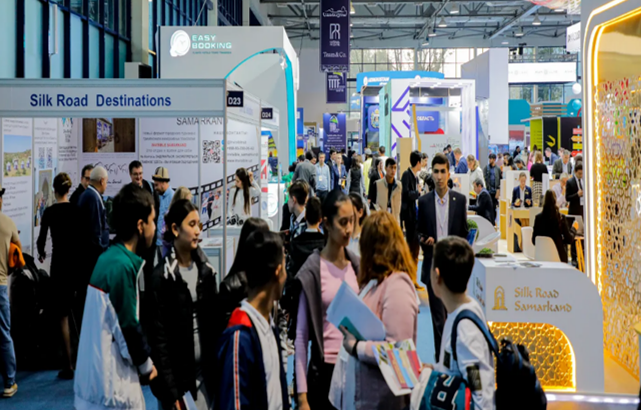
Navoi State University actively implements sustainability programs featuring robust international collaborations in full alignment with United Nations Sustainable Development Goal 17 (Partnerships for the Goals), SDG 8 (Decent Work and Economic Growth), and SDG 11 (Sustainable Cities). As a key institutional initiative, Navoi State University serves as a regional coordinator and participant in the large-scale international forum and fair “Silk Road Tourism,” gathering leading global experts in tourism, sustainable development institutions, and international delegations.
International Collaboration Activities & Strategic Advantages
Through its coordination of and participation in the Tashkent International Tourism Fair “Silk Road Tourism”, the university facilitates multilateral international partnerships and sustainable regional development. The core components and advantages of this international program include:
Global Expert Engagement & Sustainability Strategies: Hosting international conferences, presenting regional sustainability strategies, and evaluating tourism opportunities across dozens of participating countries.
Bilateral Business Negotiations & Partnerships (SDG 17): Facilitating business meetings, signing international commercial agreements, and establishing new institutional partners focused on sustainability.
Industrial Support & Product Promotion (SDG 8): Providing active support for regional tourism industry development, promoting sustainable tourist products, and conducting advanced market research.
Trend Analysis & Innovation: Enabling professionals, researchers, and students to acquaint themselves with cutting-edge global tourism trends and sustainable practices.
Summary Matrix of Evidence Alignment
University Sustainability Program with International Collaborations | Serving as regional coordinator and active participant in the international “Silk Road Tourism” forum and fair. |
International Partnerships & Agreements (SDG 17) | Finding new sustainability partners, signing business agreements, and collaborating with global experts and institutions. |
Regional & Economic Sustainability Impact (SDG 8 & 11) | Promoting sustainable tourism development strategies, industrial support, and marketing research across dozens of countries. |
NAVOI STATE UNIVERSITY
14.
SDG Indicator Focus: | SDG 17, SDG 4 |
Program Type: | International Faculty Training & Benchmarking Program in Nordic Educational Systems |
Participating Delegation: | 23 Professors and Academic Faculty Members from Navoi State University |
Diplomatic Support: | Embassy of Uzbekistan in Sweden & Honorary Consulate of Finland in Uzbekistan |
Program Duration & Venue: | 12 Days Total (7 days in Finland studying school & higher education systems; 5 days in Sweden focusing on educational benchmarking and future cooperation) |
Host Institution: | Navoi State University (Republic of Uzbekistan) |
Executive Summary & International Mobility Program
Navoi State University actively engages in international academic mobility and faculty capacity-building initiatives in full alignment with United Nations Sustainable Development Goal 17 (Partnerships for the Goals) and SDG 4 (Quality Education). Recognizing the global prominence of Nordic educational models, a delegation comprising 23 professors and academic faculty members from Navoi State University participated in intensive international training courses in Finland and Sweden. This strategic initiative was successfully realized with the vital diplomatic support of the Embassy of Uzbekistan in Sweden and the Honorary Consulate of Finland in Uzbekistan.
Structured Program & Pedagogical Benchmarking in Finland and Sweden
The 12-day international training program was meticulously structured to provide deep, experiential immersion into the world-renowned educational systems of Finland and Sweden. Guided by distinguished Finnish educational experts and institutional partners, the delegation engaged in rigorous comparative analysis across two key phases:
Immersion in the Finnish Educational Ecosystem (7 Days): The delegation spent seven days in Finland examining innovative school operations, higher education structures, and advanced pedagogical methodologies with direct mentorship from leading Finnish educational experts (SDG 4).
Educational Benchmarking & Cooperation in Sweden (5 Days): The subsequent five-day program in Sweden focused on analyzing Nordic administrative practices, higher education management, and establishing long-term bilateral academic cooperation (SDG 17).
Faculty Capacity Building & Teacher Training (SDG 4.c): Empowering 23 university professors with world-class pedagogical insights, modern curriculum design strategies, and interactive student-centered teaching models to elevate educational quality at Navoi State University.
Diplomatic & Institutional Networking: Leveraging diplomatic channels through the Uzbek Embassy in Sweden and the Finnish Honorary Consulate to forge sustainable cross-border institutional partnerships.
Summary Matrix of Evidence Alignment
International Faculty Mobility & Partnerships (SDG 17) | Participation of 23 NSU professors in international training courses across Finland and Sweden, facilitated by diplomatic missions. |
Teacher Training & Educational Quality (SDG 4.c) | Studying advanced school and higher education systems under expert Finnish guidance to upgrade pedagogical standards. |
Cross-Border Institutional Benchmarking | Executing a structured 12-day program (7 days in Finland, 5 days in Sweden) to establish mutual cooperation and institutional reform. |
NAVOI STATE UNIVERSITY
15.
SDG Indicator Focus: | SDG 17, SDG 4, SDG 9 |
Agreement Type: | Bilateral Memorandum of Cooperation & Joint Educational Program Agreements |
Partner Institution: | M. Tank Belarusian State Pedagogical University (Republic of Belarus) |
Key Joint Programs: | 1+1 Master’s Program in “Preschool Education” (starting 2026–2027 academic year); Planned 3+1 and 2+2 formats |
Fields of Cooperation: | Philological Education, Primary Education, Inclusive Education, Management & Artificial Intelligence, Machine Learning |
Host Institution: | Navoi State University (Republic of Uzbekistan) |
Executive Summary & Strategic Partnership
Navoi State University continues to expand its international academic cooperation and joint educational frameworks in full alignment with United Nations Sustainable Development Goal 17 (Partnerships for the Goals) and SDG 4 (Quality Education). An official Memorandum of Cooperation has been signed between Navoi State University and the M. Tank Belarusian State Pedagogical University. A cornerstone of this partnership is the establishment of a joint 1+1 Master’s degree program in “Preschool Education”, commencing in the 2026–2027 academic year.
Expanded Academic Fields & Collaborative Formats
Under the terms of the signed agreement, bilateral cooperation will be significantly broadened across key pedagogical, humanities, and high-technology disciplines, with joint educational programs planned in 3+1 and 2+2 formats starting next academic year:
Philological Education: Developing joint curricula and comparative linguistic research programs.
Primary Education: Enhancing pedagogical methodologies and teacher training standards.
Inclusive Education (SDG 4 & SDG 10): Promoting equal learning accessibility, special education strategies, and inclusive institutional practices.
Management & Artificial Intelligence / Machine Learning (SDG 9): Integrating advanced digital technology, AI systems, and computational data analytics into academic programmes.
Joint Degree Programmes (1+1 Master’s in Preschool Education): Structuring dual-qualification graduate training starting from the 2026–2027 academic year.
Academic Mobility, Lectures & Summer Schools: Organizing student and faculty exchange programmes, hybrid online/offline lectures, and tuition-free summer schools for students.
Summary Matrix of Evidence Alignment
Bilateral Memorandum & Joint Degree Programmes | Formal signing of cooperation agreement and launch of 1+1 Master’s program in Preschool Education (2026–2027) with M. Tank BSPU. |
Expanded Multidisciplinary Collaboration | Establishing joint 3+1 and 2+2 programs across Philology, Primary Education, Inclusive Education, Management & AI, and Machine Learning. |
SDG Contributions (SDG 17, 4 & 9) | Executing academic mobility, online/offline lectures, free summer schools, and high-tech pedagogical integration. |
NAVOI STATE UNIVERSITY
16.
SDG Indicator Focus: | SDG 17, SDG 3, SDG 4 |
Agreement Type: | Memorandum of Understanding (MoU) on International Medical & Academic Cooperation |
Partner Institution: | Medical University of Białystok (Republic of Poland) |
Core Focus Areas: | Joint Educational Programmes in Medicine, Academic & Student Mobility, Healthcare-Related Scientific Research Cooperation |
Institutional Impact: | Expanding European academic network, fostering sustainable long-term cooperation, and advancing medical education standards |
Host Institution: | Navoi State University (Republic of Uzbekistan) |
Executive Summary & European Strategic Partnership
Navoi State University has officially signed a Memorandum of Understanding (MoU) with the Medical University of Białystok, Poland. This strategic partnership marks a major milestone in establishing international cooperation in medical education, scientific research, and academic exchange between Uzbekistan and European higher education institutions [cite: 4]. The agreement aligns fully with United Nations Sustainable Development Goal 17 (Partnerships for the Goals) and SDG 3 (Good Health and Well-being).
Strategic Pillars of Medical Cooperation
Under the terms of the memorandum, both universities have established robust operational frameworks across key pillars of cooperation:
Joint Educational Programmes (SDG 4 & SDG 3): Developing and implementing joint academic programmes in medicine to enhance the quality of medical education and promote international academic standards.
Academic and Student Mobility: Facilitating structured exchanges of professors, academic staff, and students to encourage cross-cultural learning, professional development, and educational experience-sharing.
Scientific Research Cooperation (SDG 3 & 17): Expanding collaboration in healthcare-related scientific research, supporting joint research initiatives, and promoting the exchange of research findings and expertise.
Knowledge and Experience Sharing: Creating opportunities for academic staff to share teaching methodologies, innovative approaches, and international best practices in medical education.
International Academic Partnerships: Strengthening institutional relations and laying the groundwork for sustainable, long-term cooperation with European higher education institutions.
Summary Matrix of Evidence Alignment
International Academic Partnership (SDG 17) | Formal signing of MoU with the Medical University of Białystok (Poland) to expand European engagement. |
Joint Medical Programmes & Mobility (SDG 4) | Development of joint medical programmes, faculty/student exchanges, and sharing of innovative teaching methodologies. |
Healthcare Research Cooperation (SDG 3) | Supporting joint healthcare research initiatives, exchanging research findings, and advancing medical field activities. |
NAVOI STATE UNIVERSITY
17.
SDG Indicator Focus: | SDG 17 , SDG 9, SDG 4 |
Event & Venue: | International Conference on China-Central Asia Cooperation in Industry, Universities, and Research (Urumqi, China) |
Delegation Representation: | Vice-Rector for International Cooperation and Senior Staff Members of Navoi State University |
Strategic Milestone: | Official Admission as a Member of the “6 Campus” International Initiative |
Key Partnership Agreements: | Education University of Hong Kong (QS Top-12), Xinjiang Normal University, Abai Kazakh National Pedagogical University (QS 671–680), Kyrgyz National University, Korkyt Ata Kyzylorda University |
Host Institution: | Navoi State University (Republic of Uzbekistan) |
Executive Summary & International Cooperation in Urumqi
Navoi State University continues to systematically expand its international cooperation with a primary focus on sustainability, sustainable industry development, innovation transfer, and strengthening higher education systems. Represented by the Vice-Rector for International Cooperation and senior staff members, Navoi State University participated in a major international conference held in Urumqi, China, dedicated to fostering cooperation between China and Central Asian countries across industry, universities, scientific research, and the practical application of technological achievements. Nearly 300 participants from various countries attended this high-level summit.
The “6 Campus” Initiative & Global Institutional Partnerships
As a landmark milestone during the conference programme, Navoi State University was officially accepted as a member of the “6 Campus” international initiative, significantly strengthening its access to global academic and sustainability-related networks (SDG 17). Furthermore, NSU delivered a prominent presentation on the relevance of developing the higher education system in Uzbekistan. Bilateral agreements were successfully reached and formalised with leading universities across China, Kazakhstan, Kyrgyzstan, and other countries:
Education University of Hong Kong (EdUHK) (QS Top-12): Formalized partnership agreement with a world-class top-tier institution for joint academic and research initiatives.
Xinjiang Normal University (China): Established strategic cooperation in regional teacher training and academic exchange.
Abai Kazakh National Pedagogical University (QS 671–680) (Kazakhstan): Formalized collaborative framework for pedagogical research and joint academic programmes.
Kyrgyz National University (Kyrgyzstan): Agreements reached on cross-border academic and scientific cooperation.
Korkyt Ata Kyzylorda University (Kazakhstan): Expanded regional university partnerships for innovation transfer and sustainability education.
Summary Matrix of Evidence Alignment
International Academic Networks (“6 Campus” Initiative) | Official acceptance of Navoi State University as a member of the “6 Campus” international initiative at the Urumqi conference. |
High-Tier Global Partnerships (SDG 17) | Formalized partnership agreements with Education University of Hong Kong (QS Top-12), Xinjiang Normal University, Abai Kazakh National Pedagogical University, Kyrgyz National University, and Korkyt Ata Kyzylorda University. |
Industry, Innovation & Higher Education (SDG 9 & 4) | Active participation in China-Central Asian industrial and university cooperation summit, delivering presentations on Uzbekistan higher education development. |
NAVOI STATE UNIVERSITY
18.
SDG Indicator Focus: | SDG 17, SDG 4 |
Program Type: | Practical Internship & Academic Exchange under the “1+1” Joint Educational Programme |
Partner Institution: | Polotsk State University (Republic of Belarus) |
Delegation & Leadership: | 2nd-year Master’s Students (Russian Language and Literature), led by Dilorom Shamsiyeva (Director of the Registrar’s Office & Associate Professor) |
Core Activities: | Specialized Master-Classes on Moodle / Electronic Complexes, Immersive Campus Exploration, and Undergraduate Thesis Defense Observations |
Host Institution: | Navoi State University (Republic of Uzbekistan) |
Executive Summary & Joint Educational Program Implementation
Navoi State University consistently turns international agreements into active, real-world educational outcomes in full alignment with United Nations Sustainable Development Goal 17 (Partnerships for the Goals) and SDG 4 (Quality Education). Demonstrating active cross-border academic integration, 2nd-year master’s students specializing in Russian Language and Literature are currently undertaking a comprehensive practical internship and academic exchange at Polotsk State University (Republic of Belarus). The delegation is led by Dilorom Shamsiyeva, Director of the Registrar’s Office and Associate Professor.
Key Highlights of the Academic Exchange & Practical Internship
Operating under the established “1+1” joint educational program, the internship is meticulously structured to provide master’s students with immersive academic, digital, and cross-cultural competencies:
Master-Classes & Digital Learning (SDG 4): Following official bilateral meetings, students participated in specialized master-classes conducted by leading faculty members at Polotsk State University, focusing on the effective application of the Moodle distance learning system and the creation of modern electronic educational-methodological complexes.
Immersive Campus Exploration: Master’s students explored Polotsk State University’s advanced educational infrastructure, research laboratories, modern university libraries, and specialized museums to gain comparative institutional insights.
Defense Sessions & Cross-Cultural Learning: To gain deep insight into international academic standards and evaluation criteria, NSU students attended and observed Belarusian undergraduate thesis defense sessions, acquiring valuable cross-cultural and scholarly perspectives.
Summary Matrix of Evidence Alignment
International Joint Degree Programme (“1+1” Format) | Implementation of joint “1+1” Master’s program with Polotsk State University, featuring active student mobility for Russian Language and Literature master’s students led by institutional leadership (Dilorom Shamsiyeva). |
Digital Learning & Capacity Building (SDG 4) | Participation in specialized master-classes on Moodle distance learning systems and electronic educational-methodological complexes. |
Academic Benchmarking & Thesis Defenses | Observing international thesis defense sessions, exploring research laboratories, and acquiring cross-cultural academic perspectives. |
NAVOI STATE UNIVERSITY
19.
SDG Indicator Focus: | SDG 17, SDG 4, SDG 8, SDG 11 |
Event Description: | Uzbekistan–Spain Seminar on Higher Education Cooperation |
Venue: | Silk Road International University of Tourism and Cultural Heritage (Samarkand, Uzbekistan) |
International Partners: | Representatives of several leading Spanish higher education institutions |
Core Objectives: | Sustainable education collaboration, joint academic initiatives, student and staff exchange opportunities |
Host Institution: | Navoi State University (Republic of Uzbekistan) |
1. Executive Summary & Seminar Overview
Navoi State University consistently expands its international cooperation with a strategic focus on sustainable tourism, cultural heritage preservation, and quality education development, in full alignment with United Nations Sustainable Development Goal 17 (Partnerships for the Goals), SDG 4 (Quality Education), SDG 8 (Sustainable Tourism), and SDG 11 (Cultural Heritage). Within this framework, representatives of Navoi State University participated in a high-level seminar dedicated to strengthening academic collaboration between universities of Uzbekistan and Spain.
2. Strategic Discussions & Bilateral Partnership Initiatives
Hosted at the Silk Road International University of Tourism and Cultural Heritage in Samarkand, the seminar brought together delegates from several leading Spanish higher education institutions and Uzbek universities. During the sessions, Navoi State University staff engaged in targeted discussions with Spanish partners, focusing on:
· Sustainable Education & Tourism Fields: Establishing bilateral cooperation in sustainable education fields, supporting ecological and regional sustainability in tourism (SDG 8 & SDG 4).
· Cultural Heritage Preservation (SDG 11): Collaborating on preserving historical and cultural heritage through joint academic programs and research methodologies.
· Joint Academic Initiatives: Developing collaborative educational projects, curriculum frameworks, and innovative pedagogical approaches.
· Student and Staff Mobility: Creating formal opportunities for cross-border exchange of students, academic staff, and researchers between Uzbekistan and Spain (SDG 17).
3. Summary Matrix of Evidence Alignment
International Academic Collaboration (SDG 17) | Participation of Navoi State University in the Uzbekistan-Spain Higher Education Seminar in Samarkand with leading Spanish university representatives. |
Sustainable Tourism & Cultural Heritage (SDG 8 & 11) | Engaging in strategic discussions focused on sustainable tourism and cultural heritage preservation. |
Joint Academic Initiatives & Mobility (SDG 4) | Establishing frameworks for joint academic initiatives and creating exchange opportunities for students and staff. |
NAVOI STATE UNIVERSITY
20.
SDG Indicator Focus: | SDG 17, SDG 9, SDG 4 |
Program Name: | China–Uzbekistan Industry Digital Talent Specialized Training Programme |
Date & Venue: | June 2026 | Chongqing, China |
Participants: | Faculty Members and Students of Navoi State University |
Core Training Areas: | Artificial Intelligence (AI), Big Data, Smart Agriculture, Modern Manufacturing Laboratories, Robotics, and Industrial Equipment Solutions |
Host Institution: | Navoi State University (Republic of Uzbekistan) |
1. Executive Summary & Program Context
In June 2026, faculty members and students of Navoi State University are actively participating in the China–Uzbekistan Industry Digital Talent Specialized Training Programme in Chongqing, China. This international programme provides vital opportunities for participants to develop practical skills, gain hands-on experience, and explore cutting-edge technological advancements in full alignment with United Nations Sustainable Development Goal 17 (Partnerships for the Goals), SDG 9 (Industry, Innovation and Infrastructure), and SDG 4 (Quality Education).
2. Practical Training & Technological Innovations
The specialized training programme in Chongqing immerses NSU faculty and students into advanced industrial and digital ecosystems. Key activities and competency-building areas include:
· Artificial Intelligence & Big Data (SDG 4 & 9): Engaging in practical training sessions focused on AI algorithms, data analytics, and digital technology integration.
· Smart Agriculture & Modern Manufacturing: Exploring expertise exchange in smart agricultural systems and modern manufacturing laboratories.
· Robotics & Industrial Equipment: Gaining hands-on experience working with industrial robots, automated equipment, and innovative technological solutions.
· Enterprise & Educational Centre Visits: Enhancing professional knowledge through structured visits to leading Chinese enterprises and educational centres to study industrial applications of advanced technologies.
3. Summary Matrix of Evidence Alignment
International Mobility & Digital Talent Partnerships (SDG 17) | Active participation of Navoi State University faculty members and students in the China–Uzbekistan Industry Digital Talent Training Programme in Chongqing. |
Industry, Innovation & Infrastructure (SDG 9) | Hands-on training in Artificial Intelligence, Big Data, robotics, smart agriculture, and modern manufacturing laboratories. |
Quality Education & Digital Transformation (SDG 4) | Strengthening professional competencies, supporting digital transformation, and fostering innovation-oriented education. |
NAVOI STATE UNIVERSITY
21.
SDG Indicator Focus: | SDG 17, SDG 4 |
Event Description: | Official Meeting on Strategic Transformation & International Cooperation with Prof. Visuanathan Gopalan (Singapore) |
University Units Involved: | Department of English Linguistics, Transformation Center, and International Relations Department |
Strategic Horizon: | Strategic Transformation Programme (2026–2030) |
Key Focal Areas: | Global Linguistics Programs, Modern Management Practices, Educational Quality Enhancement, and Joint Research Projects |
Host Institution: | Navoi State University (Republic of Uzbekistan) |
Executive Summary & Strategic Dialogue
Navoi State University continues to expand its global networks and institutional development initiatives in full alignment with United Nations Sustainable Development Goal 17 (Partnerships for the Goals) and SDG 4 (Quality Education). Recently, an official strategic meeting was held at NSU with distinguished Singaporean professor Visuanathan Gopalan. The dialogue brought together faculty members of the Department of English Linguistics, representatives of the university’s Transformation Center, and the International Relations Department to elevate international cooperation and institutional governance to a new level.
Strategic Transformation Pillars (2026–2030)
During the high-level meeting, critical pathways for university development, educational process optimization, and international networking were thoroughly analyzed across three core pillars:
Strategic Transformation (2026–2030): Transforming the university based on a comprehensive strategic program, introducing modern management practices and innovative governance approaches to the educational process (SDG 4).
Global Linguistics Programs: Designing and implementing short-term and long-term international cooperation programmes in partnership with the Department of English Linguistics.
Enhancing Educational Quality: Studying advanced foreign educational practices and successfully integrating them into Navoi State University’s academic and research ecosystem.
Joint Research & Institutional Reputation: Outlining prospective plans for mutually beneficial cooperation, implementing joint research projects, and further strengthening NSU’s global standing.
Summary Matrix of Evidence Alignment
International Academic Cooperation & Networking (SDG 17) | Official consultation and strategic dialogue with Singaporean professor Visuanathan Gopalan involving NSU’s International Relations Department. |
Strategic Transformation Programme (2026–2030) | Implementation of modern management practices and governance reforms led by the university’s Transformation Center. |
Educational Quality & Global Linguistics (SDG 4) | Collaborating with the Department of English Linguistics to integrate advanced foreign practices and global linguistics programmes. |
NAVOI STATE UNIVERSITY
22.
SDG Indicator Focus: | SDG 17, SDG 2, SDG 9, SDG 4 |
Agreement Type: | Memoranda of Cooperation on Agricultural Education, Research, and Innovation |
Chinese Partners: | Beijing Vocational College of Agriculture & Beijing Shengxi Agricultural Development Company |
Core Focus Areas: | Modern Agricultural Technologies, Student & Academic Staff Exchanges, Joint Educational Programmes, and Collaborative Scientific Research |
Strategic Impact: | Strengthening links between higher education and industry, promoting sustainable agricultural practices, and fostering technological innovation |
Host Institution: | Navoi State University (Republic of Uzbekistan) |
Executive Summary & Strategic Partnership
Navoi State University has officially signed memoranda of cooperation with Beijing Vocational College of Agriculture and Beijing Shengxi Agricultural Development Company of China. This strategic partnership marks an important milestone towards strengthening international cooperation in agricultural education, scientific research, and innovation, in full alignment with United Nations Sustainable Development Goal 17 (Partnerships for the Goals), SDG 2 (Zero Hunger & Sustainable Agriculture), and SDG 9 (Industry, Innovation and Infrastructure).
Core Areas of Agricultural Cooperation & Innovation
The agreements establish a robust framework to expand mutually beneficial partnerships in agricultural education and practical training. Particular emphasis is placed on the following operational pillars:
Modern Agricultural Technologies & Innovation (SDG 9 & 2): Introducing advanced agricultural technologies, sharing innovative practices, and exploring modern approaches to agricultural production.
Student & Academic Staff Exchanges (SDG 4 & 17): Promoting mobility programs to provide students and faculty members with international experience, professional knowledge, and practical skills.
Joint Educational Programmes & Research: Developing collaborative educational curricula and implementing joint scientific and innovative projects tailored to agricultural sector needs.
University-Industry Linkages: Strengthening direct cooperation between higher education institutions and agricultural industry leaders (Beijing Shengxi Agricultural Development Company) to prepare highly qualified specialists.
Summary Matrix of Evidence Alignment
International Partnerships (SDG 17) | Signing memoranda of cooperation with Beijing Vocational College of Agriculture and Beijing Shengxi Agricultural Development Company. |
Sustainable Agriculture & Food Security (SDG 2) | Introducing modern agricultural technologies, sustainable production approaches, and specialized training programs. |
Industry Innovation & Joint Programmes (SDG 9 & 4) | Developing joint educational programmes, student/staff exchanges, and bridging higher education with agricultural industry. |