1. Green Replacement and Beautification
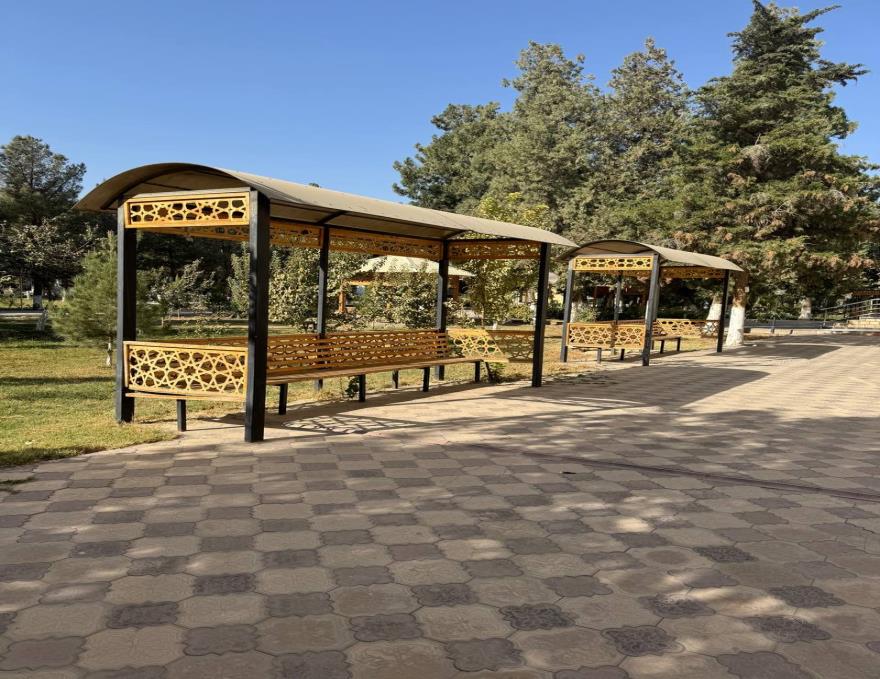
At Navoi State University, former asphalt parking areas have been redesigned into eco-gardens, seating zones, and shaded pedestrian paths as part of the university’s long-term sustainability plan. These green spaces feature native trees, decorative plants, solar-powered lighting, and benches made from recycled materials, creating a clean and welcoming environment for students and staff. The transformation not only enhances air quality and reduces heat from paved areas but also provides comfortable outdoor areas for study and relaxation. The program continues through 2025, further improving campus ecology and visual appeal.
2. Incentives for Sustainable Transport
Navoi State University has implemented a comprehensive program to encourage sustainable and low-emission transportation among students and staff. The university offers discounted public transport passes to promote the use of buses and city transit systems instead of private cars. To support eco-friendly commuting, NSU has constructed safe bicycle lanes and designated parking areas for over 150 bicycles, making cycling a practical and healthy alternative. Regular campus-wide campaigns, including “Bike to Campus Day” and “Car-Free Week,” raise awareness about environmental protection and sustainable mobility. These initiatives not only reduce traffic congestion and carbon emissions but also foster a culture of environmental responsibility, physical wellness, and community engagement across the university.
3. Digital and remote initiatives
Navoi State University (NSU) has taken significant steps to promote sustainability through the integration of digital and remote initiatives that reduce unnecessary commuting to campus. By expanding online learning systems, adopting hybrid teaching models, and enabling remote work options for administrative staff, NSU has successfully reduced daily car arrivals by nearly 20%. Many academic departments now conduct meetings, consultations, and even examinations online, minimizing travel-related emissions. The university also uses digital document circulation and virtual management platforms, which have decreased paper use and energy consumption in offices. These efforts not only contribute to lowering the university’s carbon footprint but also support flexibility, digital innovation, and modern educational practices in line with NSU’s sustainability and transformation strategy.
4. Accessibility Assurance
Navoi State University (NSU) ensures that its sustainable transport initiatives are fully inclusive by maintaining reserved and accessible parking spaces for persons with disabilities in all key campus areas. These designated spaces are located close to main academic buildings, dormitories, and administrative offices, featuring clear signage, non-slip surfaces, and barrier-free access routes. In addition, wheelchair-friendly sidewalks and ramps connect parking zones with major pedestrian paths, ensuring safe and convenient mobility for all members of the university community. NSU also provides accessible electric shuttle services equipped with ramps and priority seating, reinforcing its commitment to equal access and inclusive campus design in accordance with national accessibility standards.