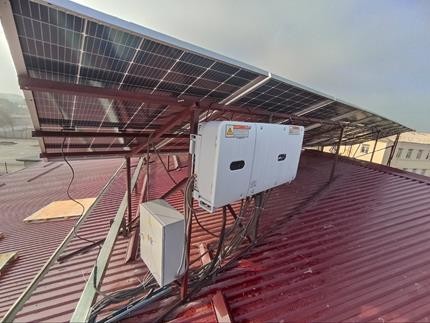
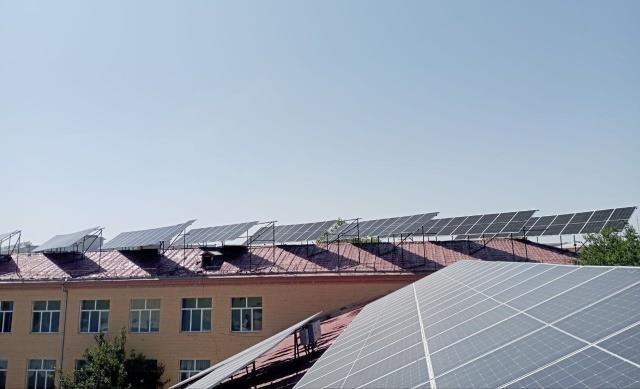
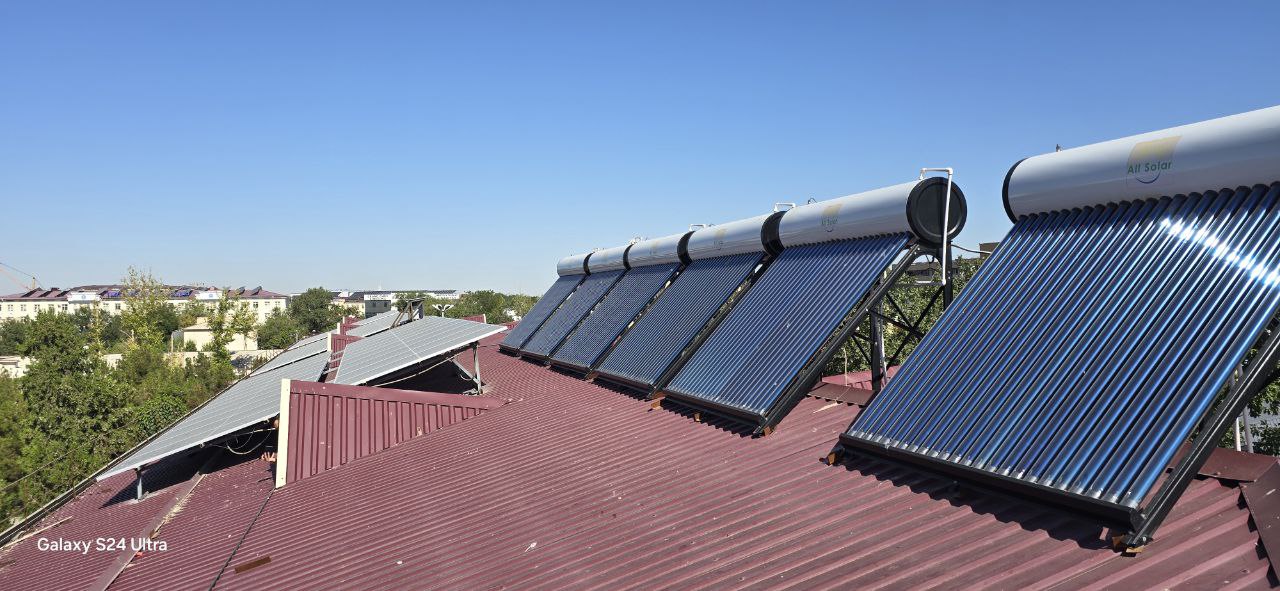
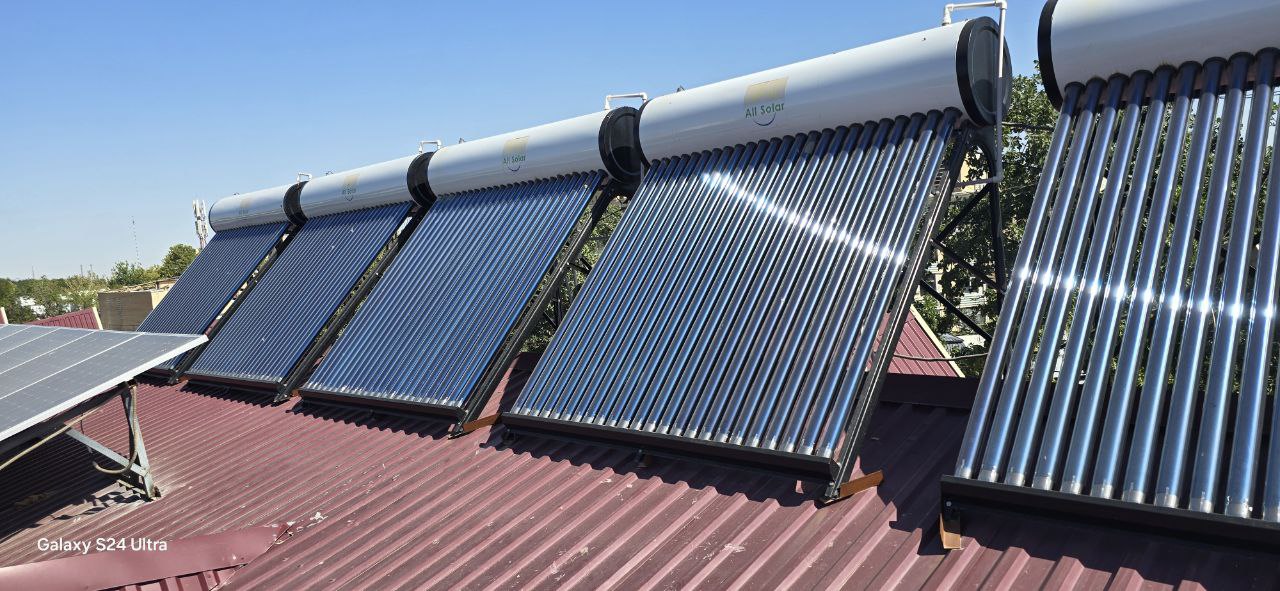
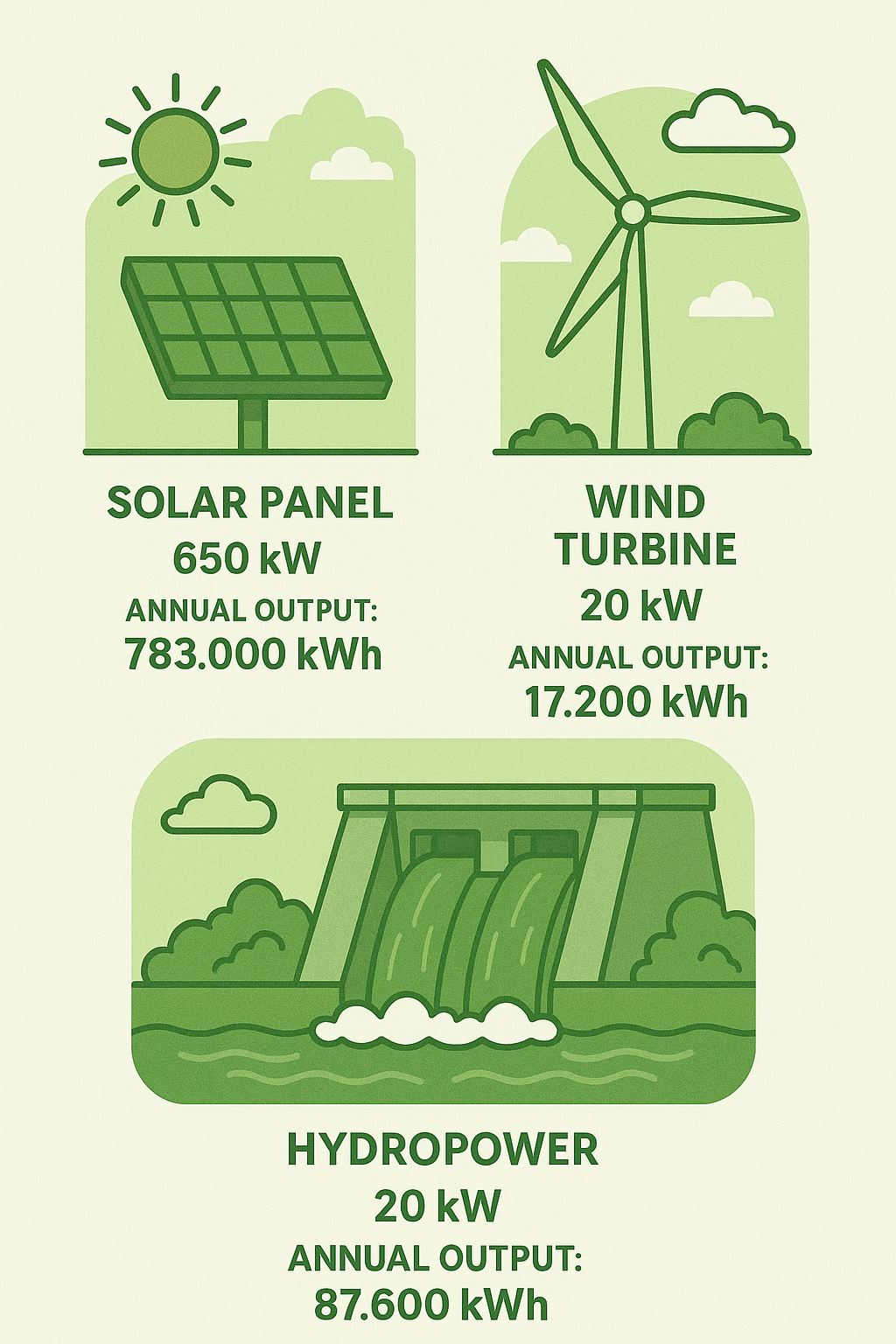
1. Solar energy is becoming increasingly popular globally as a source of power. Solar power is considered a sustainable energy source, as it is inexhaustible and environmentally friendly. No greenhouse gases are produced, including carbon emissions or other heat-trapping gases. It prevents the harm to the environment linked with extracting fossil fuels through mining or drilling. Moreover, solar energy requires minimal to no water, in contrast to power plants utilizing steam turbines for electricity generation. Given this, Navoi State University gives importance to utilizing renewable energy sources in order to save on energy consumption by endorsing the use of solar panels. Solar panels cover the total electricity consumption of the institute. Moreover, our institute is taking the lead in selling excess energy produced under various contracts and 252 347 000 soums has been earned through renewable energy.
2. Hydropower at Navoi State University (NSU)
Navoi State University is exploring the use of hydropower as a sustainable and renewable energy source to support its commitment to environmental responsibility. Although large-scale hydroelectric plants are not feasible on campus, NSU has initiated small-scale water flow projects, such as micro-hydro systems in irrigation channels and nearby water bodies. These systems convert the kinetic energy of flowing water into electricity, which helps power campus lighting and lab equipment. Hydropower not only reduces dependence on fossil fuels but also contributes to the university’s green energy strategy and promotes clean energy awareness among students.
3. Wind Power for Renewable Energy at Navoi State University (NSU)
Navoi State University is incorporating wind power as part of its renewable energy initiatives. The university has installed small wind turbines on open areas of the campus where wind conditions are favorable. These turbines help generate clean electricity to power outdoor lighting, research labs, and administrative offices. Wind power is a sustainable energy source that reduces greenhouse gas emissions and supports NSU’s efforts toward carbon neutrality. In addition, it serves as a practical learning tool for students studying engineering, environmental science, and energy management, reinforcing the importance of green technologies.
4. Annual Report on Electricity Monitoring at Navoi DPI
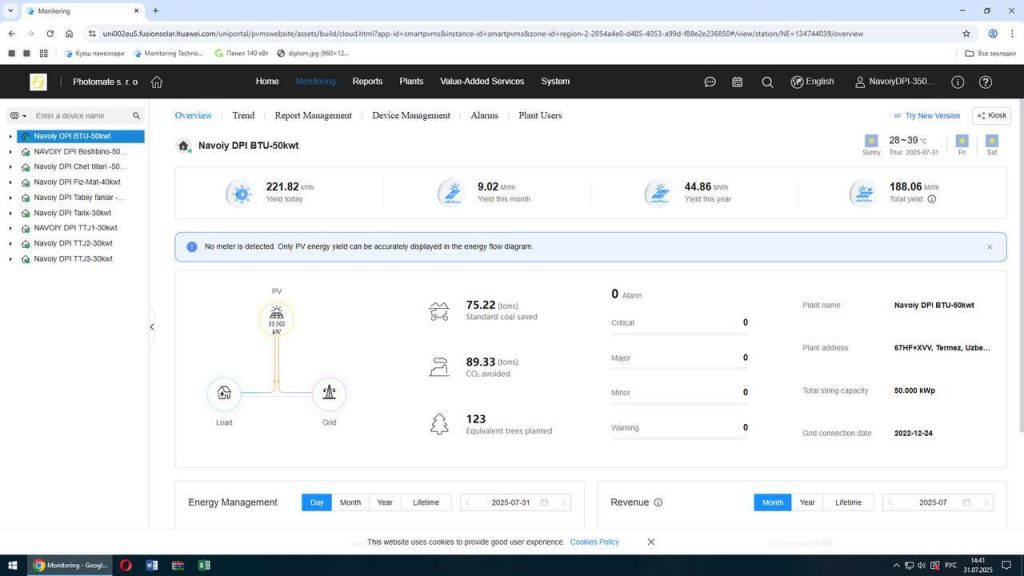
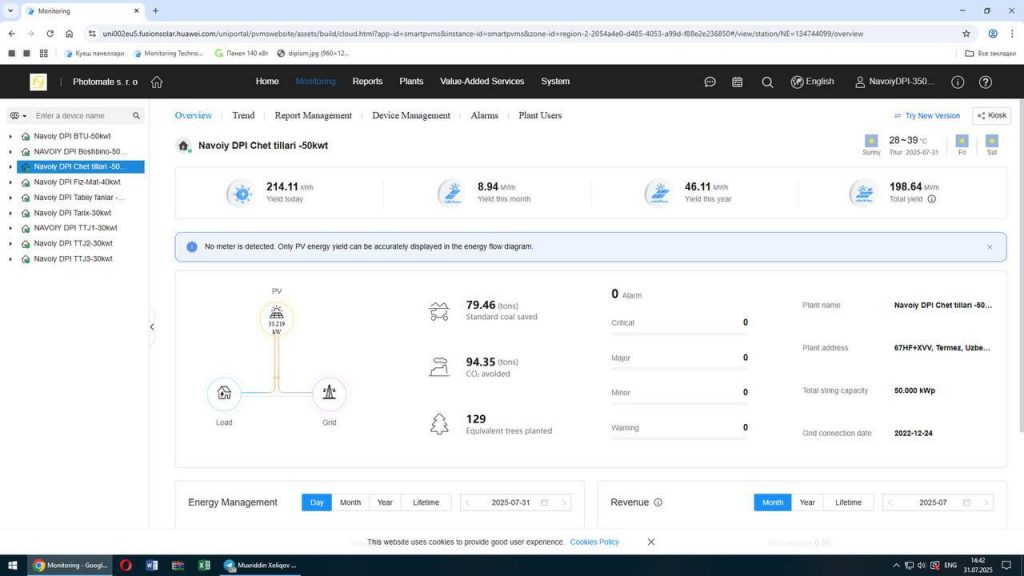
At Navoi State Pedagogical Institute, a solar power system with a dedicated monitoring platform is actively used to track electricity generation throughout the year. The system records daily, monthly, and yearly energy production data, enabling the university to manage energy use efficiently and support sustainability goals.
Through this monitoring, the university ensures stable operation of the solar station, identifies possible technical issues promptly, and evaluates environmental benefits such as carbon reduction and resource savings. The monitoring platform plays an essential role in promoting renewable energy awareness and responsible energy management on campus.