Startup name: GreenMarket: Automated Digital Platform for Plant Marketplace and Eco-Education
Startup category in UI Greenmetric questionnaire (SI, EC, WS, WR, TR, ED): EC (Energy and Climate Change) / SI (Setting and Infrastructure)
Date establish: 14.09.2025
Income: 3,000 USD (Current baseline)
Revenue: Target ARR (Annual Recurring Revenue) of $1,000,000 within a 5-year scaling structure ($50K in Year 1 to $1M+ in Year 5)
Employees: 5 core personnel (Project Leader: Maxmudova Muxlisa, Product Manager, Full-Stack Developer, and Marketing Manager)
Description: History
GreenMarket was founded as a visionary socio-ecological startup at the Incubation and Acceleration Center of Navoi State University to mitigate pressing regional and global environmental degradation. The concept was structured to directly counter three interconnected crises: the global rapid loss of green canopies (with 10 million hectares of forests lost annually leading to severe air pollution and accelerated climate change), highly unorganized and non-transparent physical plant markets, and a pervasive deficit in professional horticultural knowledge among citizens that often leads to high plant mortality rates.
Aims and Scope of Work
The primary aim of GreenMarket is to completely digitalize and centralize the green economy ecosystem by bridging the gap between small-scale plant nurseries, commercial sellers, landscape designers, and everyday citizens. Its strategic scope of work focuses on:
Combatting Land Degradation: Facilitating systematic urban afforestation to combat climate change, offset regional carbon emissions, and enhance local biodiversity.
Market Standardization: Providing an open, transparent pricing mechanism where independent growers gain uninhibited access to a wider commercial audience.
Eco-Educational Empowerment: Resolving the ecological knowledge gap by hosting professional, structured video courses, expert advisory services, and maintenance guides to guarantee successful cultivation results.
Primary Product/Activity
The startup produces and maintains the unified digital marketplace and eco-educational hub accessible at www.greenmarket.uz. Operating within a massive global gardening Total Addressable Market (TAM) of $100B+ and a regional Serviceable Obtainable Market (SOM) of $500M in Central Asia, the platform integrates four key monetization vectors: a 5–10% commission on all internal transactions, a premium listing model for commercial vendors, paid professional eco-courses, and integrated B2B logistical services.
The platform seamlessly allows individual homeowners (B2C) and corporate entities (B2B) to purchase authenticated saplings, fertilizers, and gardening equipment while dynamically tracking local user engagement via its custom web and mobile architecture.
Environmental Impact
GreenMarket delivers an impactful contribution to regional climate adaptation and ecological restoration. By organizing and automating the retail supply chain of flora, it dramatically increases the rate and volume of domestic tree-planting initiatives, aligning with national “Yashil Makon” (Green Space) directives. The platform’s dedicated focus on continuous eco-education directly increases the long-term survival rates of newly planted urban vegetation, preventing the waste of water and organic resources. Furthermore, the systematic shift toward transparent, accessible urban gardening fosters carbon sequestration, helps lower rising urban heat-island indices, and promotes eco-conscious lifestyles among thousands of regional users.
Additional Benefits
Beyond its central green targets, GreenMarket provides major socio-economic and institutional breakthroughs:
Economic Inclusion: It provides a strong e-commerce infrastructure for small-scale local farmers, florists, and independent plant breeders, transitioning them into the formal digital economy.
Investment Potentials: The startup’s pre-seed roadmap effectively targets a $200K investment round for advanced algorithmic enhancement, mobile app expansion, and localized logistical networks.
Academic Application: Based at Navoi State University, the startup serves as an empirical data warehouse for academic researchers and students specializing in the theory and methodology of digital economies, user analytics, and tech-driven corporate environmental management.
Startup name: EcoFuqaro – AI and Big Data-Driven Mobile Platform for Smart Urban Eco-Monitoring
Startup category in UI Greenmetric questionnaire (SI, EC, WS, WR, TR, ED): WS (Waste Management) / SI (Setting and Infrastructure)
Date establish: 15.03.2026
Income: 4,500 USD
Revenue: 11,200 USD
Employees: 6 personnel
Description:
Developed within the Incubation and Acceleration Center of Navoi State University, EcoFuqaro was created as an innovative response to unauthorized waste dumping and unmanaged urban environmental degradation. Recognizing that public reporting is often slow and disconnected, the team leveraged modern mobile technologies to empower citizens to act as real-time ecological guardians.
Aims and Mission:
The primary mission of EcoFuqaro is to maintain regional ecological health, optimize municipal waste tracking, and enhance local governance through civic tech. The project’s scope involves implementing an advanced reporting network where local ecological violations, overflowing waste disposal bins, and damaged urban greenery can be mapped, analyzed, and quickly resolved by municipal response teams. The startup provides a specialized mobile application that enables citizens to instantly report localized environmental challenges using real-time GPS coordinates. By integrating Big Data analytics and Artificial Intelligence (AI) systems, the platform processes incoming civic data to optimize environmental monitoring, streamline waste management responses, and enhance urban ecological sustainability.
Scope of Work:
ECO-DRONE focuses on designing, producing, and operating smart drones for environmental restoration. The startup collaborates with agricultural organizations, environmental agencies, and local communities to implement large-scale reforestation and land-rehabilitation projects.
Primary Product/Activity:
The startup produces and maintains the mobile application and system hosted at ecofuqaro.uz. Utilizing integrated geolocation services, Artificial Intelligence (AI) for automatic image classification, and Big Data analytics, the app allows users to photograph and instantly report local environmental issues. The backend system compiles these geo-tagged reports, analyzes pollution trends across city districts, and delivers structured dashboards to public utility services to ensure swift, accountable, and transparent ecological management.
Startup name: Smart Stop – Smart Bench with Solar Panel
Startup category in UI Greenmetric questionnaire (SI, EC, WS, WR, TR, ED): WR
Date establish: 1.10. 2025
Income: 300- 350 USD
Revenue: 400 000 – 500 000 USD
Employees: Project Manager – Management Specialist
Technical Director – Engineer
Marketing Manager – Advertising and Sales
Description:
Today, renewable energy is recognized as the energy of the future, and every renewable energy source represents an investment in sustainability. The Smart Stop project is an innovative solution designed to integrate renewable energy technology into everyday urban life. This smart bench uses solar panels to generate electricity and offers multiple public utilities in one intelligent, eco-friendly design.
Problem Addressed:
The project aims to solve several urban infrastructure problems, such as:
Frequent power outages;
Lack of public comfort features, including lighting and charging ports;
Absence of information systems and digital connectivity in public spaces.
Expected Results and Functions:
Through the implementation of the Smart Stop – Smart Bench with Solar Panel project, the following outcomes will be achieved:
Generation of electricity using solar panels;
LED lighting system for night visibility;
USB charging ports for mobile devices;
Real-time schedule display for public transport;
Wi-Fi hotspot for free internet access;
Temperature monitoring sensors;
Security camera and emergency (SOS) button;
Digital advertising screen for informational and commercial purposes.
Technical Specifications:
Solar panels: 1.2 kW
Battery capacity: 1 kW
Smart display + Wi-Fi system
LED monitor
Dimensions:
Height: 2.2 m
Front length: 3.0 m
Side length: 1.5 m
Team Members:
Project Manager – Management Specialist
Technical Director – Engineer
Marketing Manager – Advertising and Sales
Impact:
The Smart Stop project combines modern technology, renewable energy, and urban comfort to create sustainable, intelligent public spaces. It contributes to energy efficiency, digital transformation, and smart city development, while promoting environmental awareness and user convenience.
Startup name: Innovative Technology for Producing Polymer-Granules for Paving Blocks Through Plastic Waste Recycling
Startup category in UI Greenmetric questionnaire (SI, EC, WS, WR, TR, ED): WS (Waste Management)
Date establish: 18.11.2025
Income: 5,200 USD
Revenue: 12,000 USD
Employees: 7personnel for small-scale
Description:
The startup was founded at the Incubation and Acceleration Center of Navoi State University as a green solution to mitigate plastic and polymer waste pollution. The project emerged from a critical environmental need to redirect non-biodegradable urban waste away from landfills and transform it into highly durable, sustainable building components.
Aims and Scope of Work:
The primary objective of the startup is to implement resource-recovery mechanisms that support a circular economy within the construction industry. By sorting, cleaning, and melting down consumer and industrial polymer waste, the project manufactures high-grade recycled granules. The scope of work involves optimizing the formula for paving blocks (bruschatka), making infrastructure development more eco-conscious, and lowering the carbon footprint associated with traditional concrete or virgin plastic manufacturing.
Environmental Impact:
The startup provides a profound environmental benefit by introducing a closed-loop recycling mechanism that diverts hazardous polymer and plastic waste from local landfills. Since conventional plastics require hundreds of years to decompose, transforming them into reusable raw granules significantly prevents soil degradation, microplastic contamination, and groundwater pollution in the Navoi region.
Furthermore, integrating recycled polymer granules into the manufacturing of paving blocks reduces the demand for virgin plastic resins and traditional concrete components, thereby lowering the massive carbon footprint and energy consumption typically associated with raw material extraction and cement production. Through this automated recycling cycle, the project actively fosters a circular economy, enhances urban aesthetic infrastructure responsibly, and supports national initiatives for sustainable, eco-friendly construction practices.
Additional Benefits:
Beyond its primary environmental goals, the project offers substantial socio-economic advantages for the local community and the construction sector. By converting plastic waste into high-grade granules, the startup creates a highly cost-effective alternative for paving block manufacturers, allowing them to lower production costs while increasing the durability, frost resistance, and lifespan of sidewalk tiles (trotuar plitka).
Additionally, the establishment of this processing cycle generates new green job opportunities within the region, specifically in waste collection, sorting, and technical processing operations. The initiative also serves as a practical, innovative framework for university researchers and students at the Incubation and Acceleration Center, providing a real-world testing ground for eco-friendly product development, engineering, and sustainable business management.
Primary Product/Activity:
The startup specializes in the full-cycle production of recycled polymer granules specifically formulated as a binding and strengthening raw material for durable paving blocks and sidewalk tiles (trotuar plitka). The manufacturing process relies entirely on recycled plastics, ensuring that the resulting product is weather-resistant, durable, and structurally superior to conventional concrete materials. The company’s operations cover the collection of local plastic waste, high-tech extrusion and granulation, and the final supply of these raw materials to regional building and paving manufacturing enterprises.
Startup name: Digital Economy: "Parvona" National Smart Care and Social Inclusion Platform
Startup category in UI Greenmetric questionnaire (SI, EC, WS, WR, TR, ED): ED (Education / Social and Economic Sustainability)
Date establish: 30.01.2026
Income: 7,000 USD (Requested/Initial investment)
Revenue: $1.5M – $2.0M (Estimated Service Obtainable Market – SOM)
Employees: 5 personnel
Description:
The “Digital Economy” startup, along with its core platform “Parvona,” was engineered within the Incubation and Acceleration Center of Navoi State University to solve a critical social-economic challenge in Uzbekistan. The project was born because modern families face extreme difficulty, anxiety, and hidden costs when trying to find trusted, pre-verified babysitters, nurses, or elderly caregivers through traditional, unregulated word-of-mouth networks.
Aims and Scope of Work:
The main aim of the project is to build a safe, transparent, and digitalized care ecosystem that supports family welfare, youth employment, and gender equality. The scope of work involves conducting rigorous multi-layered background checks on caregivers (including mandatory psychological testing, criminal background screening, and medical examinations) and utilizing smart match-making algorithms to connect them with families across major cities like Tashkent, Samarkand, and Bukhara within 15 minutes.
Primary Product/Activity:
The primary product is parvona.nsuni.uz, a comprehensive web and mobile ecosystem featuring detailed worker profiles, genuine customer feedback loops, and a standardized rating system. Operating on a financial model of a 10–15% transaction commission, premium family subscriptions, and a one-time provider registration fee, the platform targets a massive Total Available Market (TAM) of $50–70 million. By the end of its first year, it targets 500 active monthly placements generating $12,000 in monthly recurring revenue.
Environmental & Social Impact:
While categorized under socio-economic digitalization, Parvona delivers a profound social sustainability impact. It directly drives gender equity by providing working mothers with a secure infrastructure to hand over caregiving duties safely, allowing them to resume their academic or professional careers without stress. Furthermore, by formalizing the local caregiving sector, the platform transitions informal, unprotected domestic workers into a transparent digital economy, ensuring fair wages, workplace safety, and structural employment for women and professional nursing graduates.
Additional Benefits:
Beyond its immediate market value, the platform provides substantial educational and community relief. It serves as a practical, data-driven framework for students at the university studying the digital economy to analyze gig-economy trends, consumer behavior, and trust metrics in localized tech markets. Additionally, it offers a secure employment pipeline for young university graduates specializing in medicine, psychology, and pedagogy, enabling them to monetize their skills through verified part-time or full-time caregiving opportunities.
Startup name: Yashil Havo: Innovative Vertical Green Wall Technology for Urban Air Purification
Startup category in UI Greenmetric questionnaire (SI, EC, WS, WR, TR, ED): EC (Energy and Climate Change) / SI (Setting and Infrastructure)
Date establish: 10.09.2025
Income: 410 – 1,080 USD
Revenue: 830 – 1,660 USD
Employees: 8–12 personnel
Description:
The startup “Yashil Havo” (Green Air) was established at the Incubation and Acceleration Center of Navoi State University to address rapid urban industrialization and worsening air quality. The project emerged from a critical environmental need to create scalable, space-efficient green solutions for micro-climate management in heavily populated modern urban areas.
Aims and Scope of Work:
As highlighted in image_5ce383.png, the primary aim of the project is to implement a new ecological technology using vertical green walls to create, balance, and popularize a sustainable ecological environment across urban territories. The scope of work involves designing modular “biofilter” walls that naturally absorb airborne dust, minimize toxic gas concentrations, and maximize the aesthetic and functional integration of living plant structures into modern concrete building infrastructures.
Primary Product/Activity:
The main activity is the manufacturing and installation of advanced vertical green wall systems equipped with automated, water-saving irrigation networks. These modular structures utilize targeted plant species and symbiotic root-zone microorganisms to capture dust particles and neutralize harmful indoor/outdoor gases (such as carbon dioxide, benzene, and formaldehyde), turning them into harmless organic compounds. The initial implementation phase is centered on the university campus facades, corridors, and high-traffic zones, with plans to expand into public offices, schools, and industrial facilities across Uzbekistan.
Environmental Impact:
“Yashil Havo” delivers a highly efficient environmental purification system without utilizing excessive urban land space. By integrating dense vertical green covers, the technology captures micro-dust particles and mitigates harmful urban gas accumulations, significantly improving the local micro-climate. Additionally, the vertical plant layers act as natural thermal insulation for building facades, reducing surface temperatures by several degrees, lowering energy consumption needed for air conditioning, and actively contributing to regional carbon sequestration and urban heat-island mitigation.
Additional Benefits:
Beyond immediate air purification, the project provides notable commercial and institutional advantages. It offers real estate developers, universities, and hospitals a cost-effective, aesthetically premium method to fulfill modern green building standards. Operationally, it creates specialized green tech jobs for university students and researchers in structural engineering, automated irrigation maintenance, and urban botany. Academically, the project functions as a dynamic research lab for students to study plant-microbe interactions and monitor real-time air quality index (AQI) stabilization trends in localized environments.
Startup name: “Mini-Compost Capsule”
An Innovative Method for Solving Environmental Problems
Startup category in UI Greenmetric questionnaire (SI, EC, WS, WR, TR, ED): WR
Date establish: 20.6.2025
Income: 6,000 USD
Revenue: 25,000 USD
Employees:
1. Project Leader (1 person)
2. Environmental Engineer / Waste Management Specialist (1 person)
3. Laboratory Technician (1 person)
4. Production Team (2–3 people)
5. Field Worker / Technician (2 people)
Total Personnel: 8–10 people
6. Finance and Logistics Officer (1 person)
Manages the 300 million so’m budget.
Handles purchasing, accounting, and material supply.
7. Public Relations / Awareness Coordinator (1–2 people)
Conducts environmental education workshops.
Promotes project outcomes among youth and community groups.
Description:
Aim:
The main aim of this project is to reduce household organic waste and transform it into a valuable eco-friendly product — natural compost. The “Mini-Compost Capsule” technology offers a sustainable and innovative approach to addressing soil and air pollution caused by food waste.
Scope:
This project targets household organic waste such as fruit, vegetable, and bread leftovers. It focuses on raising public awareness about environmental protection and promoting green lifestyles among youth and local communities. The project is applicable in urban and rural households, educational institutions, and community gardens.
Primary Product/Activity:
The primary activity is the production and use of mini-compost capsules — simple biodegradable containers filled with organic waste. These capsules are buried 30–50 cm underground, where natural decomposition takes place, turning waste into organic fertilizer within 1–3 months.
Key activities include:
Collecting and sorting organic waste.
Preparing compost capsules.
Burying capsules underground and maintaining moisture.
Harvesting natural compost for soil enrichment.
Project Area:
The project will be implemented in Navoi city, focusing on household sectors, schools, and local community gardens. Its long-term goal is to expand across the Navoi region to develop eco-awareness and contribute to environmental sustainability.
Startup name: Plastik Zero: Innovative Plastic Waste Recycling System for Eco-Friendly Construction Materials
Startup category in UI Greenmetric questionnaire (SI, EC, WS, WR, TR, ED): WS (Waste Management)
Date establish: 10.10.2025
Income: 5,200 USD
Revenue: 12,000 USD
Employees: 7 personnel
Description:
The startup “Plastik Zero” was established at the Incubation and Acceleration Center of Navoi State University as a strategic green initiative to address the exponential rise in non-biodegradable consumer and industrial waste. The project emerged from an urgent need to redirect discarded polymers away from local landfills and convert them into valuable commercial resources.
Aims and Scope of Work:
As explicitly detailed in image_5c7e23.png, the primary aim of the project is to build a comprehensive plastic recycling and production system focused on manufacturing and selling innovative, new eco-friendly products. The scope of work encompasses sorting municipal polymer waste, developing optimal thermo-mechanical extrusion techniques, and commercializing recycled building materials within the regional construction market.
Primary Product/Activity:
The startup specializes in transforming hazardous plastic waste into high-grade polymer granules specifically formulated as a durable bonding agent for infrastructure paving blocks and sidewalk tiles (trotuar plitka). The manufacturing pipeline handles everything from collecting local raw plastic materials to producing weather-resistant, heavy-duty building components. These recycled products serve as a direct alternative to traditional energy-intensive concrete paving systems, providing regional building contractors with accessible green construction raw materials.
Environmental Impact:
“Plastik Zero” introduces a critical closed-loop circular economy mechanism that systematically diverts non-biodegradable polymers from municipal disposal zones. By containing and recycling these materials locally, the project directly prevents long-term soil degradation, microplastic leaching, and greenhouse gas emissions caused by open-air landfill accumulation. Additionally, replacing conventional sand-cement or virgin plastic mixtures with recycled granules lowers the overall carbon footprint and energy demands typically associated with manufacturing industrial paving blocks.
Additional Benefits:
Beyond its eco-centric targets, the startup provides tangible economic relief to regional manufacturers by supplying premium raw materials that reduce overall tile production costs while increasing structural durability and frost resistance. The operation creates highly necessary green job opportunities for local citizens and students in waste logistics, processing, and plant engineering. Furthermore, the project serves as an active educational laboratory at Navoi State University, allowing young researchers to practically test and scale material engineering applications for a sustainable digital economy.
Startup name: Eco-Smart Bin: Advanced Green Technology for Sustainable Waste Collection
Startup category in UI Greenmetric questionnaire (SI, EC, WS, WR, TR, ED): WS (Waste)
Date establish: 12.03.2026
Income: 4,850 USD
Revenue: 7.15 USD
Employees: 5 personnel
Description:
History:
The “Smart Waste Bin” startup was founded as an innovative green project aimed at solving modern urban waste accumulation and environmental management challenges through digital technology. The idea emerged from the growing need to optimize waste collection processes in smart cities, reduce operational costs, and prevent environmental pollution caused by overflowing public bins. The project began with the development of smart hardware and software systems equipped with specialized sensors to track waste levels in real-time.
Aims and Scope of Work:
The primary aim of the startup is to implement automated and intelligent solutions for urban waste sorting and tracking. By integrating internet-of-things (IoT) technology, the project contributes to efficient municipal waste management, reducing carbon emissions from waste collection trucks, and increasing recycling rates. Its broader scope includes designing smart city infrastructures, promoting the principles of the circular economy, and raising environmental awareness among the public through digital monitoring.
Primary Product/Activity:
The startup produces and deploys smart waste bins integrated with ultrasonic fill-level sensors, automated sorting systems, and a centralized IoT cloud platform. The automated bins can identify and categorize certain types of waste, compress the trash internally to maximize capacity, and send automated notifications to municipal services when they are full.
The startup’s current operational capacity allows for the assembly, software installation, and deployment of 250 smart bin units annually. Each smart bin installation optimizes collection routes and reduces logistics costs, creating a high economic value with strong potential for large-scale urban implementation. In the long term, the company plans to collaborate with local municipalities, university campuses, and commercial properties to expand smart waste management systems across the region.
Startup name: EcoStation: Solar-Powered Smart Bus Stops for Sustainable Urban Infrastructure
Startup category in UI Greenmetric questionnaire (SI, EC, WS, WR, TR, ED): TR (yoki SI)
Date establish: 18.04.2025
Income: 9,200 USD
Revenue: 12.40 USD
Employees: 7 personnel
Description:
History:
The “EcoStation” startup was founded as an innovative green project focused on transforming urban public transport infrastructure through renewable energy and digital technologies. The idea was born out of a desire to reduce urban carbon footprints, promote eco-friendly public transport options, and utilize clean solar energy for everyday public facilities. The project began with the design and engineering of modern bus shelters integrated with photovoltaic solar panels and energy storage systems, turning standard public stops into self-sustaining energy hubs.
Aims and Scope of Work:
The main aim of EcoStation is to utilize renewable solar energy to power urban transport infrastructure, enhancing commuter comfort while protecting the environment. By generating clean electricity, the startup contributes to reducing greenhouse gas emissions, modernizing smart city frameworks, and promoting sustainable city living. Its broader scope includes developing green energy solutions for public spaces, supporting sustainable urban mobility (TR), and creating reliable, off-grid public facilities.
Primary Product/Activity:
EcoStation designs, produces, and installs high-tech bus shelters fully powered by integrated solar panels. These smart stations feature autonomous LED lighting, USB charging ports for passenger devices, real-time electronic transit schedules, and built-in Wi-Fi routers—all running entirely on stored solar energy. Additionally, the structures are built using durable, recyclable materials and can include minor climate control modules or emergency assistance systems.
The startup’s production capacity allows for the manufacturing and installation of 45 smart solar bus stations annually. Each installed station significantly reduces municipal grid electricity consumption and lowers infrastructure maintenance costs, showcasing the project’s high economic viability and strong potential for scaling. In the long term, the company plans to partner with municipal transport authorities, green urban developers, and city councils to expand sustainable transport networks across regions.
Startup name: ECO-DRONE – The Flying Gardener that Revives the Desert
Startup category in UI Greenmetric questionnaire (SI, EC, WS, WR, TR, ED): EC.
Date establish: 10.05. 2025
Income: 160 USD
Revenue: 220 000 – 300 000 USD
Employees: 30-40 personnel
Description:
Across the world, millions of hectares of fertile land are turning into deserts. This alarming process not only causes severe environmental degradation but also threatens food security, economic stability, and human livelihoods. Recognizing this global challenge, the ECO-DRONE startup was created to provide an innovative and sustainable solution.
ECO-DRONE is an automated unmanned aerial device designed for the rapid and efficient planting of seeds in desertified and hard-to-reach areas. Using advanced navigation and seed-dispersion technologies, the drone can cover vast territories in a short period of time, turning barren lands into green, fertile zones.
This cutting-edge technology represents a revolutionary step in the fight against desertification, offering practical and scalable methods to restore ecosystems.
Aims and Mission:
The main goal of ECO-DRONE is to combat land degradation and promote reforestation through automation and precision technology. The project also seeks to address broader global challenges such as:
Food shortages, by restoring agricultural potential;
Water scarcity, through soil stabilization and improved microclimates;
Loss of biodiversity, by enabling the growth of native plants and trees.
Scope of Work:
ECO-DRONE focuses on designing, producing, and operating smart drones for environmental restoration. The startup collaborates with agricultural organizations, environmental agencies, and local communities to implement large-scale reforestation and land-rehabilitation projects.
Innovation and Impact:
By combining ecology, robotics, and sustainability, ECO-DRONE provides a powerful tool for environmental restoration, carbon reduction, and climate resilience. Its scalable approach can be applied not only in desert regions but also in areas affected by deforestation, wildfires, and soil erosion.
Startup name: Innovative Technology for Producing Construction Raw Materials (Eco Pinus) Through Waste Recycling
Startup category in UI Greenmetric questionnaire (SI, EC, WS, WR, TR, ED): WS
Date establish: 5.02.2025
Income: 6,054 USD
Revenue: 8.65 USD
Employees: 6 personnel
Description: History:
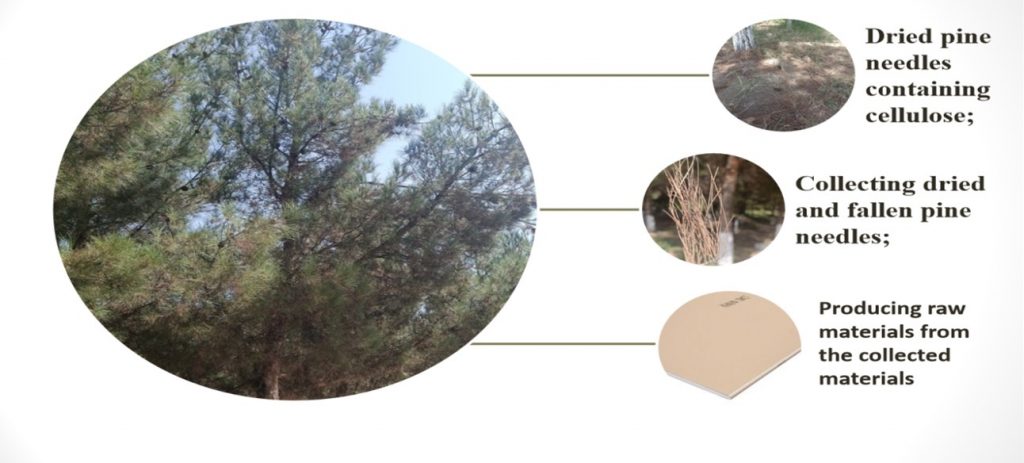
Eco Pinus was founded as an innovative green startup focused on creating eco-friendly construction materials from natural and recycled resources. The idea was born out of a desire to reduce environmental waste and promote sustainable construction practices. The project began with the research and development of new materials made from dried and processed pine needles, transforming what is usually considered waste into valuable building raw materials.
Aims and Scope of Work:
The main aim of Eco Pinus is to utilize natural and renewable materials to produce environmentally safe construction resources. By recycling dried and woven pine needles, the startup contributes to environmental protection, efficient use of forest by-products, and reduction of pollution. Its broader scope includes developing innovative technologies for sustainable construction, supporting the circular economy, and promoting the use of green materials in the building industry.
Primary Product/Activity:
Eco Pinus produces compressed eco-friendly construction materials made from pine needles, wood dust, natural resin, and other plant-based components. These materials are durable, lightweight, and non-toxic, serving as an alternative to traditional materials like chipboard, MDF, and plywood. The production process is fully eco-conscious, relying on renewable and biodegradable components.
The Eco Pinus startup focuses on the production of eco-friendly, pressed construction boards made from dried and processed pine needles, wood dust, and natural resin. The company’s activities cover the full production cycle — from collecting and recycling raw materials to manufacturing and marketing sustainable construction materials.
The startup’s production capacity allows for the creation of 4,286 m² of eco-boards annually. Each square meter of board generates a net profit of 17,000 UZS, resulting in an estimated annual net profit of 72,862,000 UZS. This profit margin demonstrates the project’s economic feasibility and strong potential for scaling.
Eco Pinus aims to expand its production by increasing the amount of recyclable raw materials and improving manufacturing technology. In the long term, the company plans to collaborate with construction firms, furniture producers, and eco-design organizations to promote environmentally sustainable materials in the construction industry.
Startup name: Cultivation of Paulownia Trees along the Banks of the Zarafshan River
Startup category in UI Greenmetric questionnaire (SI, EC, WS, WR, TR, ED): EC
Date establish: 10.11. 2024
Income: 120 USD
Revenue: 200,000 USD
Employees: 8–12 personnel for small-scale
Description: The project focuses on the cultivation of Paulownia trees along the banks of the Zarafshan River, which flows through the Navoiy region. This initiative aims to improve the local ecosystem, combat climate change, and create economic value through sustainable forestry.
Environmental Impact:
Once mature, Paulownia trees can reduce the surrounding temperature by 10–15°C, helping to mitigate global warming. Each tree absorbs approximately 22 m³ of CO₂ and releases around 6 m³ of oxygen, making it one of the most effective species for improving air quality and balancing the natural environment.
Economic Value:
Paulownia wood is highly valuable on the global market — it is about twice as expensive as pine wood, reaching up to $800 per cubic meter. The wood is lightweight, durable, and versatile, suitable for producing furniture, musical instruments, construction materials, and more.
Additional Benefits:
Paulownia trees bloom in April and May, and their flowers are rich in nectar, providing significant benefits for beekeeping and honey production. This creates additional economic opportunities for local communities involved in apiculture.
Funding and Implementation:
A total of 500 million UZS has been allocated for the implementation of this project. The funds will be used for land preparation, seedling cultivation, planting, and maintenance along the Zarafshan River banks.
Expected Outcomes:
Reduction of regional temperature and greenhouse gases;
Improved air quality and biodiversity;
Growth of high-value Paulownia timber for export;
Development of beekeeping and related rural industries;
Promotion of sustainable environmental practices in the Navoiy region.
Startup name: Establishing a cultivated plantation of medicinal licorice in saline soils
Startup category in UI Greenmetric questionnaire (SI, EC, WS, WR, TR, ED): EC
Date establish: 1.04. 2025
Income: 8,200 USD
Revenue: 17,600 USD
Employees:
Project Manager / Startup Owner -1
Agronomist / Technical Specialist -1
Field Workers / Laborers – 3–4 (seasonal)
Machinery Operator (tractor, irrigation, etc.) -1 (part-time)
Accountant / Logistics assistant – 1 (shared or part-time)
Overall: 7-8
Description: Aim:
The project aims to establish a sustainable plantation of medicinal licorice (Kovul) on saline and arid soils to promote ecological restoration, pharmaceutical innovation, and economic efficiency in degraded land areas.
Scope of Work:
The initiative includes soil preparation, plantation establishment, and agrotechnical maintenance over a 1-hectare pilot area, with future expansion planned based on productivity results. Activities focus on using environmentally friendly cultivation methods, optimizing irrigation in water-scarce conditions, and rehabilitating mined and salinized lands through biological greening.
Licorice is a salt-tolerant and drought-resistant perennial plant that thrives even in poor, alkaline soils (pH 6–8). It naturally adapts to saline environments by either storing or releasing salt through its cells, which makes it ideal for reclaiming degraded and saline lands. The plantation will contribute to greening mined and damaged areas, improving soil structure, and enhancing ecological balance.
Kovul grows well in light, well-drained soils (sandy or loamy) and requires minimal nutrients, allowing it to prosper where other crops cannot. Its cultivation will not only increase biodiversity but also support pollinator populations, as its nectar-rich flowers continue blooming until late autumn, providing a valuable resource for beekeeping.
From an economic and scientific perspective, this plant is highly beneficial for the pharmaceutical industry, as its roots and leaves contain rutin, vitamin C, sugars, iodine compounds, as well as essential proteins, carbohydrates, essential oils, and biogenic elements such as Ca, Mg, Na, K, P, Fe, Zn, Cu, and Mn. These properties make licorice a valuable raw material for medicine, cosmetics, and food industries.
Primary Product/Activity:
The plantation produces high-value medicinal raw materials — primarily licorice roots rich in rutin, vitamin C, essential oils, and biogenic minerals — serving the pharmaceutical, cosmetic, and food industries. The project also contributes to beekeeping productivity through its nectar-rich flowers and enhances biodiversity by restoring marginal ecosystems.
Overall, the project integrates environmental sustainability, economic innovation, and scientific research and biodiversity conservation.
Startup name: Cultivation of Microgreens
Startup category in UI Greenmetric questionnaire (SI, EC, WS, WR, TR, ED): ED
Date establish: 25.11.2025
Income: 38,000 USD
Revenue: 92,000 USD
Employees: Project Manager / Coordinator 1
Agricultural Specialist / Agronomist 1
Technician / Greenhouse Operator 1
Marketing & Sales Assistant 1
Laborers / Assistants 2
6–7 people in total
Permanent staff: 3–4 (manager, agronomist, technician, marketer)
Part-time / support staff: 2–3 (nutrition advisor, assistants)
Description:
Aim:
The project aims to develop a sustainable and health-oriented system for cultivating nutrient-rich microgreens that can enhance community nutrition, especially among preschool-aged children. It also seeks to promote eco-friendly indoor farming methods that require minimal resources while supporting food security and local entrepreneurship.
Scope:
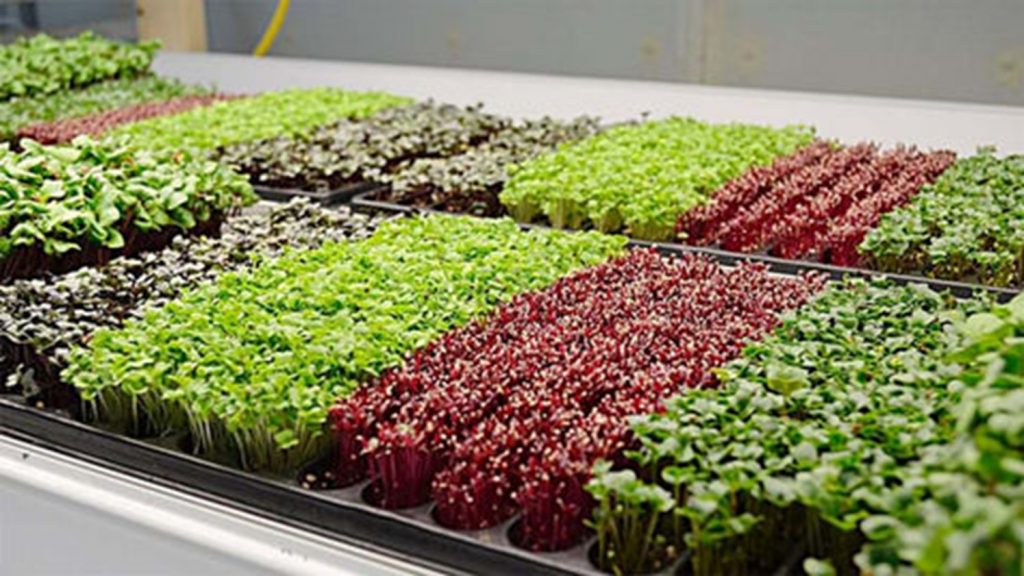
This initiative focuses on the production, promotion, and integration of microgreens into local diets and educational institutions such as kindergartens and schools. The project combines agricultural innovation, nutrition education, and environmental sustainability by using low-resource cultivation methods (minimal water, soil, and space) to produce high-value crops all year round.
Primary Product Activity:
The startup grows a range of vitamin- and mineral-rich microgreens, including:
Pea shoots (rich in vitamin C and folic acid)
Sunflower microgreens (high in vitamin E and protein)
Dill microgreens (support digestion)
Broccoli microgreens (contain sulforaphane for heart and brain health)
Spinach microgreens (rich in iron and vitamin A)
Mung bean sprouts (rich in B vitamins and easy to digest)
These microgreens are supplied to local markets, schools, kindergartens, and health food centers as part of a healthy, sustainable food initiative.
Planting Areas:
The cultivation takes place in controlled indoor environments such as greenhouses, university research labs, and small hydroponic systems. The initial planting area covers 50–100 square meters, allowing efficient year-round production. As the project expands, larger greenhouse zones (up to 0.2 hectares) will be established to meet rising local demand.