Measuring Sustainability Literacy of Students
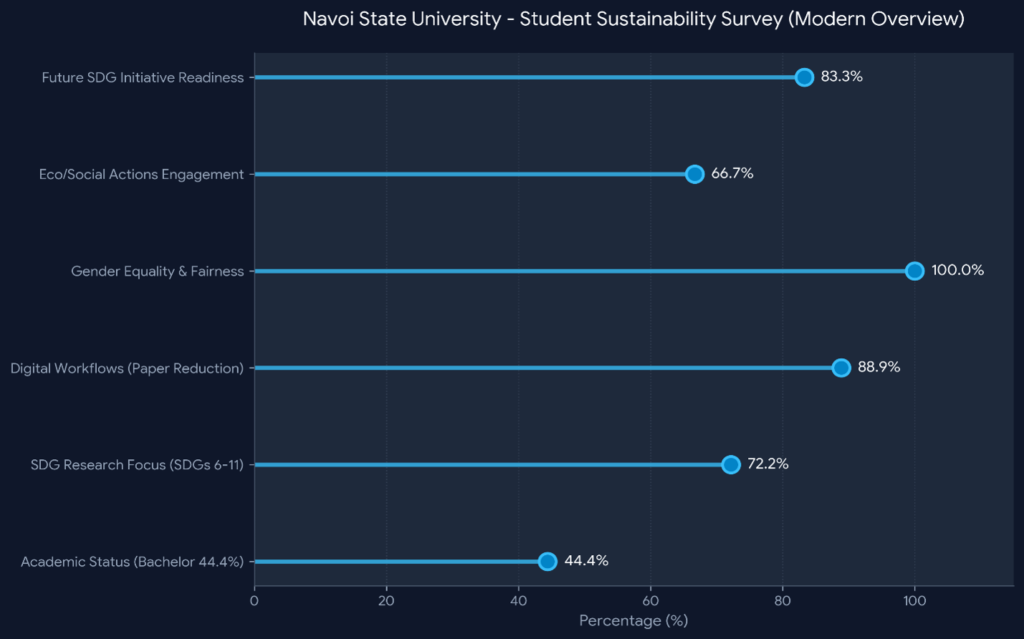
Navoi State University (NSU) recognizes the importance of assessing students’ understanding of sustainability principles and their ability to apply these concepts in academic and social contexts.
While a formal university-wide sustainability literacy test is in the process of development, NSU currently evaluates sustainability literacy through:
active participation in SDG-related seminars, workshops, and volunteer initiatives,
project-based learning on environmental protection, health, and social responsibility,
student reflection surveys and discussions integrated into academic courses,
and monitoring of student engagement in Green Campus and SDG Outreach programs.
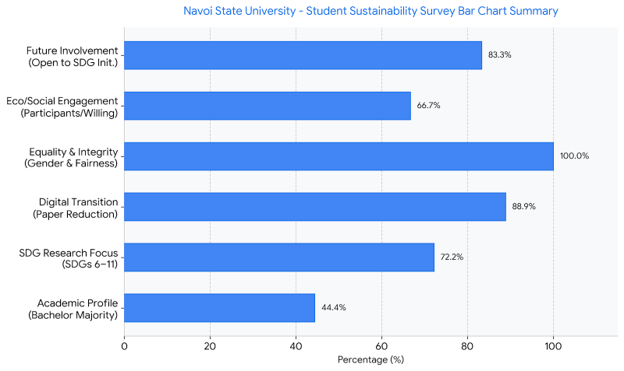
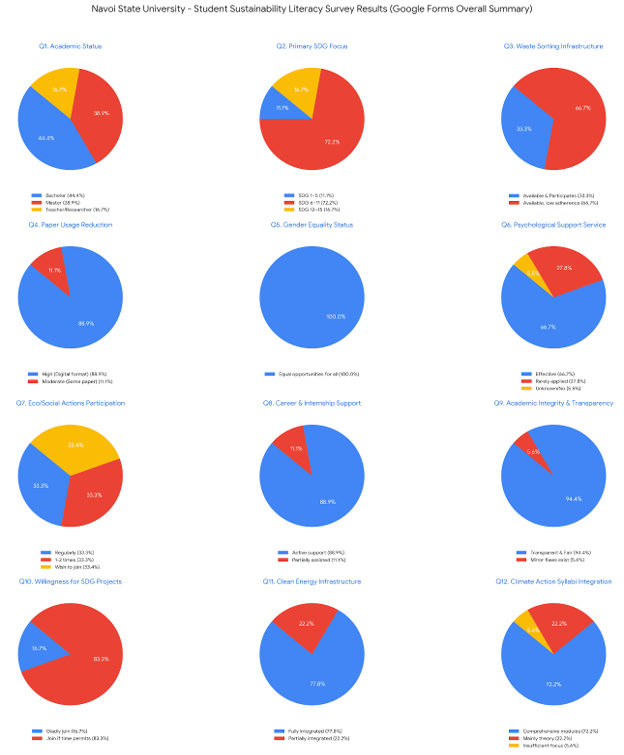
In 2026, NSU plans to launch an institutional Sustainability Literacy Survey to measure students’ knowledge, attitudes, and behaviors related to sustainable development. The results will be used to further improve curriculum content, student engagement, and campus sustainability initiatives.
On the occasion of September 16 – the International Day for the Preservation of the Ozone Layer, an art competition was organised among students on the initiative of the Youth Union Council of the Faculty of Arts and Sports at Navoi State University and the Navoi Regional Council of the “Young Ecologists” movement, in cooperation with the Navoi City Council of the Ecological Party of Uzbekistan.
The distinctive feature of the competition was that it was held outdoors, surrounded by nature. Participants expressed ideas about protecting the ozone layer, preserving the environment, and developing a responsible attitude towards nature through their creative works.
The event provides a platform for students and academic staff to exchange ideas, strengthen environmental awareness, and encourage collective responsibility for achieving the Sustainable Development Goals (SDGs). Through educational activities and intellectual engagement, Navoi State University supports the dissemination of sustainability knowledge and encourages collaboration between educational institutions, students, and the wider community. Such initiatives demonstrate the university’s role in building partnerships that promote environmental education, sustainable practices, and the implementation of the SDGs at the local and regional levels.
2.National Youth Competition on Volunteerism and Sustainable Development
The Youth Affairs Agency and Navoi State University jointly organized a national competition aimed at supporting youth-led volunteer initiatives and sustainability projects across Uzbekistan. The competition provided a platform for young people to develop innovative solutions to environmental and social challenges, strengthen their practical skills, and contribute to the achievement of the United Nations Sustainable Development Goals.
From April 15–18, students who successfully completed all stages of the competition gathered at the Zomin recreation center in Jizzakh region. During the event, participants demonstrated their knowledge of sustainable development, presented their ideas, and engaged in practical activities designed to promote environmental awareness, social responsibility, teamwork, and community engagement.
The initiative strengthened cooperation between Navoi State University, the Youth Affairs Agency, and young volunteers from different regions of Uzbekistan. It encouraged the exchange of knowledge and best practices, promoted youth participation in sustainability projects, and supported the development of leadership, communication, and project-management skills. By bringing together students, educational institutions, and public organizations, the competition fostered collaboration and collective action toward shared sustainability objectives.
The competition demonstrates Navoi State University’s commitment to building partnerships with public organizations and youth networks to advance sustainable development. Through joint organization, knowledge-sharing, and support for youth-led initiatives, the university contributed to strengthening institutional cooperation and encouraging collaborative solutions to sustainability challenges.
The initiative also supports SDG 4 (Quality Education) by providing experiential learning opportunities, SDG 11 (Sustainable Cities and Communities) by encouraging community engagement, and SDG 13 (Climate Action) by promoting environmental awareness and sustainable practices.
Overall, the competition highlights the role of partnerships between universities, government agencies, and young people in empowering the next generation of sustainability leaders and advancing the SDGs at national and regional levels.
At Navoi State University, the “My Startup Project” on SDG competition enabled students to demonstrate their knowledge and practical skills in innovation, science, and social projects, supporting the university’s efforts to measure sustainability literacy.
The initiative supported the university’s efforts to assess and strengthen students’ sustainability literacy by encouraging them to apply their academic knowledge to practical challenges and develop innovative solutions to environmental, economic, and social issues.
Through the competition, students had the opportunity to present their startup ideas, develop problem-solving and critical-thinking skills, and explore how innovative projects can contribute to sustainable development. The initiative also encouraged creativity, teamwork, entrepreneurship, and student engagement in addressing community needs. By connecting theoretical knowledge with practical applications, the competition helped students understand the importance of responsible innovation and the long-term impact of their projects on society and the environment.
The competition contributes to SDG 4 (Quality Education) by promoting practical, skills-based learning; SDG 8 (Decent Work and Economic Growth) by encouraging entrepreneurship and the development of employment opportunities; SDG 9 (Industry, Innovation and Infrastructure) by supporting innovation and student-led startup initiatives; and SDG 12 (Responsible Consumption and Production) by encouraging sustainable approaches to project development.
Furthermore, the initiative supports SDG 17 (Partnerships for the Goals) by creating opportunities for cooperation among students, academic staff, university departments, and potential external partners. Through such initiatives, Navoi State University promotes sustainability awareness, practical learning, and innovative thinking while encouraging students to become active contributors to sustainable development at the local and national levels.
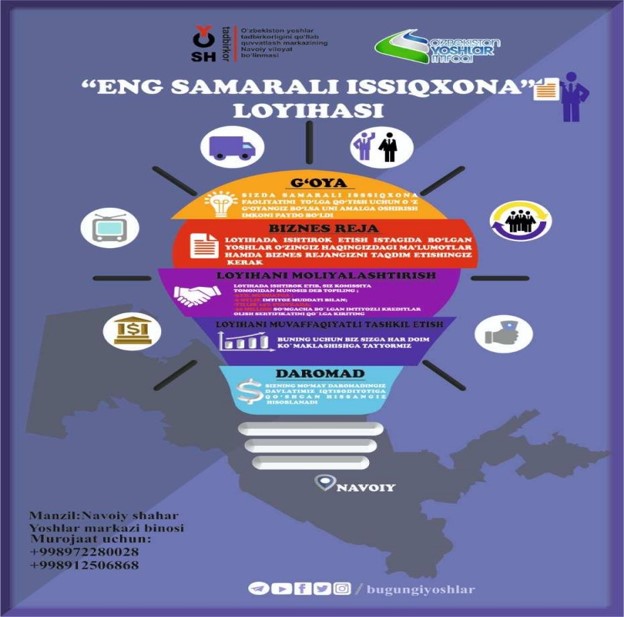
At Navoi State University, the “Most Effective Greenhouse” project engages youth aged 18–30, enabling them to apply entrepreneurial knowledge and practical skills in sustainable business development through preferential loans.
The initiative encourages youth to establish and manage greenhouse businesses, create income-generating opportunities, and apply modern agricultural practices to improve productivity and resource efficiency.
Through this project, young entrepreneurs can gain practical experience in planning and managing agricultural enterprises, cultivating crops, and exploring sustainable approaches to food production. Greenhouse farming can also help promote efficient land use, responsible water management, and the production of fresh agricultural products throughout different seasons. By supporting youth entrepreneurship and access to financial resources, the initiative contributes to economic empowerment, self-employment, and the development of sustainable local businesses.
The project contributes to SDG 1 (No Poverty) by supporting income-generating opportunities; SDG 2 (Zero Hunger) by promoting agricultural production and food security; SDG 8 (Decent Work and Economic Growth) by encouraging youth entrepreneurship and employment; SDG 9 (Industry, Innovation and Infrastructure) by supporting innovative approaches to agricultural business; and SDG 12 (Responsible Consumption and Production) by promoting resource-efficient production practices.
Furthermore, the initiative aligns with SDG 17 (Partnerships for the Goals) by highlighting the importance of cooperation among educational institutions, financial organizations, government bodies, and young entrepreneurs in advancing sustainable economic development. Overall, the “Most Effective Greenhouse” project demonstrates how youth-focused financial support and practical entrepreneurial experience can contribute to sustainable agriculture, local economic growth, and improved livelihood opportunities.
A NATIONWIDE STUDENT SURVEY IS BEING CONDUCTED
Navoi State University is conducting a nationwide student survey to ensure the implementation of Presidential Decree No. PF–76, dated May 5, 2025, “On Additional Measures to Ensure the Quality of Education and Improve the System of Educational Services.”
The survey aims to collect students’ opinions and suggestions regarding the educational process and the quality of education, the professional competence of professors and teachers, teaching methods, teaching and learning materials, the use of digital educational resources, the assessment system, and the facilities and conditions provided at the university.
The survey is being conducted in stages, with students from all faculties and academic programmes actively participating in accordance with the principles of openness, transparency, and impartiality. Students are sharing their feedback and practical suggestions aimed at further improving the quality of education.
The survey results will serve as an important source of information for aligning the educational process with students’ needs and the requirements of the modern labour market, improving curricula and course programmes, further developing the professional activities of academic staff, and enhancing the quality of educational services.
Furthermore, the nationwide student survey plays a significant role in recognising students’ opinions as a key priority in the education system, strengthening their participation in the educational process, and systematically improving the performance of higher education institutions.
The nationwide student survey conducted at Navoi State University contributes to the achievement of the United Nations Sustainable Development Goals (SDGs), particularly SDG 4 (Quality Education), by gathering students’ feedback to improve teaching methods, curricula, digital learning resources, assessment systems, and the overall quality of education. It also supports SDG 16 (Peace, Justice and Strong Institutions) by promoting transparency, accountability, and student participation in institutional decision-making, and SDG 17 (Partnerships for the Goals) by strengthening cooperation among students, academic staff, and university management to improve educational services and outcomes.