Navoi State University demonstrates a comprehensive and institution-wide commitment to fostering a holistic ethical organisational culture through the development and implementation of its officially approved “Code of Ethics and Conduct”. This document serves as a unified regulatory framework that defines the principles, values, and behavioural standards expected from all members of the university community, including faculty, staff, students, and doctoral candidates.
The Code has been developed in alignment with the national legal framework of the Republic of Uzbekistan, including the Law “On Education,” http://lex.uz//docs/5013009 and other relevant normative-legal frameworks. By embedding ethical values within a formal and legally grounded document, the university ensures that its institutional culture is not only value-driven but also compliant with national priorities and regulations.
The Code of Ethics and Conduct at Navoi State University establishes clear principles of honesty, fairness, integrity, and respect to guide the behaviour of all faculty, staff, students, and doctoral candidates. All members are formally introduced to the Code at the start of the academic year, and its implementation is supported through leadership oversight, the Ethics Committee, monitoring processes, and disciplinary measures. This ensures that ethical standards are consistently applied, fostering a responsible, respectful, and morally conscious university culture.
At the core of the university’s ethical culture are clearly articulated values such as legality, respect for human rights and dignity, honesty, fairness, impartiality, patriotism, transparency, accountability, and anti-corruption. These values are not presented as abstract ideals; rather, they are systematically integrated into all aspects of university life and governance. The Code (link) explicitly establishes that the rights, freedoms, and legitimate interests of individuals are the highest priority, and it requires all members of the university to act in accordance with these principles in both academic and professional contexts.
A particularly strong feature of the university’s approach is the mandatory familiarization process. All students and employees are formally introduced to the Code of Ethics and Conduct in writing prior to the beginning of the academic year, and they are required to adhere strictly to its provisions. This ensures that ethical expectations are clearly communicated, uniformly understood, and consistently applied across the institution. Such a practice reflects a proactive and preventive approach to ethics management, rather than a reactive one.
The Code functions not only as a statement of values but also as a practical policy instrument that regulates behavior in detail. It addresses a wide range of areas, including academic integrity, professional conduct, communication ethics, dress code, use of digital technologies, and interpersonal relations. It explicitly prohibits corruption, conflicts of interest, discrimination, harassment, and any actions that may harm the dignity of individuals or the reputation of the university. The inclusion of anti-corruption provisions, in particular, demonstrates the university’s strong alignment with principles of transparency and integrity, as well as its contribution to broader societal goals such as strengthening trust in public institutions.
Implementation of ethical principles is ensured through clearly defined mechanisms embedded within the institutional structure. University leadership plays a central role in promoting ethical behavior, as leaders are required to demonstrate professionalism, fairness, and integrity, while also preventing nepotism, favoritism, and other unethical practices. At the same time, all members of the university community are given specific responsibilities to uphold ethical standards in their daily activities, thereby creating a shared sense of accountability.
Monitoring and enforcement are carried out through a formal governance structure, most notably the Ethics Committee. This body is responsible for reviewing cases of ethical violations, conducting investigations, and making recommendations regarding disciplinary measures. The existence of such a committee ensures that ethical standards are actively enforced and that violations are addressed in a structured and transparent manner. Depending on the severity of the violation, sanctions may range from warnings to termination of employment or expulsion, thereby reinforcing the seriousness of ethical compliance.
In addition to formal enforcement mechanisms, the university promotes ethical culture through collective and public oversight. Institutional bodies such as trade unions, youth organizations, and advisory councils may participate in reviewing and discussing ethical issues, which enhances transparency and encourages community engagement in maintaining ethical standards.
Overall, Navoi State University adopts a holistic approach to ethical organizational culture by integrating values, policies, implementation mechanisms, and accountability systems into a single coherent framework. The Code of Ethics and Conduct is not merely a formal document but a living instrument that shapes behavior, guides decision-making, and strengthens the moral and professional environment of the university. Through this comprehensive approach, the university ensures that ethical principles are embedded in everyday practice and contribute to the sustainable development of both the institution and society as a whole.
I. Our university provides training based on those values at all levels of the organisation.
1.1. Institutional Commitment
Navoi State University promotes a strong ethical culture through a structured system of training and awareness activities aligned with its Code of Ethics and internal regulations. Ethical values such as integrity, respect, fairness, and social responsibility are systematically integrated into both academic and extracurricular environments, ensuring that all members of the university community actively engage with these principles.
Implementation Through Training Activities
Ethical training is delivered through a wide range of formats, including seminars, workshops, roundtable discussions, and community outreach programs. These activities address key areas such as anti-corruption, academic integrity, legal awareness, cybersecurity, public health responsibility, and intercultural tolerance.
In 2025, the university organized more than 750 educational and awareness events. In the table below you can see the information about events:
No. | Activity Category | Number of Activities | Description |
1. | Crime Prevention Activities | 45 | Preventive measures against crime and misconduct |
2. | Competitions and Contests | 320 | Academic, cultural, and creative competitions |
3. | Sports Events | 42 | Promoting healthy lifestyle and teamwork |
4. | Holiday Events | 350 | National and institutional celebrations |
5. | Museum Visits | 350 | Cultural and historical awareness activities |
6. | Outreach Campaigns | 70 | Activities in schools and local communities |
7. | Intensive “90-Day” Programs | 100 | Focused awareness and engagement initiatives |
This demonstrates a consistent and large-scale institutional effort to embed ethical values across all levels.
1.2. Institutional Integration and Monitoring
Ethical training is directly linked to institutional policies, including the Code of Conduct and internal regulations, and is supported by continuous monitoring mechanisms. Compliance and participation are overseen by faculty leadership, tutors, and relevant committees, ensuring that ethical standards are not only communicated but also practiced in daily university life.
1.3. Inclusive and Community-Oriented Approach
The university ensures that ethical training reaches all stakeholders:
Students participate through structured seminars and campaigns
Staff engage in professional ethics and governance training
Parents are involved through awareness meetings
Local communities benefit from outreach and advocacy programs
This inclusive approach strengthens the university’s role as a socially responsible institution beyond campus boundaries.
1.4. Impact
Through its extensive training system, Navoi State University enhances ethical awareness, supports responsible behavior, and fosters a culture of integrity and tolerance. The scale, diversity, and continuity of activities reflect a well-established and effective ethical governance framework.
The following section outlines the initiatives and activities conducted by the Ethical compliance in relation to student engagement and oversight.
Navruz Celebration Held in a Festive Spirit
At Navoi State University, the nationwide holiday of Navruz—symbolizing renewal, rejuvenation, and goodwill—was celebrated with great enthusiasm and a vibrant atmosphere at the Faculty of Natural Sciences and Medicine.
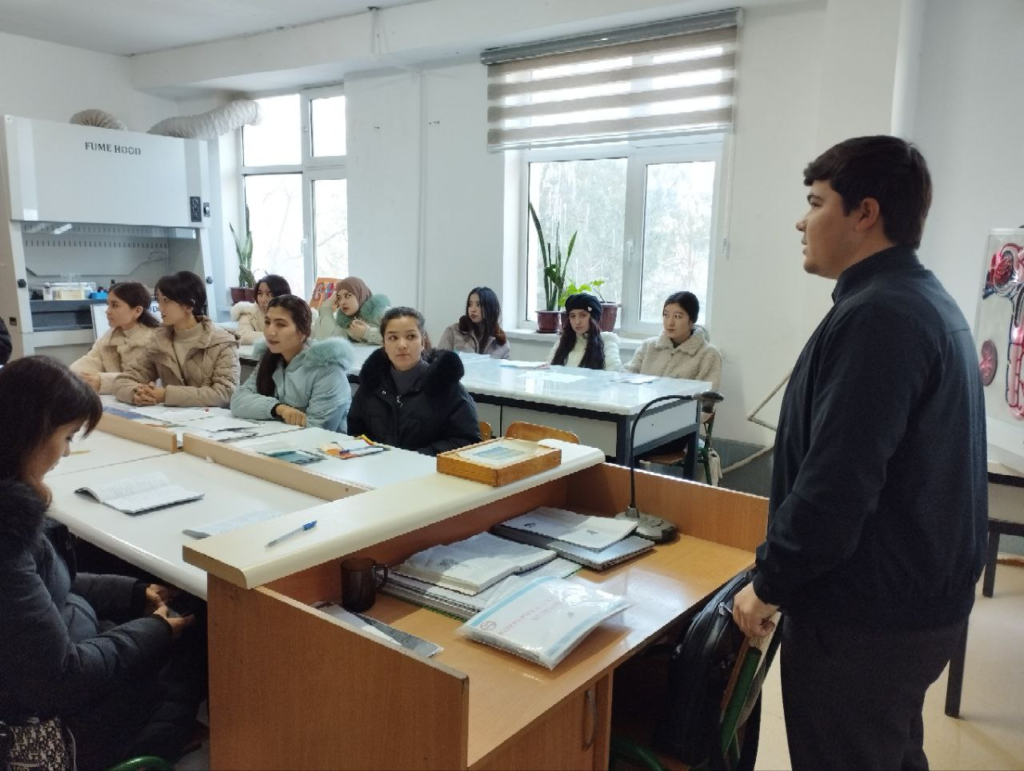
A roundtable discussion on “Promoting Healthy Lifestyles and Strengthening Reproductive Health among Women” was held at the Faculty of History of Navoi State University. The event featured specialists from the Navoi Regional AIDS Prevention Center and experienced gynecologists, who provided female students with practical guidance and essential information on reproductive health.
Organized on the initiative of the Rector’s Advisor on Women’s Affairs, Sh. Nosirova, and university psychologist D. Abduraimova, the session also included psychological testing and discussions on key aspects of women’s health.
Experts addressed common gynecological conditions, their causes, prevention methods, and potential consequences. The event concluded with an interactive Q&A session, where students received professional advice and recommendations.
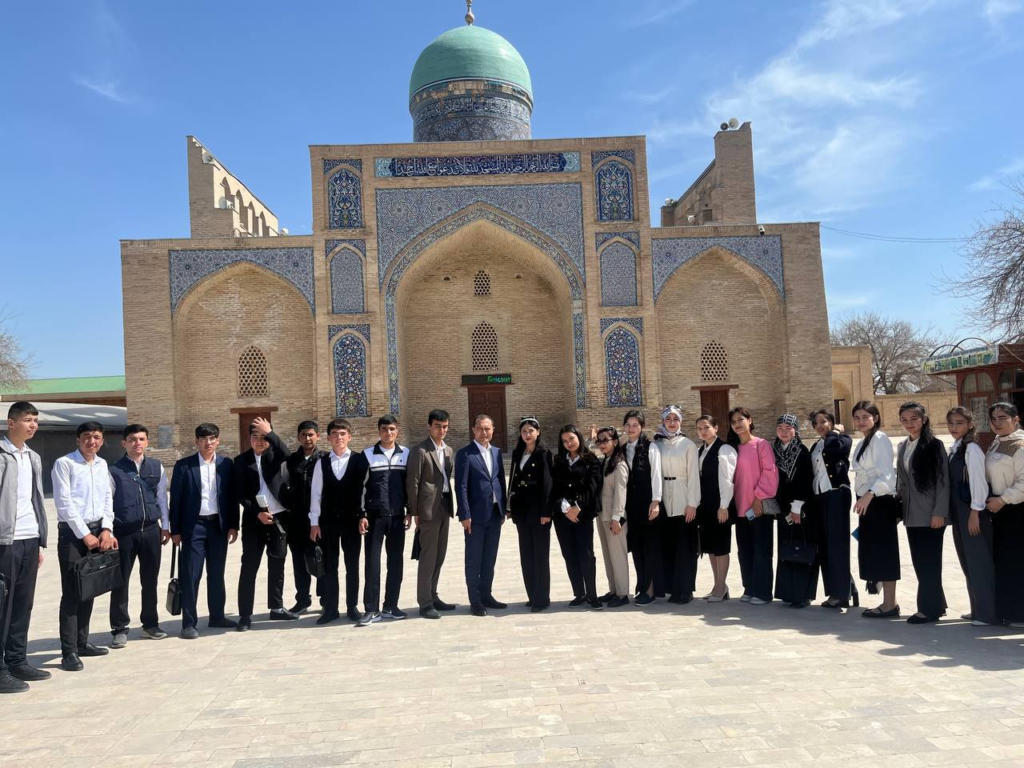
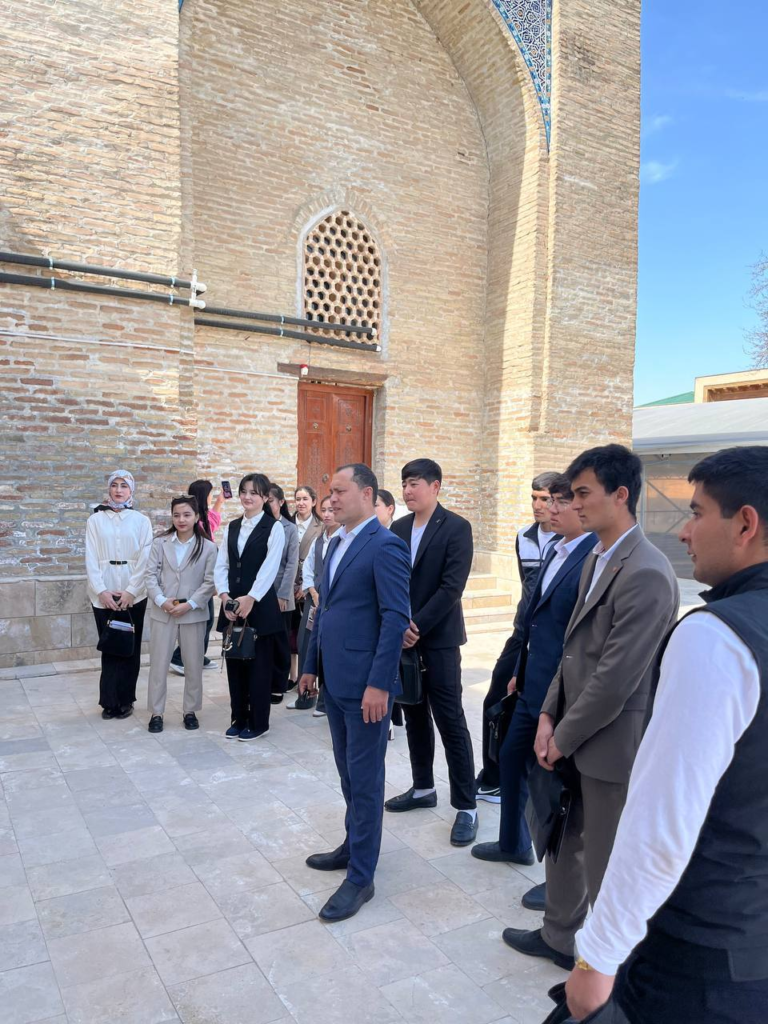
Students of the Faculty of Economics at Navoi State University organized an educational visit to the 16th-century Qosim Shaykh pilgrimage site located in the Karmana district. During the visit, students focused on exploring the historical and architectural significance of the site. They gained insights into its origin, distinctive features, and its role within the national cultural heritage.
The excursion also provided an opportunity for participants to closely examine the monument, enhancing their understanding of its historical value and current state of preservation.
II. Ethical Compliance Office and Institutional Oversight
Navoi State University has established a formal institutional structure to oversee and ensure ethical compliance across all areas of its academic and administrative operations. This function is carried out under the leadership of the Vice-Rector for Youth Affairs and Spiritual-Educational Work, who serves as the designated senior official with overarching responsibility for ethical matters at the university level.
Operating under the authority of the Vice-Rector, the Department of Youth Affairs and Spiritual-Educational Work acts as the central coordinating body responsible for promoting ethical values, monitoring institutional conduct, and ensuring adherence to the university’s Code of Ethics, Anti-Corruption Regulation and related internal policies. Through this structure, ethical compliance is systematically integrated into the university’s governance framework and day-to-day operations.
The Department performs a comprehensive oversight role across the institution, including:
implementation and monitoring of ethical standards and codes of conduct across faculties and administrative units;
coordination of activities related to integrity, anti-corruption, and ethical awareness
collaboration with relevant units such as the Anti-Corruption Compliance Center and the Human Resources Department in addressing ethical violations and employment-related grievances,
organization of educational initiatives, including seminars, trainings, and awareness campaigns aimed at fostering a culture of transparency, responsibility, and respect.
In addition, the Department works closely with the Counselor to the Rector on Women’s Issues and faculty-level counselors to ensure that ethical considerations related to gender equality, inclusion, and student and staff well-being are effectively addressed throughout the institution.
The ethical compliance system is further supported by practical tools and communication mechanisms, including digital reporting channels, anonymous feedback systems, and regular monitoring activities. These instruments enable the university to identify risks, respond to concerns, and continuously improve its ethical governance practices.
Through the leadership of the Vice-Rector and the coordinated efforts of the Department of Youth Affairs and Spiritual-Educational Work, Navoi State University ensures that ethical oversight is clearly assigned, institution-wide in scope, and actively implemented, demonstrating a strong commitment to maintaining high standards of integrity and accountability.
1. Confidential Whistleblowing & Staff Grievance Mechanism
Navoi State University has established a robust and multi-layered internal reporting system to ensure the confidentiality, protection, and fair treatment of whistleblowers and staff raising employment-related grievances. This system is formally regulated through institutional documents, including the Code of Ethics (odob axloq qoidalri linki), Anti-Corruption Regulation(korrupsiya bo’limi nizomi), Complaints Policy (policy link), and Data Protection Policy(policy link), all of which clearly define procedures for reporting, handling, and safeguarding sensitive information.
The university’s framework is aligned with national legislation, specifically the Law of the Republic of Uzbekistan “On Combating Corruption” https://lex.uz/docs/-3088008?ONDATE=21.04.2021# (No.419, dated January 3, 2017), adopted by the Legislative Chamber on November 24, 2016, and approved by the Senate on December 13, 2016. This legal foundation ensures that institutional practices comply with nationally mandated standards on transparency, accountability, and protection of individuals reporting misconduct.
Navoi State University provides multiple accessible and secure channels through which staff can report concerns confidentially or anonymously. These include:
a dedicated Anti-Corruption digital bot and official “Appeal to the Rector bot”, https://t.me/nsu_77_bot enabling direct and secure communication with university leadership;
scheduled personal appointments with university administration,
digital access via QR codes linked to the Anti-Corruption Compliance Department and its official communication platforms, including Telegram channels.
These mechanisms are designed to ensure strict confidentiality, protect the identity of whistleblowers, and prevent any form of retaliation, discrimination, or adverse consequences for individuals who report concerns in good faith.
The responsibility for managing, reviewing, and resolving complaints is clearly assigned to designated institutional structures. The Anti-Corruption Compliance Center plays a leading role in receiving and investigating reports related to corruption, unethical conduct, and integrity violations. The Human Resources Department (link kadrlar bo’limi nizomi) is responsible for handling employment-related grievances in accordance with labor legislation and institutional policies.
Additionally, the university has developed a gender-responsive support mechanism through the Counselor to the Rector on Women’s Issues, supported by faculty-level counselors in each academic unit. This network provides targeted support to female staff and students, ensuring that gender-related concerns, including discrimination or harassment, can be reported safely and addressed effectively. The system also promotes inclusivity through women-focused initiatives such as advisory sessions, support groups, and clubs.
To strengthen awareness and encourage active use of reporting mechanisms, the Anti-Corruption Compliance Center regularly conducts seminars, awareness campaigns, and training sessions on ethics, anti-corruption, and grievance procedures. The university also implements anonymous monitoring tools, including online surveys and paper-based assessments, allowing staff and students to provide feedback and report concerns without disclosing their identity.
All submitted complaints follow a structured and transparent procedure, including registration, review, investigation, decision-making, and feedback. The university strictly adheres to data protection principles, ensuring that all information is securely stored and accessed only by authorized personnel in accordance with internal data security regulations.
Through this comprehensive approach, Navoi State University ensures a safe, transparent, and accountable environment where staff can confidently report concerns, thereby reinforcing an ethical organizational culture and aligning with international best practices in institutional governance and sustainability.
The following section outlines the initiatives and activities conducted by the Compliance Control Department in relation to student engagement and oversight.
“Corruption — a Threat to Development”
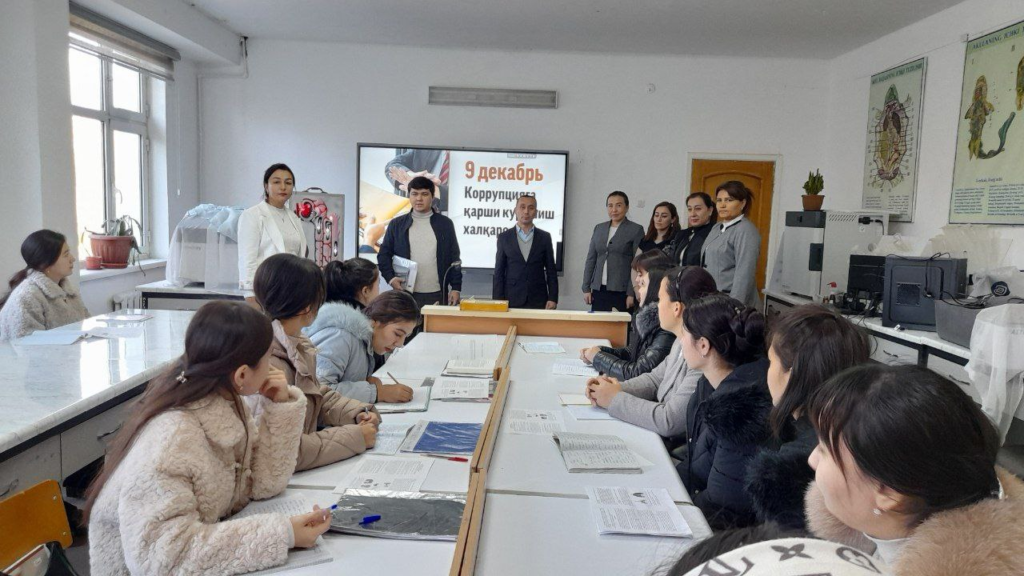
On December 9, in observance of the International Anti-Corruption Day, a roundtable discussion titled “Corruption — a Threat to Development” was organized at the Faculty of Preschool and Primary Education.
The event was attended by the Deputy Prosecutor of Navoi City, Sh. Mirzabekov, the Head of the Anti-Corruption Compliance Control Department, A. Khalikov, as well as faculty members and students. During the discussion, responsible officials provided insights into corruption-related cases, their negative consequences, and the ongoing measures and strategies being implemented to combat corruption.
In addition, a student engagement activity was held under the slogan “We Are Against Corruption,” encouraging active participation and raising awareness among participants.
December 9 – International Anti-Corruption Day
In accordance with a resolution adopted by the United Nations General Assembly, December 9 is annually observed as the International Day Against Corruption.
The primary objective of this observance is to enhance understanding of corruption as a global challenge and to highlight the role of the Convention in preventing and combating corrupt practices.
The session focused on raising awareness, promoting integrity, and encouraging proactive attitudes among students toward preventing corruption.
Higher Education – A Corruption-Free Sector
In line with this principle, the Anti-Corruption Compliance Control Department of Navoi State Pedagogical Institute has been implementing systematic measures to prevent corruption.
During the 2023–2024 academic year, a range of activities were carried out, including preventive roundtable discussions with law enforcement representatives, awareness campaigns and competitions aimed at fostering zero tolerance toward corruption among students, and anonymous surveys to gather student feedback.
These preventive efforts remain ongoing within the institute.