2. Solar Energy Systems at Navoi State University
Navoi State University has a strong institutional background in promoting renewable energy technologies and developing sustainable energy infrastructure. The university’s commitment to clean energy is reflected in the large-scale installation of solar photovoltaic systems, initially implemented during its operation as Navoi State Pedagogical Institute.
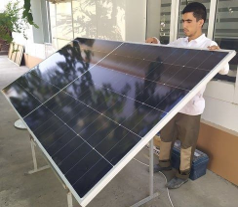
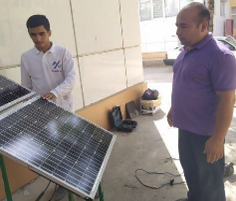
In 2022, solar photovoltaic panels with a total installed capacity of 350 kW were installed across six academic buildings and three student dormitories. This initiative marked a significant step towards improving campus energy sustainability and reducing dependence on conventional electricity sources.
In 2023, an additional 160 kW of solar photovoltaic capacity was installed, increasing the total installed solar power capacity to 510 kW. According to the institution’s official announcement, these solar installations were designed to meet 100% of its electricity demand and enable the sale of surplus electricity to the national grid.
These investments demonstrate the institution’s long-term commitment to renewable energy adoption and sustainable campus development. The integration of solar photovoltaic systems into educational buildings and student accommodation facilities supports the university’s broader efforts to reduce reliance on conventional energy sources, promote environmentally responsible energy management, and contribute to Sustainable Development Goal 7 (Affordable and Clean Energy).
Building on these earlier achievements, Navoi State University continues to promote renewable energy development through research, practical training, and innovative projects, including the establishment of the Green Energy Scientific and Educational Facility in cooperation with NAVOIY GOLD LLC.
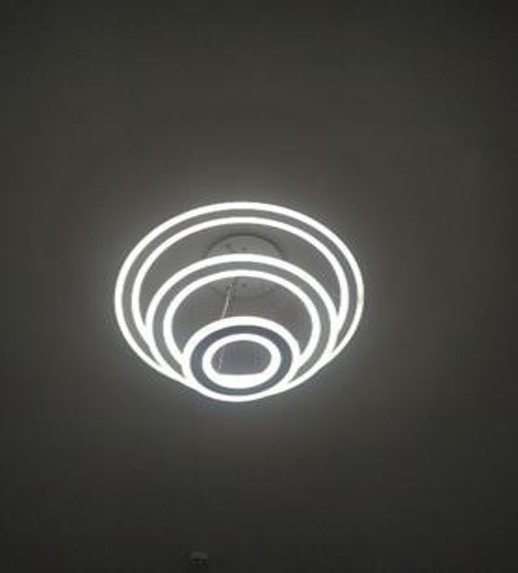
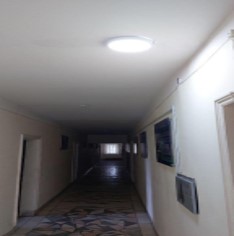
LED Lamps
The official NSU “Green University” page explicitly includes energy-efficient lighting among its campus sustainability measures (8 June 2026). This strengthens the qualitative evidence for the LED programme. The 180,000-unit figure remains sourced to the older internal inventory and should not be described as a verified 2026 count without an updated inventory.
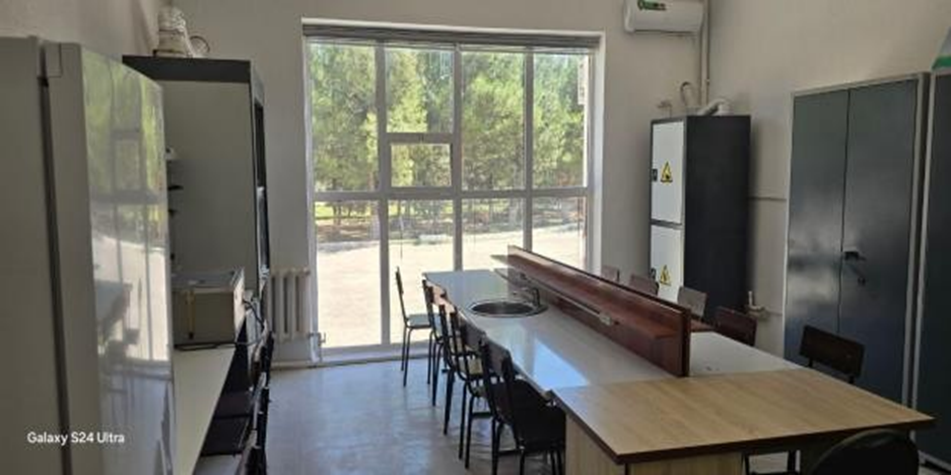
The university’s supplied energy-efficient appliances report describes a campus-wide shift to LED lighting in teaching buildings, offices, laboratories, corridors and external areas. It reports 180,000 LED lighting units and describes the transition as complete. LED fixtures use electricity more efficiently than traditional lamps and typically require less frequent replacement. Under the renovation policy, LED or comparable high-efficiency lighting is a required consideration for building works. For 2026, the appropriate upgrade emphasis is maintenance, replacement of failed units with efficient equivalents, and verification of lighting inventories
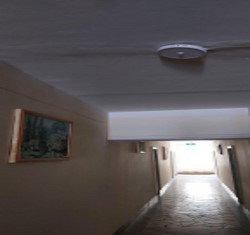
Motion Sensor Lighting Systems
The supplied report identifies occupancy-based lighting in corridors, restrooms, lecture spaces and other common areas and lists 240 motion-sensor lamps. Such controls switch lights according to occupancy and can prevent unnecessary use in intermittently occupied areas. The renovation policy also specifies motion and daylight sensors and automatic dimming controls. For existing buildings, expansion should be prioritized in circulation spaces and shared facilities, with sensor settings adjusted to actual use patterns.
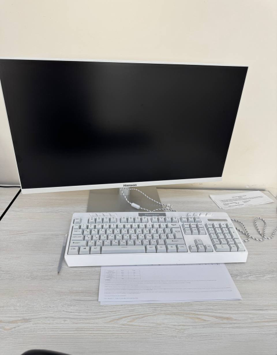
Monoblock Computers
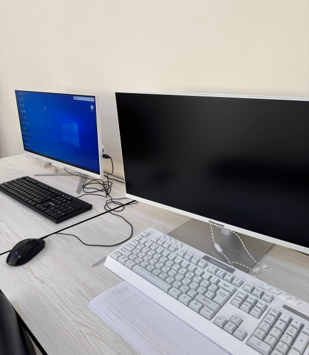
The supplied appliances report describes all-in-one (monoblock) computers used in laboratories, administrative departments and teaching facilities. Integrated computers may reduce equipment footprint and, depending on specifications and use, power demand relative to older desktop setups. Their relevance to 7.2.2 is secondary: they improve the operational efficiency of equipment housed in existing buildings rather than the building envelope itself. Procurement specifications and actual device wattage should be used to establish any quantified saving.
Electric Vehicle Chargers
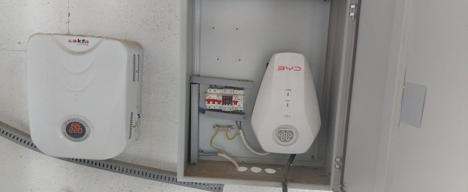
The appliances report states that EV charging facilities are available on campus. Charging infrastructure supports lower-emission transport where vehicles and electricity supply permit, and may be relevant to campus sustainability. However, EV chargers do not by themselves demonstrate that existing buildings are being upgraded to higher energy efficiency. They are therefore included as a complementary campus measure rather than the central evidence for 7.2.2.
Wide Windows and Building Envelope Improvements
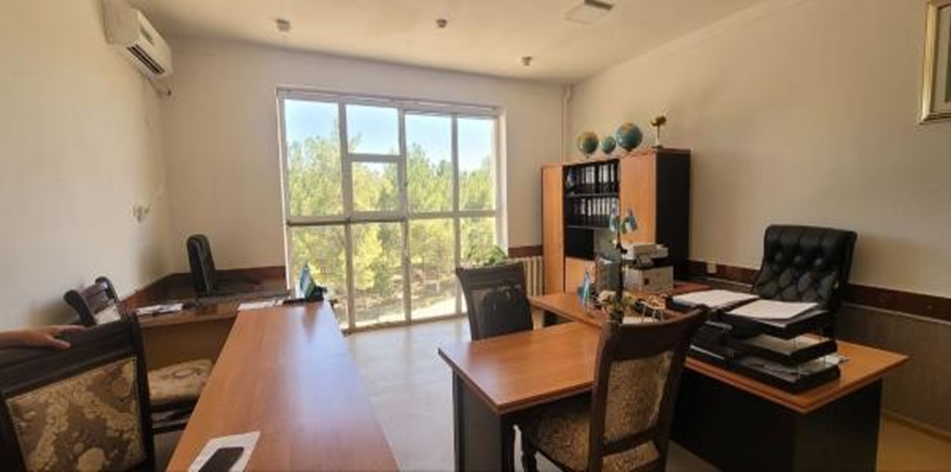
The supplied report describes wide double-glazed windows in new and renovated buildings. Daylight access can reduce reliance on artificial lighting when lighting controls are appropriate, while glazing specification and installation quality influence heating and cooling demand. NSU’s renovation policy additionally requires attention to insulated roofs and walls, low-emissivity glazing, airtightness and thermal bridges. For 2026, the strongest building-upgrade evidence would identify which existing blocks are scheduled for window replacement or insulation improvements.
Appliance | Total Number | Percentage |
LED Lamp | 180,000 | 100% |
Street lamp | 100 | 100% |
Water boilers (solar powered) | 45 | 100% |
Motion sensor lamps | 240 | 100% |
Temperature and humidity indicators | 350 | 100% |
Monoblock computers | | |
Wide windows | | 100% |
Micro-Hydropower Development at NSU
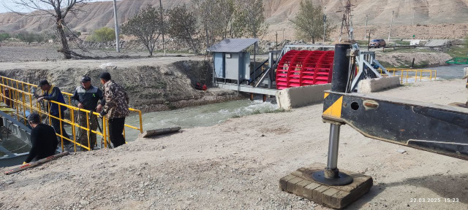
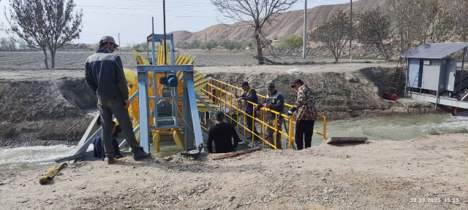
The official university webpages reviewed did not independently substantiate a new 2026 micro-hydropower installation or a 2026 generation total. The pilot and production statements in this section therefore remain historical, self-reported archive claims requiring project records.
The supplied renewable-energy narrative describes pilot micro-hydropower systems associated with controlled water flows and educational demonstration. Micro-hydro can contribute to renewable generation where hydrological and technical conditions are suitable. The supplied report also assigns 87,600 kWh of annual output to hydropower, but does not establish the reporting period, metering method or ownership of all generating sites. This initiative is presented as complementary research and energy diversification, not as proof of building renovation.
Wind Power as a Complementary Renewable Energy Source at Navoi State University
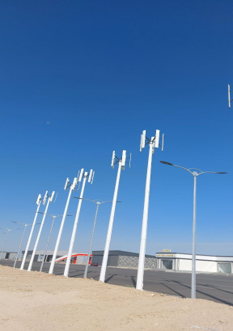
The official university webpages reviewed did not establish an additional 2026 wind-turbine installation or verified 2026 wind output. The archived figure must not be represented as a current-year audited result.
The renewable-energy narrative reports small-scale wind generators in suitable open campus areas, supporting auxiliary loads and applied learning. It lists 17,200 kWh of wind electricity within an illustrative annual generation table. Wind generation may complement solar output under suitable weather conditions, but its contribution to existing-building efficiency is indirect. Any claim of verified operational generation should be supported by turbine specifications, dates and metered records.
11. Monitoring, energy reviews and quantitative evidence
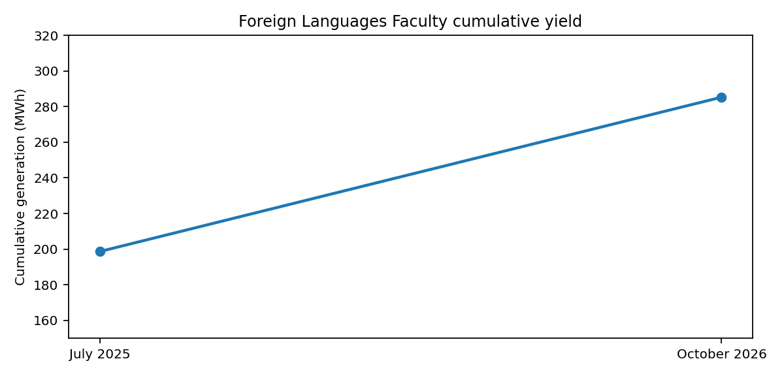
We consolidate solar plant dashboards and our signed electricity-allocation statement in the Energy Monitoring and Review Report covering July 2025–October 2026. For January–September 2026, our source statement reports 694,742.72 kWh of solar electricity generated, 313,241 kWh used for university needs and 381,502 kWh sold to the regional grid. These are the totals as reported in the original statement; they do not represent a complete-year 2026 consumption balance.
Reported metric | Value | Period / limitation |
Solar PV generated | 694,742.72 kWh | Jan–Sep 2026 |
PV allocated to university | 313,241 kWh | Jan–Sep 2026 |
PV sold to grid | 381,502 kWh | Jan–Sep 2026 |
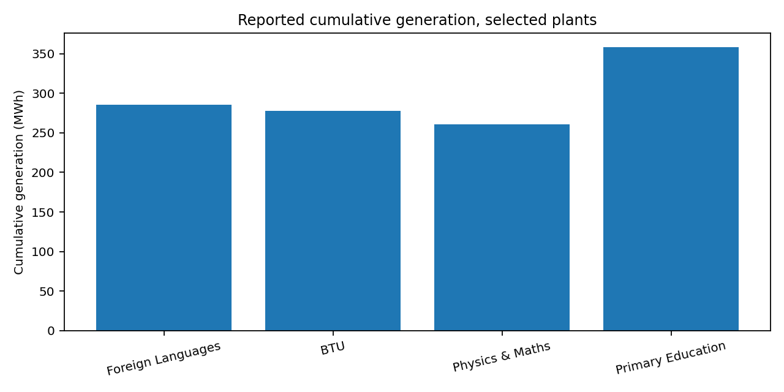
Foreign Languages plant | 285.28 MWh cumulative | October 2026 dashboard |
Physics & Mathematics plant | 260.55 MWh cumulative | October 2026 dashboard |
Primary Education plant | 358.00 MWh cumulative | October 2026 dashboard |
We use these monitoring records to support evidence-based energy management. Because photovoltaic generation does not itself demonstrate a reduction in building demand, we aim to combine generation data with building-level meter readings, operating schedules, equipment inventories and before-and-after consumption comparisons to evaluate the effectiveness of specific efficiency upgrades.
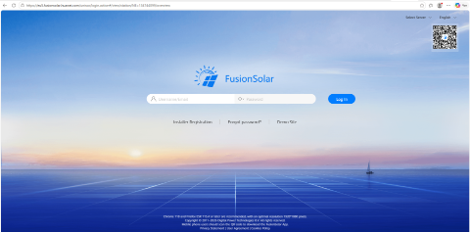
Digital plant monitoring
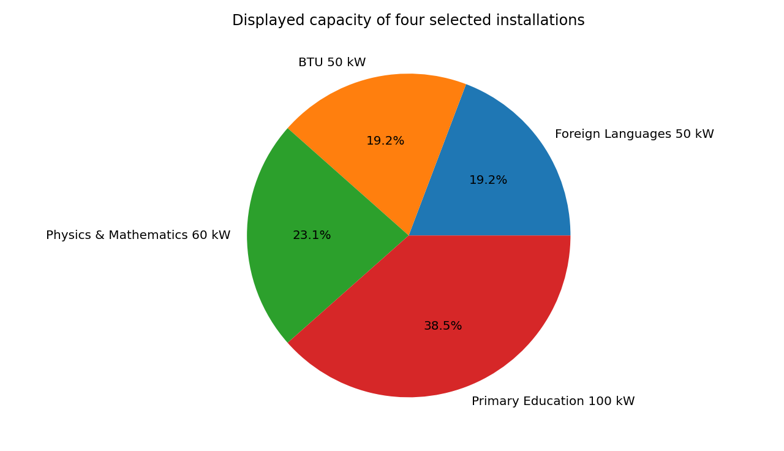
Evidence image — monitoring report charts and comparative photovoltaic analysis. Source: Energy monitoring supplied document, embedded original image 3.
11. Governance, responsibility and accountability
Institutional body | Documented responsibility |
Rector | Strategic leadership and oversight |
Vice-Rector for Capital Constructions | Coordination of energy-efficient infrastructure and renewable investment |
Unit for Coordination of Construction Works | Planning, implementation and supervision |
University Committee | Policy guidance and institutional oversight |
Sustainability Committee | Monitoring and review of carbon-reduction measures |
Relevant operational units | Energy data collection and implementation |
Academic and student community | Participation in awareness and resource-saving activities |
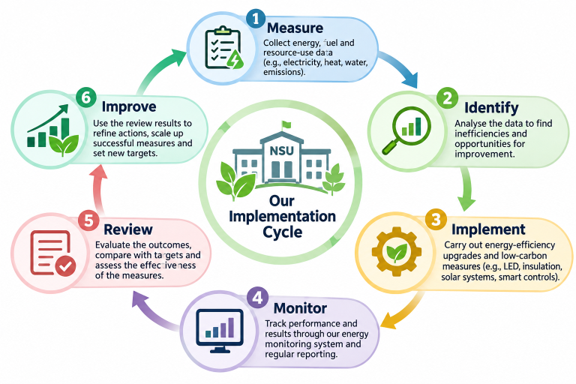
We assign overall strategic leadership to our Rector, while the Vice-Rector for Capital Constructions and the Unit for Coordination of Construction Works coordinate relevant infrastructure planning and implementation. Our University and Sustainability Committees provide oversight and review. We apply a Measure → Identify → Implement → Monitor → Review → Improve cycle to connect identified opportunities with accountable action.
12. Our implementation roadmap and priorities through 2030
Period | Documented plan / priority | Verification required |
2025–2026 | LED transition, solar water heating, renewable integration and institutional monitoring | Inventories, installation photos and signed statements |
2026 | Review energy and fuel data; develop energy-efficiency improvements and identify high-demand facilities | Building consumption register and technical assessments |
2027–2028 | Further optimisation of campus energy use; assess solar expansion, monitoring and integration | Approved project list, budget, procurement and commissioning |
2029–2030 | Evaluate progress, consolidate measures and prepare next management cycle | Before/after kWh, carbon accounting and annual review |
As part of our continuing improvement programme, we will assess building-by-building energy performance, identify suitable insulation, glazing, lighting-control, HVAC and equipment measures, and prioritise interventions according to technical feasibility, operating requirements and available financing. For each approved project, we intend to record the responsible unit, baseline, implementation status and method for verifying savings. These are forward-looking priorities, not claims that every retrofit has already been approved or completed.
13. Research, partnerships and stakeholder engagement
We support our energy-efficiency agenda through scientific research, educational events and cooperation with external stakeholders. Our supplementary evidence records 2025–2026 activities including sustainability conferences, environmental-awareness discussions, student electricity-conservation training and engagement with public bodies and industry. These activities strengthen institutional capacity and participation, while our direct building-upgrade evidence remains our policies, installed technologies and operational records.
Government engagement.