2.1. Overview and Institutional Commitment
Navoi State University (NSU) provides a structured, university-wide mentoring system designed to support women’s academic achievement, personal development, social well-being, professional growth, and successful completion of higher education.
The University’s mentoring approach combines academic tutoring, individual faculty guidance, targeted assistance for socially vulnerable female students, research mentorship, entrepreneurship training, and community-based support.
Each faculty and department has an appointed coordinator responsible for identifying the needs of female students, facilitating access to relevant support services, monitoring gender-related initiatives, and reporting emerging challenges to the central Community Council.
The University’s mentoring system operates through cooperation among:
The Women’s Support Community and Women’s Advisory Council.
The Rector’s Adviser on Women’s Issues.
Faculty and departmental coordinators.
Academic tutors and professors.
University psychologists and student welfare personnel.
The Department for Working with Talented Students.
Academic and postgraduate education departments.
This institutional structure enables Navoi State University to provide both general mentoring opportunities and additional targeted assistance to women experiencing educational, economic, or social difficulties.
2.2. University-Wide Teacher–Student Mentoring Programme
Since 2021, Navoi State University has implemented a Teacher–Student mentoring scheme to strengthen academic guidance and establish regular communication between students and academic staff.
The programme is integrated into the University’s academic and student support structure, providing opportunities for female students to receive guidance throughout their studies.
The supplied institutional documentation also refers to the Order of the Minister of Higher and Secondary Specialized Education, registered on 8 October 2018 under No. 3076, as part of the regulatory framework for academic staff mentoring responsibilities.
Implementation Mechanism
Each faculty assigns tutors to student groups, while female professors and academic mentors provide individual consultations and group mentoring activities.
The principal responsibilities of tutors and mentors include:
Academic guidance and performance monitoring
Tutors monitor students’ attendance, academic progress, learning difficulties, and participation in educational activities. When problems are identified, students receive guidance and are directed toward appropriate academic support.
Individual mentoring sessions
Female students can discuss educational difficulties, professional interests, personal development goals, and other concerns with their assigned tutors or academic mentors.
Group mentoring and developmental discussions
Regular group meetings provide opportunities for students to exchange experiences, discuss academic challenges, strengthen communication skills, and receive guidance from experienced faculty members.
Social and emotional support
Mentors assist students experiencing difficulties adapting to university life, living away from their families, or balancing academic responsibilities with personal circumstances.
Referral to specialized services
Where additional assistance is required, tutors coordinate with faculty administrations, the Women’s Support Community, psychologists, or relevant university departments.
Institutional Significance
The Teacher–Student programme is particularly valuable because mentoring is embedded in the University’s regular educational processes rather than being limited to occasional events.
According to the University’s institutional documentation, almost all female students are involved in the mentoring and student support structure through assigned tutors and faculty-level monitoring.
The programme contributes to academic continuity, early identification of student difficulties, and the creation of an accessible support network for women.
2.3. Targeted Mentoring for Vulnerable Female Students
Navoi State University operates targeted mentoring and monitoring mechanisms for female students who may face additional challenges in accessing, continuing, or completing higher education.
This support is coordinated by tutors, faculty leadership, and the Women’s Support Community.
Priority Groups
The institutional mentoring framework identifies several groups requiring additional attention.
Female students living away from their families
Tutors monitor students’ adaptation to independent living, safety, accommodation conditions, and general well-being.
Orphaned and semi-orphaned female students
These students receive additional attention and may be referred to psychological services, social assistance, or other relevant support mechanisms.
Female students from low-income families
Tutors and Women’s Support Community coordinators assist eligible students in identifying and accessing available scholarships, grants, stipends, and other forms of financial or social assistance.
Female students experiencing academic difficulties
Tutors identify attendance or performance problems and provide individual guidance to help students improve their academic engagement.
Implementation.
Mentoring Schemes
A. Teacher–Student Mentoring
1. MONITORING OF STUDENT RENTAL ACCOMMODATIONS
As part of the regular oversight of students living in rented housing, the living conditions of third-year students from the Faculty of History residing at House 18, Binokor Street, Binokor MFY, Navoi city, were examined. The visit confirmed that the apartment provides sufficient conditions for both living and studying. During the monitoring, students were given several important recommendations, including: using internet resources responsibly and only for educational purposes; adhering to rules of proper behavior and personal discipline; avoiding absence from classes without valid reasons; maintaining cleanliness and order within the apartment; taking part in foreign-language courses or…
2. LIVING CONDITIONS OF STUDENTS IN RENTAL ACCOMMODATIONS REVIEWED
The living conditions of third-year students of the Mathematics and Informatics programme at the Faculty of Exact Sciences of Navoi State University were inspected at the rental apartment located at House 42, Apartment 65, Islam Karimov Street, Orzu Mahalla, Navoi City. During the visit, the students’ situation was assessed and the conditions created for them in the rental apartment were reviewed. They were provided with guidance on the proper use of natural gas and electricity, as well as instructions on adhering to essential safety rules. It was noted that after attending their regular classes, the students meaningfully utilize their free time by conducting additional lessons for…
3. LIVING CONDITIONS OF STUDENTS IN RENTAL ACCOMMODATIONS REVIEWED
The living conditions of third-year students of the Mathematics and Informatics programme at the Faculty of Exact Sciences of Navoi State University were reviewed at the rental apartment located at House 40, Apartment 10, Amir Temur Street, Bahor Mahalla, Navoi City. During the visit, it was noted that one of the student’s grandmothers had also come to check on her grandchild’s well-being. The conditions created for the students in the rented apartment were examined. Students were provided with detailed guidance on the correct use of natural gas and electricity, as well as the importance of following safety rules. They were also advised on how to spend their free time effectively and engage…
4. LIVING CONDITIONS OF STUDENTS IN RENTAL ACCOMMODATIONS REVIEWED
The living conditions of a first-year student of the “Uzbek Language and Literature” programme at the Faculty of Languages of Navoi State University were reviewed by the faculty tutor M. Turayeva. The visit was conducted at the student’s rental residence located at House 41, A. Avloniy Street, within the “Lochin” Mahalla of Navoi City. Key aspects assessed during the visit included: Ensuring that the living space met hygienic and household standards and provided comfortable conditions for the student. Availability of an appropriate environment for study, including adequate conditions for preparing lessons and continuing academic work. Encouraging students to engage in meaningful…
5. LIVING CONDITIONS OF STUDENTS IN RENTAL ACCOMMODATIONS REVIEWED
On 14 June of this year, the department instructors G.J. Kuralova and O.K. Sunnatova conducted monitoring visits to the students of the “Physics and Astronomy, Additional Mathematics” (Evening Education) programme, 4th-year DK group. The visit took place at a rental residence located at House 16, Ibn Sino Street, within the Zarafshon Mahalla of Navoi City, where several female students—Ubaydullayeva Mohichehra, Turabova Jasmina, and Begmatova Nilufar—are currently residing. The conditions of students living in the university dormitory were also reviewed. During the visit, female students were advised on: Maintaining cleanliness and order in their rental accommodations, Preventing carbon…
6. MEETING BETWEEN MAHALLA REPRESENTATIVES AND UNIVERSITY STUDENTS
A roundtable discussion was organized with the participation of tutors from the Faculty of Exact Sciences of Navoi State University — R. Usmonov, G. Bozorova, and S. Ibragimova — together with the head of the “Janubiy” mahalla, V. Yoldoshev, youth leader J. Tojiyev, prevention inspector U. Khotamov, and students of the faculty residing in rental accommodations within the area. During the meeting, key issues were discussed, including ensuring student safety, challenges faced in rental housing, proper registration and compliance with rental agreements, and the importance of avoiding unnecessary presence in the streets during late hours. In addition, the mahalla youth leader, J. Tojiyev,…
B. Targeted Student Welfare and Women’s Safety
7. “We Stand Against Pressure and Violence” discussion event
As part of its ongoing efforts to promote gender equality and protect women’s rights, Navoi State University organized a discussion event titled “Biz tazyiq va zo‘ravonlikka qarshimiz” (“We Stand Against Pressure and Violence”) at the university’s Student Dormitory No. 3. The session was conducted by the University Council of Women’s Affairs and university psychologists, led by N. Tursunova, the Rector’s Adviser on Women’s Issues. During the meeting, participants discussed the importance of safeguarding women’s rights, preventing discrimination, and ensuring effective protection against psychological and physical violence. The conversation also emphasized the shared responsibility of…
8. National Seminar on Women’s Rights and Safety Held in Khorezm
A Republican seminar titled “Women’s Rights and Safety: Modern Challenges and Solutions” is currently being held at Urgench State University named after Abu Rayhon Beruni. The event brings together gender equality advocates, university leaders, and women’s rights specialists from across Uzbekistan to discuss pressing issues related to women’s empowerment, social protection, and gender-based safety. Representing Navoi region, Ms. Nasiba Tursunova, Adviser to the Rector on Women’s Issues at Navoi State University, and Ms. Rano Islomova, Adviser to the Rector on Women’s Issues at Navoi State University of Mining and Technologies, are actively participating in the seminar. Their participation…
9. Roundtable Discussion on Women’s Empowerment Held at Navoi State University
On April 11, Navoi State University hosted a roundtable discussion titled “Women’s Enlightenment — Society’s Prosperity.” The event was attended by Malika Mamadiyarova, Deputy Governor of Navoi Region; Munavvar Usmonova, Editor-in-Chief of Saodat magazine and Honored Cultural Worker of Uzbekistan; and Oygul Mamarayimova, member of the Writers’ Union of Uzbekistan and Labor Veteran. The discussion focused on the protection of women’s rights and legal interests, the enhancement of women’s roles in society, and the social support of women in need. Participants also emphasized the national reforms being carried out to ensure gender equality and strengthen the status of women in all areas of…
10. Mentorship for Moral and Psychological Development
Under the “Relevant 90 Days” initiative, the Faculty of Exact Sciences held mentorship sessions focusing on the moral, psychological, and ethical upbringing of young women. University psychologists, professors, and tutors guided students on topics such as emotional intelligence, self-esteem, and social behavior, providing a safe and supportive space for open dialogue. Moreover, psychologist Dilfuza Abduraimova led Art Therapy and Psychological Self-awareness workshops across multiple faculties, mentoring female students on how to cope with stress, balance academic pressures, and nurture self-understanding. These sessions served as continuous well-being mentorship
11. Health and Lifestyle Mentorship
The Faculty of Languages organized a mentorship-oriented discussion titled “Healthy Lifestyle – A Symbol of Right Living.” Specialists guided students—particularly young women—on maintaining balance in physical and mental health, time management, nutrition, and moral integrity. Mentors encouraged participants to view a healthy life as part of a broader commitment to self-discipline, cultural ethics, and women’s
C. Academic, Research and Professional Mentoring
12. “An Educated Woman is the Reflection of Society” — Seminar for Women at Navoi State University
At Navoi State University, an applied seminar titled “An Educated Woman is the Reflection of Society” was organized for female professors, doctoral students, undergraduates, and students. The event aimed to promote women’s leadership, scientific potential, and social engagement in higher education. Speakers highlighted the growing opportunities for women’s education and entrepreneurship in Uzbekistan, particularly following the new initiatives introduced under the Presidential decree to support youth and women through Aloqabank’s transformation into the “Youth
13. Supporting Female Entrepreneurship and Skills Development
As part of ongoing gender equality initiatives, 16 female students have been selected to receive free training at the Women’s Entrepreneurship Center of Navoi State University. This program provides practical business education, startup mentorship, and project management training designed to help young women develop their own enterprises and contribute to the region’s economic
14. Navoi State University Promotes Women’s Empowerment through Education, Sports, and Culture
Navoi State University continues to strengthen its commitment to gender equality and women’s empowerment, organizing a wide range of educational, cultural, and sporting events aimed at developing the leadership potential, creativity, and professional competence of female students and staff. The Women’s Volleyball Tournament for the Rector’s Cup marked the beginning of a new season of inclusive sports activities, encouraging women to lead active, healthy lifestyles and build teamwork and confidence through athletic participation. In collaboration with the Agency for the Development of Public Service, the University also hosted the third stage of short-term professional development courses…
15. Promoting Women’s Participation in the IT Sector
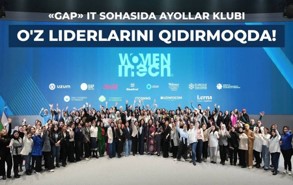
As part of Uzbekistan’s national movement to advance women in technology, NSU supported the outreach activities of the “GAP – Women in IT” Club, which seeks to expand women’s involvement in digital and technological professions. The club organizes mentorship and leadership programs to identify and support female leaders in IT across Uzbekistan, encouraging them to participate in training sessions, networking events, and collaborative projects. Through these programs, female students from NSU and across the Navoiy region are provided with access to career guidance, technical upskilling, and mentorship from industry professionals, enabling them to develop digital competencies and leadership…
16. Women’s Mentorship and Empowerment Programs at Navoi State University
Navoi State University (NSU) actively promotes women’s empowerment through mentorship, education, and leadership development. The university believes that women’s success in academia and society begins with access to knowledge, guidance, and role models who inspire confidence, competence, and social responsibility. To this end, NSU has developed a range of mentorship-oriented programs that support the personal, professional, and academic growth of female students, scholars, and
17. Academic and Research Mentorship: “A Life Dedicated to Science”
The Council for Women’s Affairs and Graduate Studies Department hosted a mentorship roundtable for female scholars under the theme “A Life Dedicated to Science – Towards a Prosperous Family.” Esteemed speakers, including Malika Mamadiyorova, Deputy Governor of Navoiy Region and Head of the Family and Women’s Affairs Department, engaged with female professors, researchers, and graduate students to discuss the role of education, ethics, and scientific dedication in women’s professional and family life. This platform enabled academic women to mentor emerging scholars, creating a supportive community for female intellectual
18. Professional Mentorship and Capacity Building
In collaboration with the Civil Service Development Agency (Navoiy Branch), the university launched a mentorship-based qualification program for local women specialists in family and gender policy. Training sessions, led by First Vice-Rector X. Qurbonov and Women’s Council Chair N. Tursunova, provided hands-on mentorship in leadership, communication, and policy implementation. This initiative empowered women in public service to strengthen their professional roles and networks. Additionally, the Department of Pedagogy and Psychology provided mentorship-based training titled “Family Psychology” for employees of the Regional Security Service Department and their families, offering guidance on…
D. Additional Development and Community Support
19. Enhancing Women’s Financial Literacy
In collaboration with the Central Bank of the Republic of Uzbekistan, Navoiy Regional Branch, NSU hosted a seminar-training on “Improving Financial Literacy among the Population”. The event, organized under the national project “Aholining moliyaviy savodxonligini oshirish” (Improving Financial Awareness), engaged women, youth, and aspiring female entrepreneurs from the local community. Conducted in an interactive format, the session focused on practical financial management, savings, business planning, and access to microfinance tools. This initiative aimed to increase women’s confidence in managing personal and business finances, fostering economic independence and gender equality in…
20. Community Mentorship and Family Education
To celebrate International Family Day (May 15), NSU’s Women’s Council, faculty members, and students held community mentorship dialogues in local mahallas (neighborhoods). Senior women and educators shared life lessons on maintaining family harmony, gender respect, and cultural continuity. Similarly, the Faculty of History and the Museum of Repression Victims co-organized a mentorship event titled “Family Stability – A Guarantee of Social Peace,” where mentors and students discussed the social role of women and legislative foundations supporting family
21. Awareness and Reflective Mentorship through Media
The university’s Information Resource Center hosted the screening of “Ayol Qismati” (“A Woman’s Fate”), followed by a reflective mentorship session led by the Rector and the Advisor for Youth Affairs. Through discussion of real-life stories depicted in the film, mentors helped students connect moral reasoning with gender awareness, reinforcing values of resilience, integrity, and